
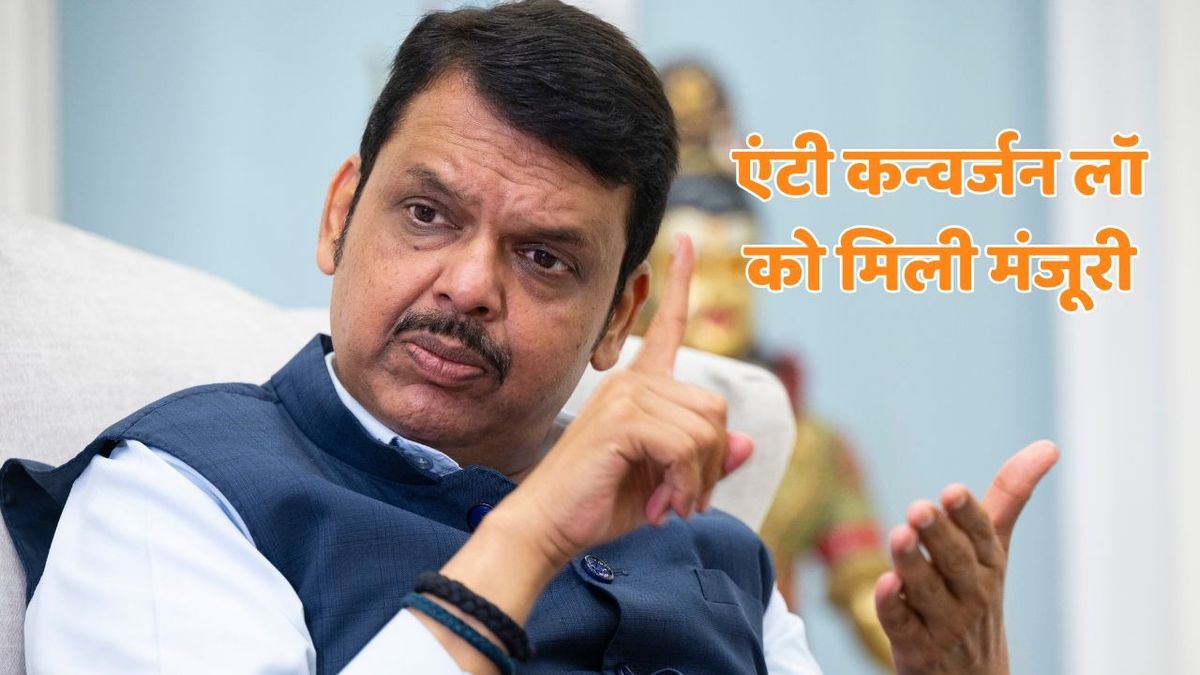
Anti-conversion law approved in Maharashtra Cabinet, know what is this law and what will happen due to it?

Maharashtra government has taken an important step by showing strictness on the cases of forced religious conversion in the state. A new bill related to forced conversion was approved in the cabinet meeting held on Thursday. This decision was taken keeping in mind the law and order and social issues of the state in this meeting chaired by Chief Minister Devendra Fadnavis.
After getting the approval of the government, this bill will now be presented in the state assembly. After being passed in the Assembly, it will be given the form of law. The state government says that the purpose of this law is to prevent any person from changing religion through pressure, greed or deception.
Forced religious conversion will be a non-bailable offence.
According to the proposed law, if any person forces someone to convert to religion by pressure, fraud, threat or luring, then strict legal action will be taken against him. Such cases will be kept in the category of non-bailable offences.
This means that the accused will be arrested and he will not be able to get bail easily. The government believes that with this law, controversial matters related to religious conversion will be controlled and people’s religious freedom will be protected.
After the implementation of the law, the police will be able to take direct action on receiving complaints. Besides, clear legal provisions will also be made for the investigation process.
The demand for law was being raised for a long time
Speaking to the media after the cabinet meeting, state government minister Nitish Rane said that there was a demand for making anti-conversion law in the state for a long time. Many social and religious organizations had also organized agitations and demonstrations regarding this issue.
He said that keeping these demands and circumstances in mind, the government has approved the anti-conversion bill. According to Rane, the purpose of this law is to prevent religious conversion through any kind of pressure or greed.
He also said that detailed information about all the technical and legal aspects related to the law will soon be made public, so that people can get clear information about its rules and procedures.
Claims to be more strict than other states
The government claims that the proposed law will be more effective than the anti-conversion laws implemented in many other states. According to Minister Nitesh Rane, this law is being brought with more strict provisions than the laws of states like Madhya Pradesh and Gujarat.
In this, the rules related to investigation, complaint filing process and punishment if found guilty will be made clear and strengthened. The government believes that this will curb cases of forced conversion.
Minister’s comment also on the issue related to Namaz
After the cabinet meeting, Minister Nitish Rane also reacted on the issue of offering Namaz in public places. He said that the recent decision of Bombay High Court should be welcomed.
Rane said that when there are enough mosques in cities to offer Namaz, there should be no need to offer Namaz on roads or other public places. He said that public places should be used for the convenience of common citizens.
The future will be decided after discussion in the assembly
At present, after getting approval from the Cabinet, the next step is to present it in the Assembly. There will be discussion and debate on it, after which the process of passing the bill will move forward.
If approved by the Assembly and Legislative Council, this bill will become law and will pave the way for strict action in cases related to forced conversion in the state.
The government says that the purpose of this law is to maintain social balance and protect the religious freedom of the people. At the same time, the reaction of opposition parties and the debate in the Assembly will play an important role in deciding the direction of this bill.
Also read – How many days can Nitish Kumar hold both the posts of CM and MP, know what the rules say?

Comments are closed.