
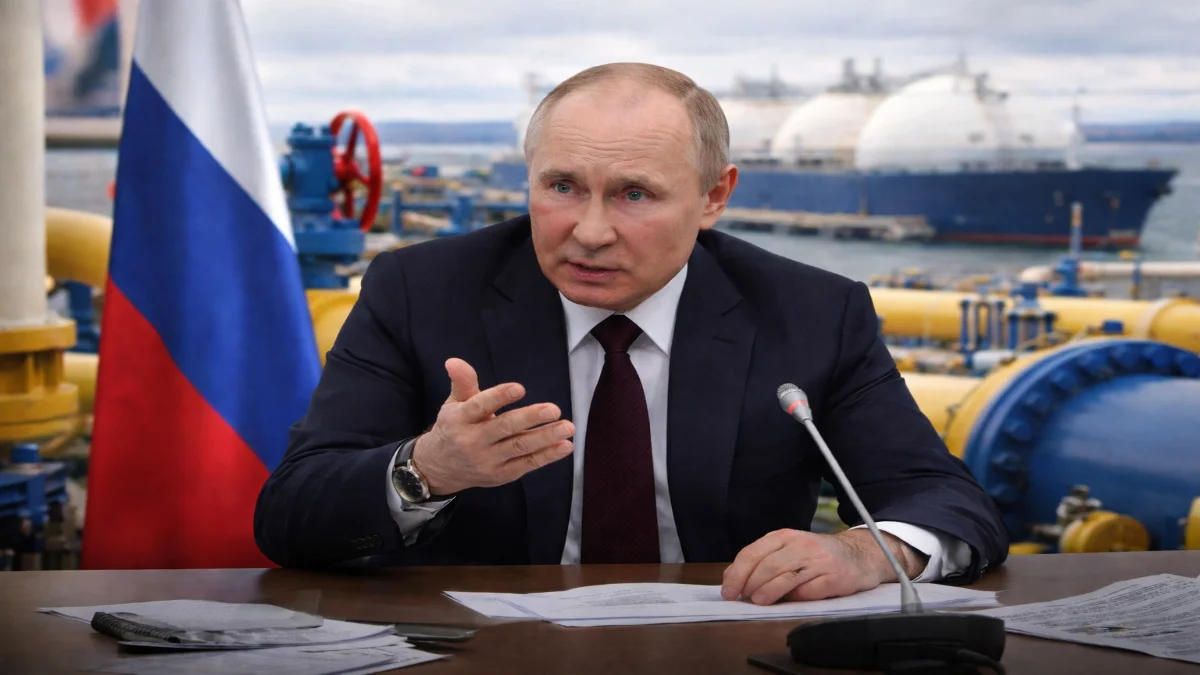

Vladimir Putin has always nourished a sense of strategic patience and geopolitical calculation, often making energy policy one of the main pillars of the global power of Russia. Famous in using natural resources to enlarge the economic and diplomatic scope of Moscow, Putin still presents the strategy of energy resources of Russia as based on the principle of pragmatism and outlook. In his recent statements, he implied that Russia could alter the path of its natural-gas exports to the world markets as the world markets change.
In an interview on Russian state television, the Russian president suggested that Moscow might stop selling the majority of its natural-gas to Europe and instead export to newer and more profitable markets. It is said because the European Union is planning a gradual ban on the imports of Russian pipeline gas and liquefied natural gas before the end of 2027.
According to Putin, Russian energy exports are finding more markets. In his view, these emerging opportunities might give higher commercial returns than the conventional European market. He said that the suppliers would automatically shift to customers who are willing to pay a higher price, and he made comparisons to companies in the United States that often focus on markets with higher financial incentives.
The Russian leader announced that he would ask his government to assess the possibility of diverting gas deliveries not to Europe so that officials and energy corporations could start planning the transition. This kind of movement, he suggested, would only be a reflection of the actions of other world energy providers who regularly change export paths depending on market forces.
Although there are political strains between Moscow and many of the European capitals, Russia still maintains the supply of pipeline gas to a number of European states. Hungary, Slovakia, and Serbia are still the beneficiaries of Russian energy supplies. Putin pointed out that Russia was ready to deliver energy to what he termed as reliable partners.
In a Kremlin meeting with Peter Szijjarto, the Russian president reiterated that Moscow would continue to have supply relations with friendly governments. According to him, these partnerships indicate that Russia is not universally confrontational in its energy policy, but selective.
Russian gas continued to amount to about 13 percent of EU imports in 2025, bringing in over 15 billion every year, even after the dramatic decline in energy relationships after the invasion of Ukraine by Russia. Part of this supply makes it to Europe via the Yamal LNG installed by Novatek.
In the meantime, the effects of wider geopolitical tensions have had an impact on the world gas markets as well. Recent events have seen prices rise to a three-year peak on growing conflict in the Middle East and fears over shipping security in the Strait of Hormuz, but since Washington assured it would act to ensure safety on the passage, prices have fallen a little.
It is against this unstable background that the proposal by Putin is an indication that Russia could be hastening its switch to other buyers as the world energy landscape keeps changing.

Comments are closed.