

Electric cars are no longer the future. They are very much the present.
In 2025, global sales of electric vehicles crossed a major milestone, with 20.53 million new energy vehicles sold worldwideaccording to data from TrendForce. The figure includes battery-electric vehicles, plug-in hybrids, and hydrogen fuel-cell cars.
That’s a 26 percent increase compared to 2024a clear sign that the shift toward electrification is still gathering momentum across the world.
But while the numbers remain impressive, the pace of growth is beginning to settle after several years of explosive expansion.
Growth Continues, But the Pace Is Slowing
TrendForce expects global EV sales to reach about 23.4 million units in 2026. That would still mark another strong year for the industry, though the growth rate is projected to slow to around 14 percent.
A big reason for that slowdown is China.
For nearly a decade, China has been the powerhouse of the electric vehicle revolution. Massive government support, a rapidly expanding charging network, and strong domestic brands helped push EV adoption faster than anywhere else.
Even today, China remains the world’s largest EV market by a wide margin. In 2025, the country accounted for around 66 percent of global EV sales. However, its growth rate of 24 percent was slightly lower than the global average, suggesting the market is starting to mature.
Europe Is Picking Up Speed
While China’s growth is easing slightly, Western Europe is seeing stronger momentum.
Electric vehicle sales in the region rose by nearly 30 percent in 2025marking the strongest performance since 2022. Tighter emissions rules, improved charging infrastructure, and continued government support are helping accelerate adoption across several European countries.
The result is a more balanced global market, with demand spreading beyond China.
BYD Takes the Top Spot
One of the biggest surprises of 2025 came from the battle for the top position in the EV industry.
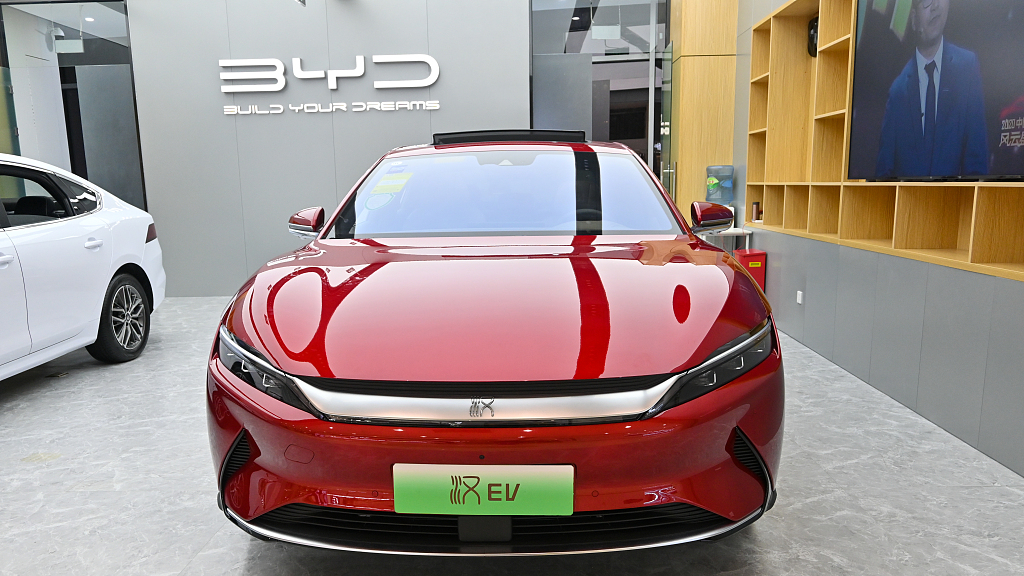
For the first time, Chinese automaker BYD overtook Tesla in global battery-electric vehicle sales. BYD recorded a 25 percent increase in salesallowing it to move ahead of the American EV pioneer.
Tesla, on the other hand, experienced a 9 percent decline in sales during the year. Analysts believe the drop may be linked to the company’s relatively quiet product cycle, with fewer new launches or significant updates compared to competitors.
The shift highlights how quickly the competitive landscape in the EV market is changing.
Chinese Automakers Continue to Expand
BYD’s rise is part of a broader trend. Several Chinese companies are rapidly climbing the global EV rankings.
Geelyfor instance, moved up to fourth place after doubling its market share from 3 percent to 6 percent. Much of that growth came from a small, affordable car called the Xingyuanpriced below 100,000 yuan (around €11,800).
Another surprising entrant is Xiaomibetter known as a smartphone manufacturer. The company managed to triple its EV market share in just one year, growing from 1 percent to 3 percentwhich placed it eighth globally.
Legacy Automakers Adjust Their Strategy
Traditional automakers are also adapting as competition intensifies.
Volkswagen, despite selling more cars overall, has lost ground in China’s EV market. To address this, the company has introduced a new brand tailored specifically for Chinese consumers and is working closely with XPeng to develop future electric models.
The first vehicles from that partnership are expected to reach the market soon.
Policy Changes Could Influence EV Demand
Government incentives have played a major role in EV adoption, and several policy changes expected in 2026 could influence buying decisions.
China is planning to shift its EV subsidy model. Instead of offering a fixed incentive, the subsidy will be tied to a percentage of the vehicle’s price. This change could make some lower-priced models less attractive to buyers.
In the United States, federal EV subsidies have endedwhich could affect short-term demand.
Germany, however, is taking the opposite approach by reintroducing EV subsidiesand the incentives will apply regardless of where the vehicle is manufactured. That move could benefit imported models, including cars from Chinese brands.
The Next Phase of the EV Race
Electric vehicles are also becoming increasingly sophisticated. Modern EVs rely heavily on advanced software and semiconductors, essentially turning them into highly connected computers on wheels.
Although chips account for only a small portion of manufacturing costs, supply shortages can disrupt production and delay deliveries, something the industry experienced during the pandemic years.
As the EV market continues to expand, automakers are focusing on three key priorities: affordability, reliable supply chains, and improved technology.
The global shift toward electric mobility is still moving forward. It’s just entering a phase where competition is tighter, and growth is becoming more measured.

Comments are closed.