
Iran’s big announcement on the Strait of Hormuz: Ban on Western ships, news of relief for India

New Delhi. Amidst rising military tensions in the Middle East, Iran has made a major announcement regarding the strategically important Strait of Hormuz. Iran’s Islamic Revolutionary Guard Corps (IRGC) has announced that this vital sea route will now be completely closed only to ships from the US, Israel, Europe, and their Western allies. However, this decision appears to bring relief to some countries, such as India, as India has not been included in these sanctions.
In the announcement, issued through Iran’s state broadcaster, the IRGC issued a clear warning that any ship belonging to the US, Israel, Europe, or their allies attempting to pass through the strait will be attacked and destroyed. This announcement comes at a time of heightened tensions in the region following the joint military operation launched by the US and Israel against Iran.
Earlier on Wednesday, Iran had stated that the Strait of Hormuz is not closed only to China. Now, with the new announcement, it is clear that India is also exempt from this strict restriction. Therefore, India remains hopeful of continued oil and energy supplies from the Gulf region.
Iranian officials say that under international law, any country has the right to control the flow of water through its maritime routes during wartime. Based on this, Iran has adopted this tough stance regarding control of the Strait of Hormuz. The IRGC said in a statement that the Islamic Republic of Iran has every right to control this strategic waterway during wartime and will take necessary steps to protect its national interests.
The Strait of Hormuz is considered one of the world’s most important sea routes for global energy supply. Approximately 20 percent of the world’s total oil shipments pass through it. It is the main sea route for many major oil-producing countries in the Persian Gulf. Dubai’s Jebel Ali Port is also located in this area and is considered one of the world’s leading container terminals.
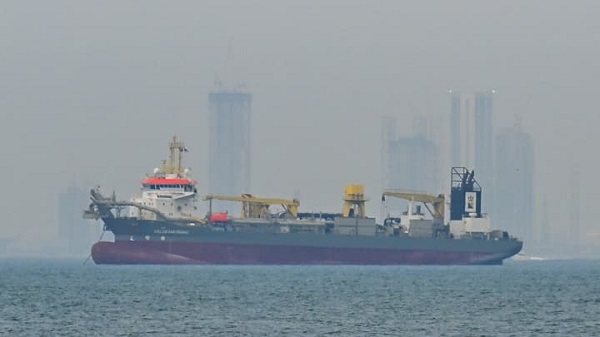
Shipping through the waterway has virtually come to a halt since the conflict began. According to maritime tracking websites, numerous oil tankers and other vessels are anchored near Kuwait and off the coast of Dubai, awaiting further clarification. Iran also has its own naval fleet stationed near the port of Bandar Abbas on the eastern side of the strait.
Experts believe that if this situation persists for a long time, it could have a significant impact on the global energy market. Oil and gas prices could fluctuate significantly, impacting the energy supply of many countries. However, for now, it is a relief for countries like India that Iran has not included them in its latest decision to include them in the list of banned countries.
This is believed to be the first time in history that the Strait of Hormuz has been partially closed to commercial shipping in this manner. Even during the Iran-Iraq War between 1980 and 1988, shipping through the route was not completely blocked despite attacks on oil tankers.

Comments are closed.