
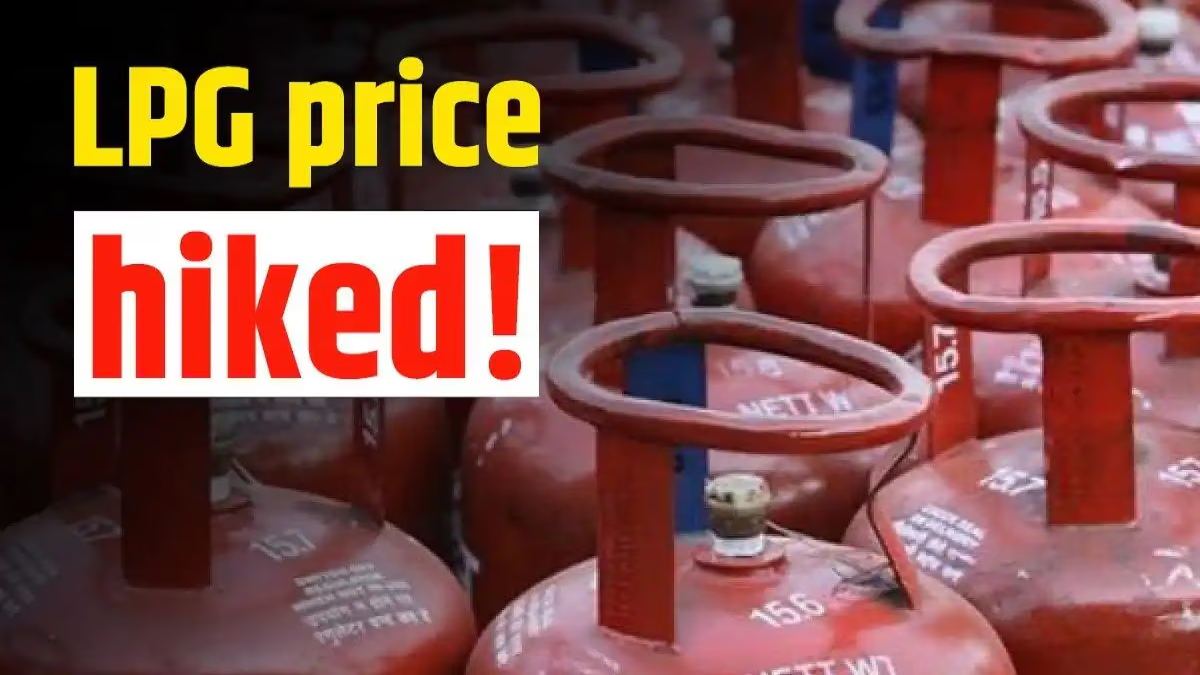
LPG Cylinder Price Hike: The government gave a big blow, the price of domestic cylinder increased by Rs 60, know why your pockets are getting empty?

LPG Cylinder Price Hike: The Central Government has increased the price of domestic gas cylinder by Rs 60. In Delhi, a 14.2 kg LPG cylinder will now be available for Rs 913, which was earlier Rs 853. The price of 19 kg commercial cylinder has increased by Rs 115 to Rs 1,883. The increased prices came into effect from March 7. Earlier, the government had increased the price of domestic cylinder by ₹ 50 on April 8, 2025. This increase comes almost a year after the price of commercial gas cylinder was increased by ₹ 31 on March 1, 2026. The government has increased the price of gas at a time when the fear of gas shortage in the country has increased due to the war between US-Israel and Iran.
New prices of domestic cylinders in big cities
Delhi
New Price: ₹913
Old Price: ₹853
Increase: ₹60
Kolkata
New Price: ₹939
Old Price: ₹879
Increase: ₹60
Mumbai
New Price: ₹912.50
Old price: ₹852.50
Increase: ₹60
Chennai
New Price: ₹928.50
Old Price: ₹868.50
Increase: ₹60
Bhopal
New Price: ₹918.50
Old Price: ₹858.50
Increase: ₹60
Jaipur
New Price: ₹916.50
Old price: ₹856.50
Increase: ₹60
Patna
New Price: ₹1011
Old Price: ₹951
Increase: ₹60
Raipur
New Price: ₹984
Old Price: ₹824
Increase: ₹60
Order to increase LPG production to prevent cylinder shortage
On March 5, the government used emergency powers to order all oil refineries in the country to increase LPG production. Increasing tension in the Middle East may affect gas supply. In response to this threat, the government issued this order. It says that refineries will now use only propane and butane for cooking gas production.
All companies will be required to supply propane and butane to government oil companies. These companies include Indian Oil (IOC), Hindustan Petroleum (HPCL), and Bharat Petroleum (BPCL). Its purpose is to ensure uninterrupted supply of gas cylinders to consumers.
Two reasons for supply crisis
- Virtual closure of the Strait of Hormuz
The biggest challenge for India is the closure of the Strait of Hormuz, which is a 167 km long waterway connecting the Persian Gulf to the Arabian Sea. Due to Iran War this route is no longer safe. Due to danger no oil tanker is passing through there.
20% of the world’s total petroleum passes through this route. Countries like Saudi Arabia, Iraq and Kuwait also depend on it for their exports. India imports 50% of its crude oil and 54% of its LNG requirements through this route. Iran itself exports through this route.
- LNG production halted due to drone attack on plant
Last week, the US and Israel attacked Iran. In response, Iran targeted US bases and ports in countries such as UAE, Qatar, Kuwait and Saudi Arabia.
After the Iranian drone attack, India’s largest gas supplier Qatar has stopped production at its LNG plant. Due to this the supply of gas to India has reduced. India imports 40% of its LNG requirements (about 27 million tonnes annually) from Qatar.
How is the price of gas cylinder decided?
Oil companies set a base price for LPG every month based on the previous month’s international prices, exchange rates and other costs. Taxes, transportation and dealer commission are then added to determine the retail price. The government compensates the difference for subsidized cylinders, while customers pay the full price for non-subsidized cylinders.
What is Essential Commodities Act 1955?
The government issued this order using the powers under the Essential Commodities Act 1955 (ESMA). Earlier, the government had imposed ESMA rules in the oil sector after the Ukrainian war. Refining companies were instructed to avoid fuel shortage within the country and to avoid exporting, because at that time selling oil abroad had become a very profitable business due to high margins.

Comments are closed.