


The new generation Renault Duster’s launch is just around the corner, and before its official launch, an interesting detail of this SUV has been revealed. Recently, Vikraman V, Chief of Engineering at Renault India, highlighted that the Indian Institute of Technology (IIT) Kanpur has a significant connection with the new Duster. As per the Chief of Engineering, IIT Kanpur has played a huge role in the aerodynamic development and wind-noise optimization of the new SUV.
Renault Duster and its IIT Kanpur connection
During an interview recently, Vikraman V highlighted that the National Wind Tunnel Facility located in IIT Kanpur helped in testing and validating the aerodynamics of the new Duster. These tests helped the Renault Duster achieve segment-best NVH (Noise, Vibration, Harshness) performance in the cabin.
According to Renault India, the new generation Duster has managed to achieve a segment-best Articulation Index (AI) of 73 percent. For those who may not be aware, the Articulation Index is a technical measurement which is used to evaluate how clearly passengers can communicate inside a vehicle cabin. A higher AI score indicates better conversation clarity and lower cabin noise.
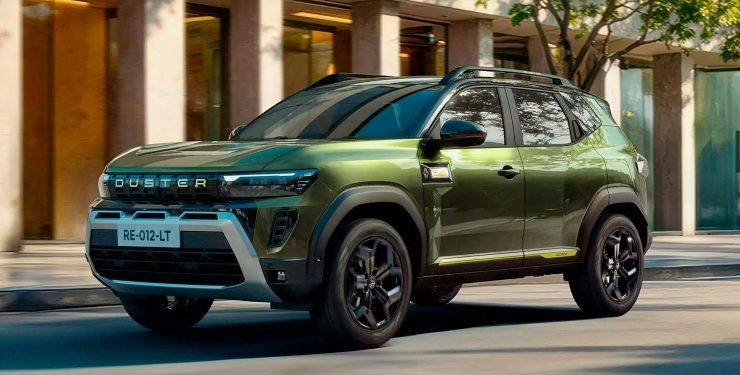
Vikraman V, Chief of Engineering, Renault India, stated, “It is a matter of pride for us to have partnered with one of the top-most engineering institutions of the country. We have developed the new Duster’s aerodynamics in collaboration with IIT Kanpur.” He added, “At 73 per cent, the score tells about the absolute conversation quality between occupants inside the Duster’s cabin. This high score is a result of the extensive development done inside the wind tunnel at IIT Kanpur.”
Vikraman continued, “With an SUV stance, getting this wind noise performance was a massive challenge, and that is why we had to take IIT Kanpur’s expertise in developing the Duster’s aerodynamics. The new Duster beats the competition in acoustic performance – rumbling noise, engine noise, and rough road noise – and among all these metrics, the absolute noise inside the cabin is the lowest in its segment.”
Improvements in aerodynamics
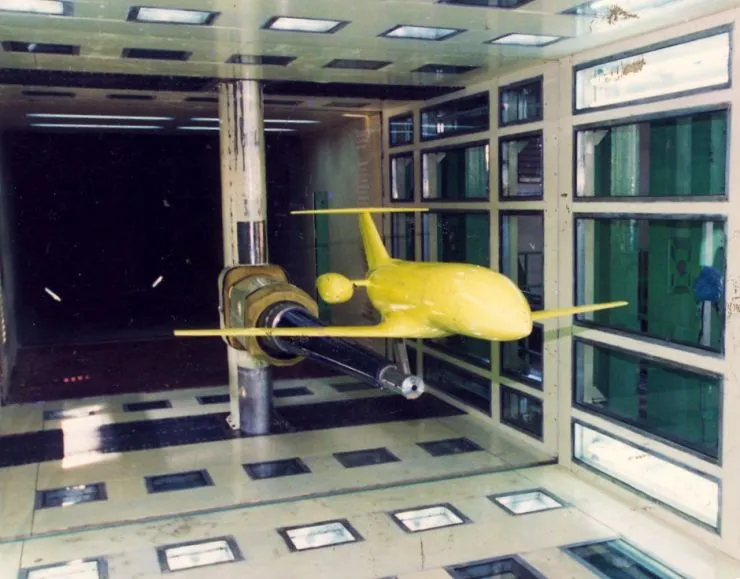
The Chief of Engineering also elaborated that Renault used a combination of wind tunnel testing and Computer-aided engineering (CAE) simulations to digitally engineer this mid-size SUV’s aerodynamics. As a result, the new Duster managed to achieve a 13 percent reduction in aerodynamic drag coefficient compared to the previous generation model.
The new Duster will offer significantly reduced wind noise inside the cabin and will also offer much improved stability at high speeds. Additionally, the efficiency and performance of this SUV have been tuned to make sure that it is one of the best in the mid-size SUV segment.
New Duster’s Suspension

What will make the new Renault Duster stand out will be its suspension setup. At the front, this SUV will be getting a fully independent MacPherson strut suspension, and the rear gets a semi-independent twist beam suspension. This particular setup is what differentiates the Duster from the rest of the rivals, including the Hyundai Creta, Maruti Suzuki Grand Vitara, Kia Seltos, Volkswagen Taigun, and others.
Renault has integrated a stabilizer bar inside the rear twist beam axle of the new Duster. As a result, this vehicle gets improved lateral support for the chassis and better handling stability during steering inputs at high speeds. This setup will also help the Duster respond quickly during cornering.
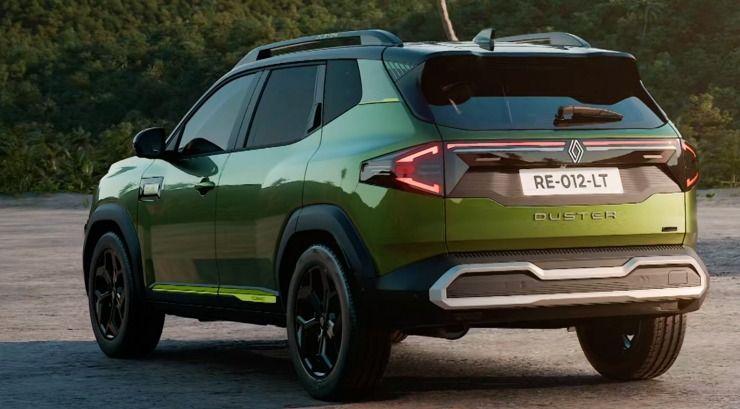
Other notable highlights of the upcoming Renault Duster include the use of MTV-CL (Multi Tuned Valve Technology with Concentric Land). This damper technology includes larger pistons inside the damper and offers improved control of vehicle motions. Additionally, this SUV has also been given high cornering stiffness tyres to reduce tyre slips during lateral loads.
Source

Comments are closed.