

75
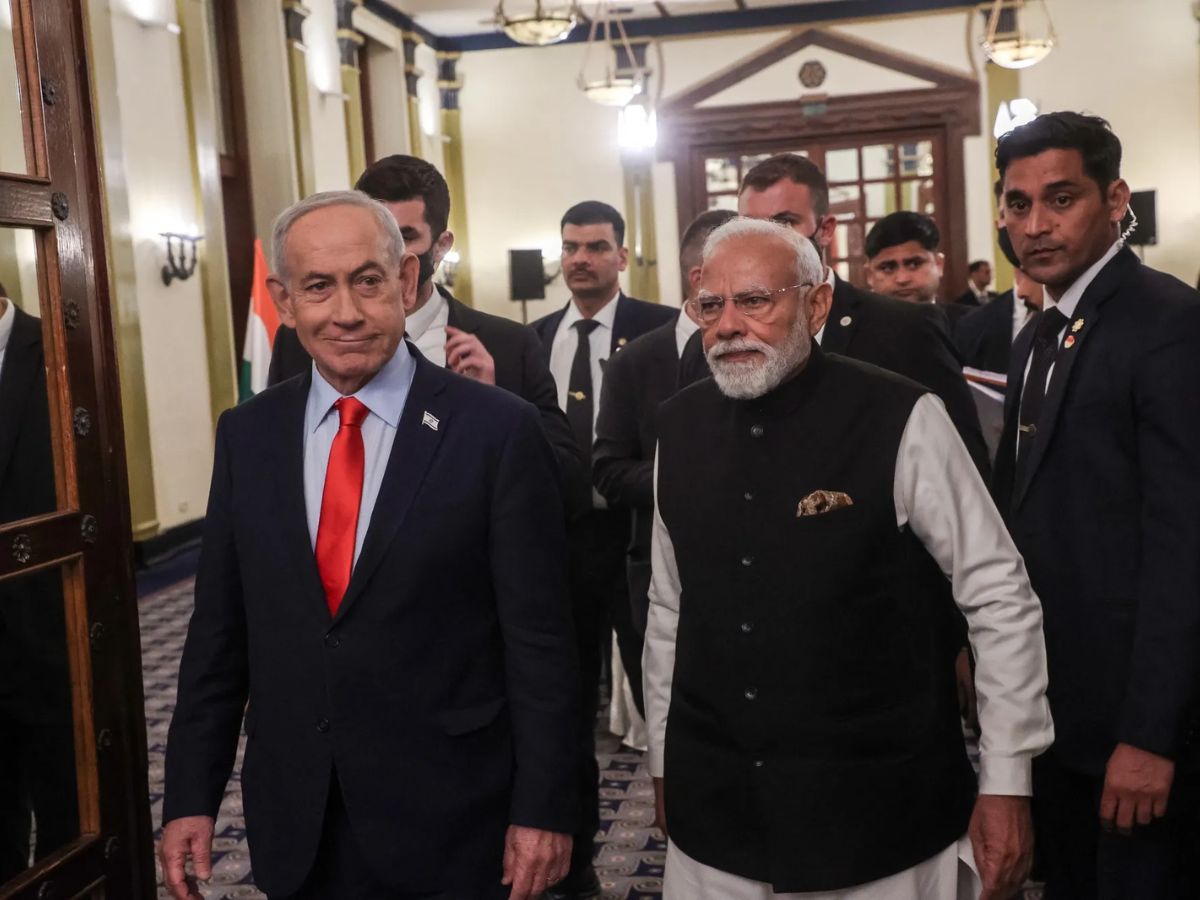
The western edge of the Indo-Pacific is being roiled by the battle between the Israel-US alliance and Iran. In past crises, Indian diplomacy would be conspicuous for its prescriptive tone and tenor. Not this time. India has taken a low key, almost under the radar approach to the present war. At the same time, it has been made clear that India stands with the US, its GCC partners and Israel in the conflict, which was launched the day after Prime Minister Narendra Modi made an internationally reported visit to Israel. The timing of the Israel visit showed that India stood with the alliance determined to ensure the removal of the clerical regime in Iran that has been in power since 1979. And that is the correct choice. The GCC countries are host to several million expats from India, who have shown their excellence in confronting and resolving tasks given to them by their employers. Unlike the Europeans and the US, India has refused to press the Panic button and arrange a withdrawal of its citizens from locations subjected to attacks by the clerical regime in Iran and its proxies. The calculation in the new offices housing the ministries whose heads are part of the Cabinet Committee on Security is that the active phase of the war would last 10-15 days at most, after which speedily normal operations would resume. Those opposed to the government in place since 2014 were hoping for a massive boost in petrol and petroproduct prices that would infuriate the public and lead them to the same road as their counterparts in Bangladesh and Nepal experienced. India has a Gen Z that can be counted in the hundreds of millions, but thus far the predictions of anti-government sources that there would be an upsurge in the streets has not come to pass. In view of the fact that for a long time, thousands of crores of rupees have accrued to the government because of petroproduct taxes. Now a part of that surplus needs to be trimmed in order to keep petro product prices stable for the Indian consumer.
India is not playing a kinetic role in the war, for there is no need for its intervention. What needs to be avoided by the US and in particular President Trump is to continue to talk about the need for him to have an active say in the selection of the new regime elements. Such comments are reminiscent of President George W. Bush in 2003 having a US citizen as the effective Head of Government in Iraq and an Iraqi only as the advisor of Paul Bremer, who expectedly made a hash of his assignment by his airs of superiority towards his Iraqi juniors. It was a new form of colonialism, and if it did not work in Iraq in 2003, it will not in Iran in 2026. Like the Iraqis, the Iranians are a proud, self-respecting people, aware of the millennia of history they could claim as their heritage. Those carrying a big stick, as President Trump does in the US military assets, need to speak softly, not loudly. The kinetic phase involving the battlefield will be followed by the more important stage, that of winning over the people of Iran to the coalition that will provide the catalyst for the collapse of the clerical regime. Such a war must not be lost in the very beginning as was the case in Iraq. Else fallen US servicemen would cross the numbers that are acceptable for the US public to endure.
The people of Iran are capable of the finest innovations, including in technology. The work of the Iranians now resident in the US and Europe bear this out. The kinetic phase needs to be followed by a phase led by the Iranians themselves, those who endured torment yet went in public against the clerical regime ruled by a Supreme Leader. What needs to be done is to have an elected, democratic regime where every branch of government is subjected to not just checks and balances from within, but from an alert and informed public in Iran. Such would be what not just India but people across the world would welcome.

Comments are closed.