
T20 World Cup 2026 Prize Money Breakdown: From Champions to Runner Ups to Group Stage Teams

As India and New Zealand get ready to face off in the ICC Men’s T20 World Cup 2026 final at the Narendra Modi Stadium in Ahmedabad, there is more than just the trophy at stake.
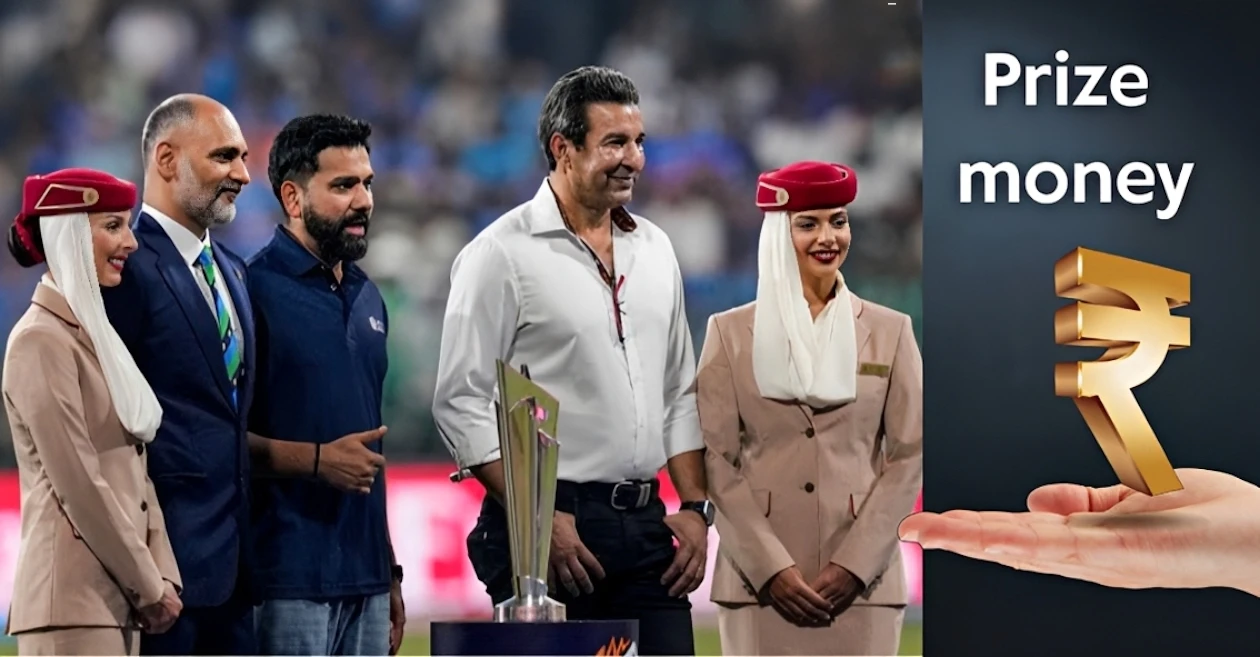
The International Cricket Council (ICC) has announced a massive prize pool for this year’s tournament, making it the most lucrative edition in T20 World Cup history. The total prize money stands at $13.5 million (around ₹120 crore), reflecting the growing global popularity and commercial success of T20 cricket. The champions will take home a stunning $3 million (approximately ₹27.5 crore), the highest prize ever awarded in the tournament.
Record prize pool highlights growing popularity of T20 cricket
This year’s prize pool represents a 20 percent increase compared to the 2024 edition, when the total prize money was $11.25 million. When India lifted the trophy in 2024, they received $2.45 million for their victory. That means the winners of the 2026 tournament will earn roughly $550,000 more than the previous champions.
The increase reflects the booming commercial appeal of T20 cricket. With record-breaking broadcasting deals, strong sponsorship partnerships, and massive global viewership, the shortest format of the game continues to expand its financial footprint. The tournament, co-hosted by India and Sri Lanka, has drawn huge audiences both in stadiums and online, further boosting its value.
The stakes in the final are therefore enormous. The team that wins the title will walk away with $3 million, while the runners-up will still earn a substantial $1.6 million (around ₹14.6 crore). The difference between winning and finishing second stands at $1.4 million, highlighting how significant the final match is not just for prestige but also financially.
Teams that reached the semi-finals have already secured a healthy reward. The four semi-finalists each receive $790,000 (around ₹7.2 crore) for making it to the last four of the competition.
Meanwhile, teams that progressed to the Super Eight stage but failed to reach the semi-finals – finishing between fifth and twelfth place – have each been awarded $380,000 (approximately ₹3.48 crore). This group includes several prominent teams such as Pakistan, Sri Lanka and the West Indies.
Pakistan’s earnings from the tournament provide a good example of how the prize structure works. Despite being eliminated in the Super Eight stage, they still managed to earn over $500,000 (about ₹4.6 crore). Their total included the base prize for reaching the second round along with additional bonuses earned from match victories earlier in the tournament.
Also READ: IND vs NZ – Michael Clarke predicts Player of the Match in T20 World Cup 2026 final
Financial rewards for every participating team
One of the notable features of the prize distribution is that all 20 teams participating in the tournament receive financial rewards, ensuring that even teams eliminated early still benefit from the competition’s commercial success.
Teams that finished between 13th and 20th place – those knocked out in the group stage – receive $250,000 (approximately ₹2.29 crore) each. This category includes some surprising early exits, including Australia, who failed to advance beyond the opening round.
In addition to the base prize money, the ICC has also introduced performance-based bonuses for match wins during the group and Super Eight stages. Every victory in these rounds earns teams an additional $31,154 (around ₹28 lakh). This system ensures that even teams with little chance of reaching the knockout stages remain motivated to compete for every match.
For instance, the United Arab Emirates (UAE), who finished fourth in their group, earned a base payment along with a bonus for their win against Canada, bringing their total earnings to over $140,000 from the tournament.
The prize money increase is also important for the development of global cricket. For Associate nations and smaller cricket boards, these earnings provide valuable financial support that can be invested into infrastructure, grassroots programs, and player development.
The surge in prize money has been made possible largely due to the tournament’s enormous popularity. According to ICC data, the 2026 T20 World Cup has already crossed 10 billion video views across digital and social media platforms, and it is expected to surpass the record engagement levels set during the 2024 edition.
| Round reached | Prize money |
|---|---|
| Winner | $3 million (approx. ₹27.48 crore) |
| Runner-up | $1.6 million (approx. ₹14.65 crore) |
| Semifinals (losing teams) | $790,000 (approx. ₹7.24 crore) each |
| Super 8 (eliminated teams) | $380,000 (approx.₹3.48 crore) each |
| Group stage (eliminated teams) | $250,000 (approx. ₹2.29 crore) each |
Several matches have attracted extraordinary interest from fans. India’s Super Eight clash against the West Indies reportedly generated more than 500 million digital viewers, while even non-marquee matches drew strong attendance inside stadiums.
All of this sets the stage for a dramatic finale in Ahmedabad. As India and New Zealand step onto the fieldthe prize at stake is not just the T20 World Cup trophy but also a $3 million payday and a place in cricketing history.
Also READ: Ravichandran Ashwin picks a key player for India in the T20 World Cup 2026 final against New Zealand

Comments are closed.