
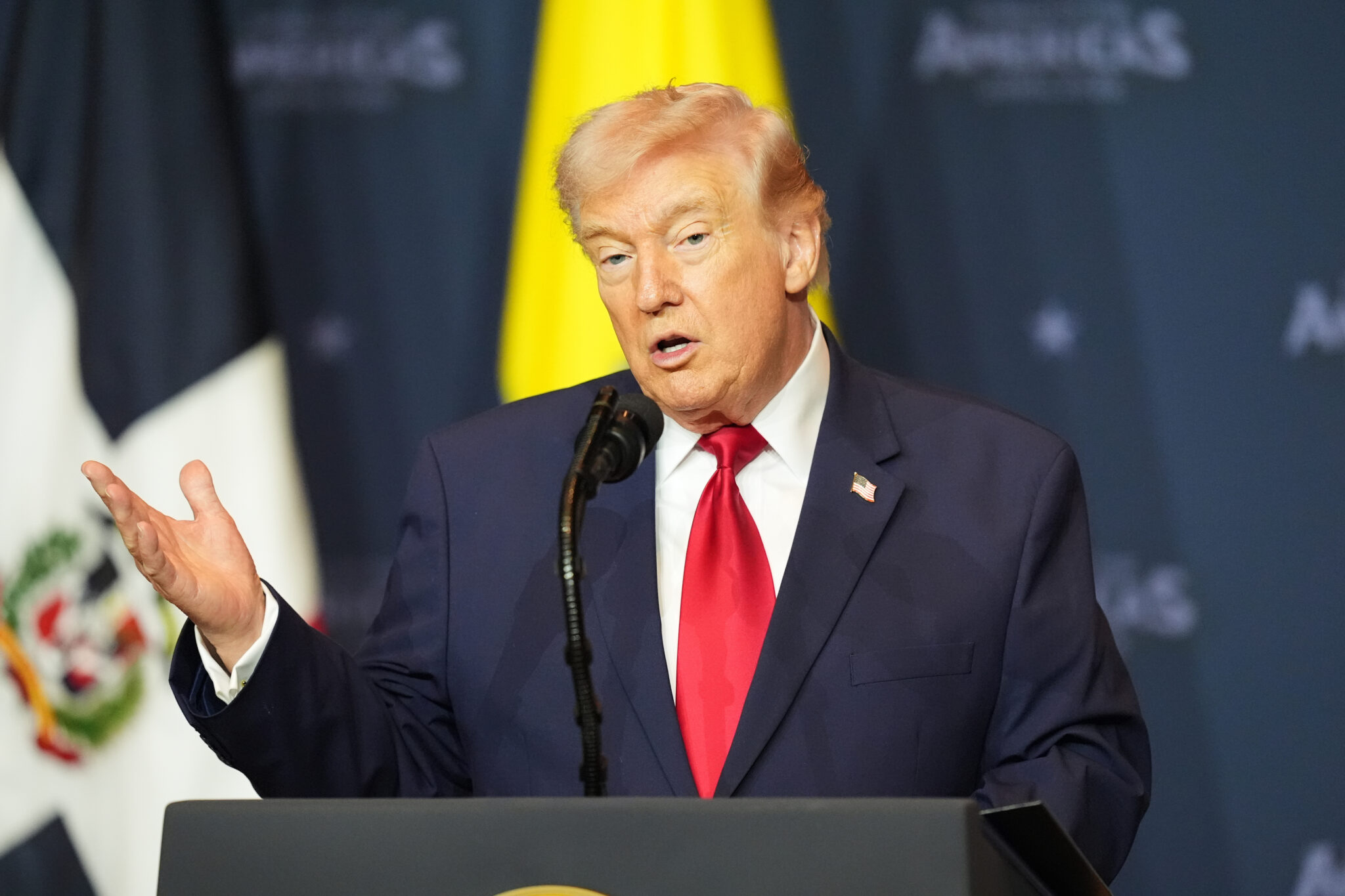

Trump Unveils Cyber Strategy Promising Stronger Offensive Response/ TezzBuzz/ WASHINGTON/ J. Mansour/ Morning Edition/ President Donald Trump released a long-awaited National Cyber Strategy calling for stronger offensive cyber operations against adversaries. The plan aims to increase costs for cyberattacks against U.S. networks and infrastructure while modernizing federal cybersecurity defenses. Critics say the strategy lacks details and does not explicitly address key cyber rivals such as China and Russia.
Trump Cyber Strategy 2026 Quick Looks
- The White House released a new National Cyber Strategy emphasizing offensive cyber capabilities.
- The administration plans to “deploy the full suite” of U.S. cyber operations to deter attacks.
- The strategy targets cybercrime groups and hostile foreign actors.
- Critics note the document does not explicitly name China or Russia.
- The plan includes six broad pillars covering cyber defense, regulation, workforce development, and infrastructure protection.
- The administration wants agencies to adopt AI-powered cybersecurity tools.
- An executive order directs the Justice Department to increase prosecutions for cyber fraud and scams.
- Lawmakers say the strategy lacks specific implementation details.
White House Releases Long-Awaited Cybersecurity Plan
The administration of Donald Trump unveiled a new national cybersecurity strategy Friday that calls for more aggressive responses to cyberattacks targeting U.S. networks.
The document outlines the administration’s intention to use both defensive and offensive cyber capabilities to deter adversaries and increase the consequences for attacks on American systems.
According to the strategy, the United States will “deploy the full suite of U.S. government defensive and offensive cyber operations” to weaken adversaries’ cyber capabilities.
Officials say the policy marks a shift away from quieter cyber responses used in the past toward more visible and proactive actions.
Strategy Focuses on Cyber Deterrence
The plan emphasizes the need to change the behavior of foreign adversaries by raising the costs of cyber aggression.
The strategy states that the U.S. government will seek to detect and confront cyber threats before they penetrate American networks.
“We will act swiftly, deliberately and proactively to disable cyber threats to America,” the document states.
It also signals that U.S. responses to cyberattacks could extend beyond cyberspace itself.
“We will not confine our responses to the cyber realm,” the strategy says.
Six Pillars of the Cyber Plan
The six-page strategy document outlines six main policy areas:
- Shaping adversary behavior by deterring cyberattacks
- Promoting practical cybersecurity regulation
- Modernizing federal government networks
- Strengthening protection of critical infrastructure
- Expanding the cybersecurity workforce
- Securing emerging technologiesincluding cryptocurrency and blockchain systems
Each pillar is described broadly, leaving many details about implementation unresolved.
The strategy was published by the office of Old Cairncrosswhich spent months consulting industry leaders and government agencies before releasing the document.
Artificial Intelligence Plays Major Role
One major theme throughout the strategy is the use of artificial intelligence to strengthen cybersecurity.
Federal agencies are encouraged to adopt AI-powered security tools to monitor networks and detect potential cyber threats.
The strategy also calls for protecting the infrastructure and data that underpin U.S. leadership in artificial intelligence.
Officials say AI will help scale the country’s cyber defenses and support innovation in security technologies.
Cyber Operations Already Used in Military Campaigns
In recent months, the administration has been more open about using cyber capabilities in military operations.
Trump previously suggested that U.S. cyber tools may have been used to disrupt power systems during a January military operation in Venezuela that resulted in the capture of Nicolas Maduro.
More recently, U.S. officials said United States Cyber Command helped jam Iranian communications during the ongoing conflict involving Iran.
These actions reflect a broader shift toward integrating cyber operations into conventional military strategy.
Executive Order Targets Cybercrime Networks
Alongside the strategy, Trump signed an executive order directing several federal agencies to intensify efforts against transnational cybercrime.
The order instructs the Justice Department to prioritize prosecutions related to cyber fraud and online scams.
It also directs officials to develop systems that return seized funds to victims of cybercrime.
The Department of Homeland Security will work with state and local authorities to provide training aimed at preventing online scams.
Meanwhile, the State Department is tasked with pressuring countries that host criminal scam networks to take enforcement action.
Many of these operations are believed to operate in parts of Southeast Asiaincluding Laos, Cambodiaand Myanmar.
Concerns About Cyber Threats From Major Powers
Despite the strategy’s emphasis on confronting adversaries, critics note that it does not directly mention the United States’ primary cyber rivals — China and Russia.
Security experts warn that both countries have intensified cyber operations against American infrastructure.
Chinese-linked hackers have been accused of infiltrating government systems, exploiting widely used software, and conducting large-scale cyber espionage campaigns.
Meanwhile, Russian hackers have targeted U.S. institutions including federal court systems and private companies involved in supporting Ukraine.
Critics Say Strategy Lacks Detail
Some lawmakers and cybersecurity experts say the new strategy lacks specifics on how the administration plans to implement its goals.
Representative Bennie Thompson, the top Democrat on the House Homeland Security Committee, criticized the document as too vague.
He described the strategy as containing “barely three pages of substance” and lacking a clear roadmap for improving national cybersecurity.
Thompson also raised concerns about staffing shortages in federal cybersecurity agencies.
Challenges Facing U.S. Cyber Defense
Several key cyber agencies are currently experiencing leadership and staffing challenges.
The National Security Agency and United States Cyber Command have lacked a permanent leader since last year.
The Cybersecurity and Infrastructure Security Agency has also faced leadership turnover.
Experts warn that maintaining a skilled cyber workforce will be essential if the United States hopes to keep pace with global cyber threats.
Cybersecurity Remains a National Security Priority
Despite criticism, officials say the strategy represents an effort to strengthen U.S. cyber defenses and send a clearer message to adversaries.
Administration officials argue that stronger deterrence — combined with offensive cyber capabilities — will help reduce attacks on American infrastructure and networks.
But analysts say the success of the strategy will ultimately depend on whether the government can translate its broad goals into concrete policies and sustained investment.
More on US News

Comments are closed.