
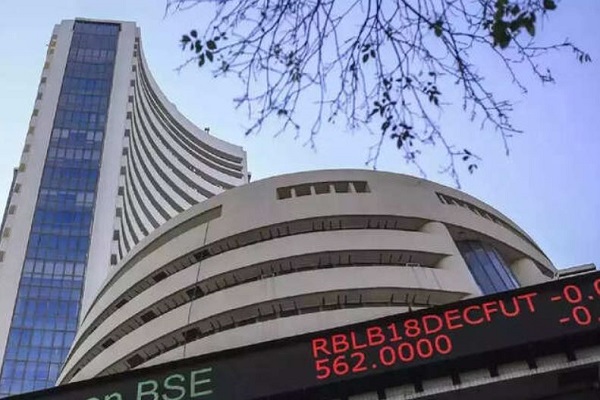

Mumbai, March 9. The fire raging in the battlefield of the Middle East is no longer limited to the borders only, but its heat has reached the coffers of stock markets around the world. The beginning of the week was very weak for the Indian stock market. A sharp fall was seen in Nifty 50 and Sensex in the initial trading session on Monday morning. Nifty 50 fell by about 658 points (2.69%) and was seen trading at the level of 23,792.30. A big fall was also recorded in the Sensex and it fell by about 2,161 points (2.74%) and reached the level of 76,757.51.
As soon as the market opened, most of the sectors appeared in the red. Maximum pressure was seen in shares of IT, Banking and Auto sectors. Weak signals from global markets and profit-booking by investors are being considered as the main reasons for this decline. Experts say that the direction of the market in the coming sessions will depend on global cues, activities of foreign investors and economic data.
Even American markets could not escape this fire
This fire of war has scorched even America, the world’s largest economy. Heavy selling was seen in the American markets on the last day of last week. ‘Dow Futures’ fell by 1120 points, while ‘Dow Jones’ closed with a loss of 453 points. Apart from this, ‘Nasdaq’ (NASDAQ) and ‘S&P 500’ with technical stocks also collapsed with heavy fall. This weakness of the American market is now affecting the markets of the entire world.
Outcry in global markets: devastation from Japan to Hong Kong
The scene seen in the Asian markets at the beginning of the week has given investors sleepless nights. The worst condition is of Japan’s stock market, where ‘Nikkei’ index crashed by more than 4000 points i.e. about 7.40%. This decline is so huge that it has raised alarm bells at the global level. Similarly, Hong Kong’s ‘HangSeng’ has also slipped by more than 800 points, while South Korea’s ‘KOSPI’ is trading with a huge fall of 440 points. These very bad signals coming from foreign markets are no less than a big shock for the Indian market.

Comments are closed.