
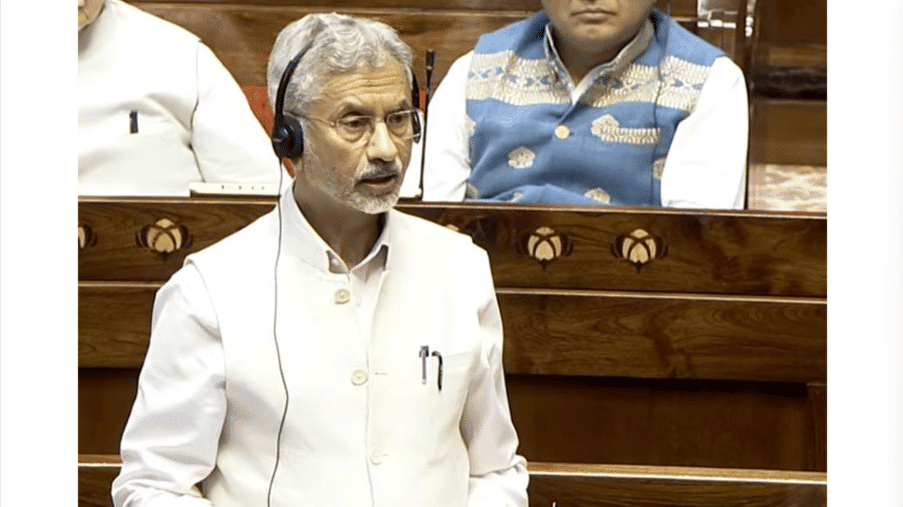

Opposition leaders in India have demanded a full parliamentary debate on the escalating West Asia crisis after External Affairs Minister Subrahmanyam Jaishankar delivered a statement in Parliament on Monday.
Members of the opposition protested both inside and outside Parliament, arguing that the situation requires a detailed discussion rather than a one-sided address.
Leaders from the INDIA bloc, including Rahul Gandhi and Mallikarjun Khargegathered outside the Parliament complex carrying banners that read: “Gulf burning, oil shock. Indians stranded. India needs leadership — not silence.”
The protest followed Jaishankar’s prepared statement on the growing tensions in West Asia.
Opposition Raises Concerns Over Energy Security
Opposition leaders argued that the ongoing conflict could significantly impact India’s economy and energy security.
Congress MP K.C. Venugopal stated that the crisis is already affecting citizens, pointing to rising LPG prices and increasing fuel costs.
According to Venugopal, the government should allow a full discussion in Parliament because similar debates have taken place during international crises in the past.
Senior Congress leader Shashi Tharoor also expressed concern about the economic consequences of the conflict. He noted that global oil prices had crossed $100 per barrel and warned that gas supplies from Qatar had been disrupted.
He added that industries in India could face supply challenges and that rising fuel prices could affect households across the country.
Criticism of US and Israel’s Actions
Congress MP Karti Chidambaram strongly criticised the military strikes carried out by the United States and Israel against Iran.
He described the attack as “unprovoked” and said conflicts between nations should be resolved through dialogue and diplomacy rather than warfare.
Other opposition leaders also expressed concern about the humanitarian impact of the conflict and the potential consequences for global stability.
Walkout in Parliament
The opposition staged protests during Jaishankar’s speech in both the Lok Sabha and the Rajya Sabha.
According to Congress MP Jairam Rameshthe walkout occurred because the statement was delivered as a “suo moto” address, which does not allow members to ask questions or seek clarifications.
Opposition parties argued that they had requested an immediate debate where members could raise concerns and receive answers from the government.
Government Response
The government accused opposition MPs of disrupting parliamentary proceedings.
During the Lok Sabha session, BJP MP Jagdambika Palwho was chairing the House in the absence of Speaker About Birlasaid the government had already addressed several issues raised by the opposition.
Parliamentary Affairs Minister Kiren Rijiju also criticised the protests and urged members to follow parliamentary norms.
The Lok Sabha proceedings were later adjourned until 3 pm amid continued protests.
Jaishankar Highlights Government Measures
In his statement, Jaishankar said that the government is closely monitoring developments in West Asia.
He stated that Prime Minister Narendra Modi is regularly reviewing the situation and that multiple ministries are coordinating responses to protect Indian interests and citizens in the region.
Jaishankar also noted that India had previously issued a statement urging restraint and calling for diplomatic efforts to de-escalate tensions.
Background: Escalation in West Asia
The crisis intensified on February 28 after joint military strikes by the United States and Israel targeted Iran. The attacks reportedly killed several senior leaders, including Iran’s Supreme Leader Ali Khamenei.
Since then, the conflict has expanded across the region, with attacks reported on oil depots and water desalination facilities.
Analysts warn that the escalating situation could lead to higher global oil prices and disruptions in energy supply chains, affecting countries that rely heavily on imported fuel, including India.
Conclusion
The debate over how India should respond to the West Asia crisis continues to dominate parliamentary proceedings. While the government maintains that it is closely monitoring the situation, opposition leaders are pressing for a comprehensive debate to address concerns related to energy security, economic stability, and the safety of Indian citizens abroad.

Comments are closed.