
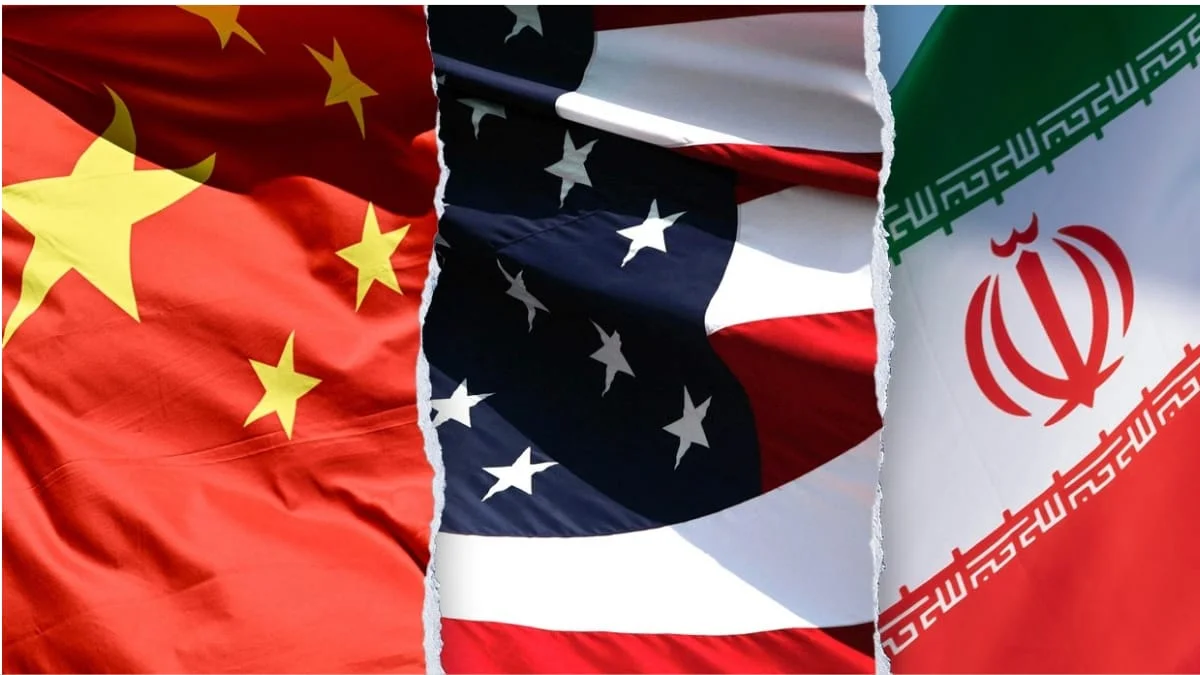
How a United States-Iran war could reshape China’s economic stability energy security, and global financial strategy

The prospect of a direct military confrontation between the United States and the Islamic Republic of Iran represents one of the most consequential geopolitical risks for the global economy and for China in particular. As the world’s largest importer of crude oil and a central actor in global manufacturing supply chains, China’s financial stability remains deeply intertwined with energy security, maritime trade routes and the broader geopolitical architecture of the Middle East. Any large-scale conflict involving Iran would not merely represent a regional security crisis but would generate cascading economic and legal consequences that would reverberate across China’s industrial system, financial markets, and diplomatic strategy.
At the centre of the potential disruption lies the global oil market. China imports more crude oil than any other country, and a substantial share of those imports originates from the Middle East. Iran itself represents a particularly significant supplier to China due to discounted sales that have emerged under the complex framework of international sanctions imposed primarily by the United States. Although Iranian oil exports are constrained by United States sanctions legislation such as the Iran Sanctions Act and subsequent executive orders, China has remained one of the principal buyers of Iranian crude through indirect trading arrangements and intermediated shipping networks. A war involving the United States and Iran would therefore have immediate consequences for Chinese energy procurement, not only because of direct supply risks but also because global benchmark prices would likely surge dramatically.
Oil price volatility represents the most immediate financial threat to China’s economy. When global oil prices rise sharply, the cost structure of Chinese manufacturing increases because transportation logistics, petrochemical inputs and industrial energy consumption become more expensive. Given that China remains the world’s largest manufacturing economy and a central hub in global supply chains, any sustained increase in energy prices would translate into higher production costs for industries ranging from steel and aluminium to electronics and automobile manufacturing. The result would likely be a combination of inflationary pressure within China and reduced competitiveness in export markets.
The strategic vulnerability becomes even more pronounced when considering the geographical chokepoint of the Strait of Hormuz. Approximately one fifth of the world’s traded oil passes through this narrow maritime corridor connecting the Persian Gulf with global shipping lanes. Any military escalation involving Iran carries the risk that shipping through the strait could be disrupted or temporarily blocked. For China, which relies heavily on maritime energy transport, a closure or partial disruption of the Strait of Hormuz would create immediate supply chain instability. Shipping insurance premiums would rise sharply, tanker routes would become more expensive and energy markets would experience severe volatility.
The legal implications of such a disruption are equally significant. International maritime law under the United Nations Convention on the Law of the Sea recognises the right of transit passage through international straits used for navigation. However, in wartime or during severe security crises, the practical enforcement of these legal norms becomes uncertain. If naval confrontations were to occur in the Persian Gulf region, shipping companies might suspend operations regardless of formal legal protections. China would therefore face the challenge of balancing diplomatic engagement with practical contingency planning to secure alternative energy routes.
Beyond the oil market itself, a United States Iran conflict would affect China’s financial interests through its extensive economic engagement with the Middle East. Over the past two decades China has invested heavily in infrastructure, telecommunications and energy projects across the region under the broader framework of the Belt and Road Initiative. Chinese state owned enterprises operate ports, railways, industrial zones and construction projects in several Middle Eastern countries. Military escalation could disrupt these investments, delay projects and expose Chinese companies to financial losses.
China’s policy response to rising oil prices would likely involve a combination of domestic regulatory mechanisms and international energy diplomacy. Beijing maintains large strategic petroleum reserves designed to stabilise domestic supply during global disruptions. These reserves allow the Chinese government to release stored crude oil into the market in order to moderate price spikes and ensure continued industrial production. In addition, China has increasingly diversified its energy imports by expanding oil purchases from Russia, Central Asia and Africa while simultaneously investing in renewable energy and electrification of transportation.
The geopolitical dimension of China’s response is shaped by its long standing foreign policy principle of opposing the use of force in international relations and advocating negotiated political solutions. Beijing consistently emphasises the importance of maintaining stability in the Middle East because regional conflict threatens both global energy markets and the safety of Chinese citizens working abroad. Diplomatic engagement with both Iran and Gulf states has therefore become an essential component of China’s broader energy security strategy.
Another dimension that cannot be overlooked is the impact on global financial markets. Oil price spikes historically trigger broader economic consequences including currency volatility, stock market instability and shifts in investment flows. As the world’s second largest economy and a major holder of foreign exchange reserves, China must carefully manage these shocks to protect its domestic financial system. A sustained surge in energy prices could also influence China’s monetary policy decisions and fiscal planning.
Ultimately the economic consequences of a United States Iran war would extend far beyond the battlefield. For China the conflict would represent a complex challenge involving energy security, maritime law, financial stability and geopolitical diplomacy. The country’s response would likely combine pragmatic economic management with sustained diplomatic efforts aimed at preventing further escalation. In an era where global economic networks are deeply interconnected, the financial repercussions of regional conflicts demonstrate how strategic stability in the Middle East remains essential not only for regional actors but for the functioning of the entire international economic system.

Comments are closed.