
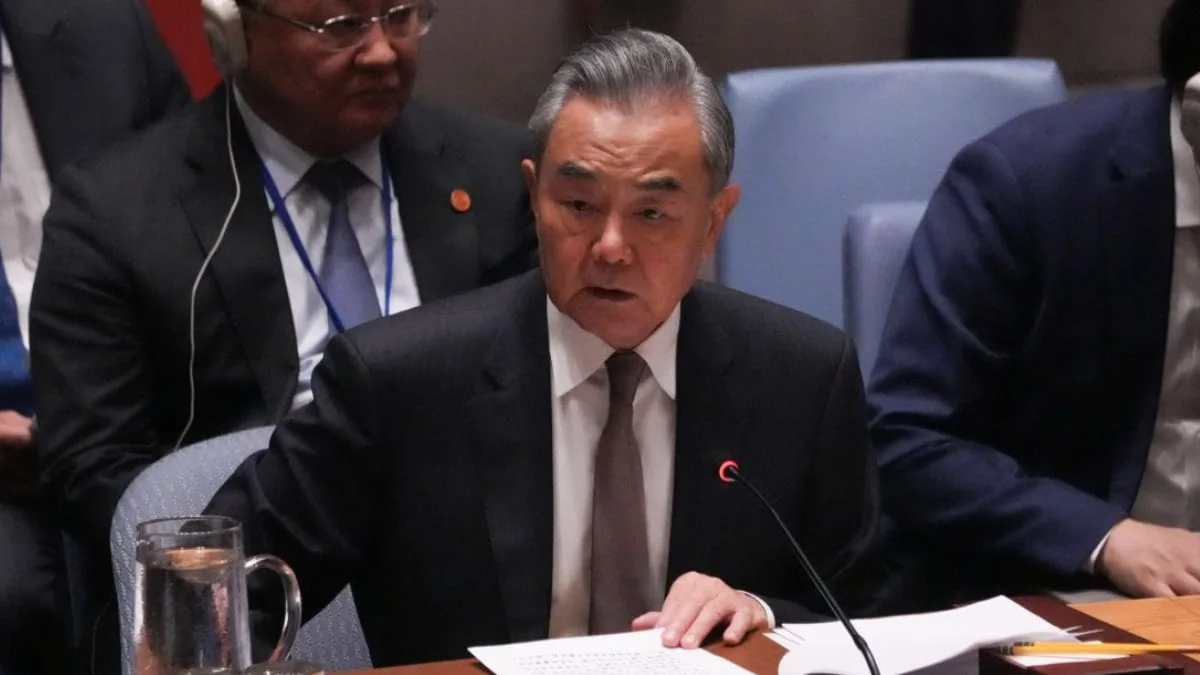
Why China’s foreign minister is calling leaders of Pakistan, Qatar, and regional states carries major geopolitical and legal significance

In periods of escalating geopolitical tension, diplomatic communication between major powers and strategically positioned regional states often becomes one of the most consequential yet least publicly understood instruments of international relations. When China’s foreign minister engages in direct telephone diplomacy with the prime ministers and foreign ministers of countries such as Pakistan and Qatar, the action is far more than routine diplomatic courtesy. Such calls represent deliberate strategic signalling within the framework of international law, crisis management, and geopolitical alignment. They illustrate how states use diplomatic channels to shape the legal narrative surrounding conflicts, manage economic vulnerabilities, and position themselves within evolving regional security architectures.
China’s diplomatic engagement with Pakistan and Qatar must be understood within the broader framework of the United Nations Charter and contemporary international legal principles governing the use of force and the peaceful settlement of disputes. Article 2 of the Charter establishes the obligation of states to resolve international disputes through peaceful means, while Article 33 explicitly encourages negotiation, mediation and diplomatic consultation as mechanisms to prevent escalation. In this context, telephone diplomacy between foreign ministers and heads of government functions as a practical implementation of these principles. When China’s foreign minister communicates with counterparts across the Middle East and South Asia during periods of crisis, Beijing is effectively positioning itself as a diplomatic actor seeking to stabilise regional dynamics and prevent further escalation.
The relevance of Pakistan within this diplomatic network is rooted in both geography and strategic partnership. Pakistan occupies a pivotal location linking South Asia, Central Asia and the Middle East, and it shares a long border with Iran through the province of Balochistan. Any conflict involving Iran has immediate security implications for Pakistan because refugee flows, cross border militant activity and energy supply disruptions could directly affect Pakistani territory. China and Pakistan maintain what both governments describe as an all weather strategic cooperative partnership, anchored by the China Pakistan Economic Corridor which forms a central component of the Belt and Road Initiative. Consequently, when the Chinese foreign minister consults with Pakistani leadership during regional crises, the objective is not merely diplomatic courtesy but coordination on security risks that could affect infrastructure projects, energy pipelines and trade routes connecting Western China to the Arabian Sea.
Qatar represents a different but equally critical dimension of China’s regional diplomacy. As one of the world’s largest exporters of liquefied natural gas and a central player in Gulf diplomacy, Qatar occupies a strategic position in global energy markets and Middle Eastern mediation efforts. The country has frequently served as an intermediary in regional negotiations, hosting diplomatic talks and facilitating communication between rival actors. China’s outreach to Qatar during times of regional tension reflects Beijing’s recognition that energy security and diplomatic mediation are closely intertwined. China is among the largest importers of Qatari liquefied natural gas, and long term energy contracts between Chinese companies and Qatari suppliers form a significant component of China’s energy diversification strategy.
Beyond bilateral relationships, such diplomatic calls also serve a broader legal and geopolitical function. In the event of escalating conflict involving Iran or other regional actors, the international community inevitably debates questions surrounding the legality of military action under international law. States frequently seek to shape the narrative regarding whether the use of force complies with the principles of self defence under Article 51 of the United Nations Charter or whether it constitutes unlawful aggression. By engaging in diplomatic consultations with multiple regional governments, China positions itself within the emerging legal discourse and reinforces its long standing policy emphasis on sovereignty, territorial integrity and opposition to unilateral military intervention.
Another dimension of this diplomatic engagement relates to the protection of economic interests and global supply chains. The Middle East remains a crucial source of energy resources for China and an important corridor for maritime trade routes connecting Asia with Europe and Africa. Conflicts in the region often lead to disruptions in shipping lanes, volatility in oil and gas prices and instability in financial markets. Through proactive communication with key regional partners such as Pakistan and Qatar, China seeks to anticipate potential disruptions and coordinate responses that safeguard energy flows and commercial interests.
The calls also demonstrate the increasing role of China as a diplomatic actor within Middle Eastern affairs. Historically the region was dominated by Western diplomatic influence, particularly by the United States and European powers. However, China’s expanding economic presence and its emphasis on non intervention have gradually positioned it as an alternative diplomatic interlocutor capable of engaging with multiple sides of regional disputes. Beijing’s facilitation of the rapprochement between Saudi Arabia and Iran in 2023 illustrated the potential of this approach, and ongoing diplomatic engagement with regional leaders reflects an effort to consolidate that role.
Ultimately the significance of China’s foreign minister calling the leaders of Pakistan, Qatar and other regional states lies in the intersection of law, diplomacy and strategic interest. These conversations are not symbolic gestures but carefully calibrated elements of crisis diplomacy designed to manage geopolitical risk, protect economic interests and reinforce China’s position within the evolving architecture of global governance. In an international system increasingly characterised by multipolar competition and legal contestation, the quiet mechanisms of diplomatic communication often prove as consequential as the more visible actions of military or economic power.

Comments are closed.