
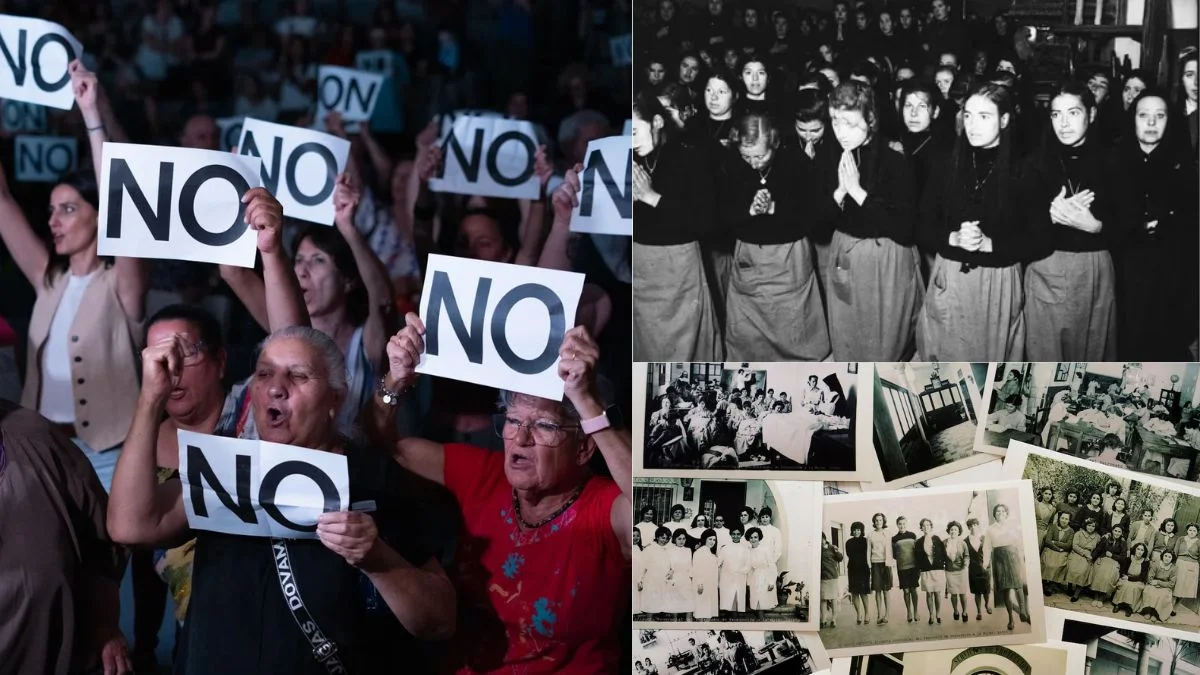

Spain’s government is set to formally pardon 53 women who were imprisoned as teenagers during the dictatorship of Francisco Francorecognising them as victims of repression carried out through state institutions that enforced strict moral and gender norms under the authoritarian regime. The move is intended to acknowledge that the women were subjected to punitive measures rooted in ideological and gender-based repression during the Franco era.
The women had been detained by the Board for the Protection of Women (Patronato de Protección a la Mujer), a network of reform institutions largely operated by Catholic religious orders. Authorities used these centres to confine girls and young women considered “fallen” or at risk of moral deviation, even when they had not committed criminal offences. Historians say the system functioned as a mechanism of social control that targeted female behaviour and reinforced strict social norms.
Spain’s Ministry of Democratic Memory said the women will be officially recognised as victims of Francoist repression during an upcoming ceremony. According to the ministry, any administrative or legal sanctions imposed on them will be declared null and void because they resulted from repression and violence carried out for political, ideological or gender-based reasons during the dictatorship.
The Board for the Protection of Women was originally established in 1902 to combat prostitution. However, its mandate expanded significantly after the end of the Spanish Civil War in 1939. By 1941, the institution had been strengthened under the Franco regime to enforce strict moral standards influenced by the teachings of the Catholic Church. Girls and young women could be detained for behaviour authorities considered socially inappropriate or morally unacceptable.
The institutions were overseen by Carmen PoloFranco’s wife, and were run through a network of reformatories managed by religious congregations. Historical accounts indicate that many girls were sent to the centres after being reported by relatives, neighbours or local authorities. Research suggests that thousands of women passed through these facilities, where they were often subjected to strict discipline, forced labour and programmes aimed at moral re-education.
The Ministry of Democratic Memory launched an investigation into the board’s operations as part of Spain’s broader efforts to address historical injustices linked to the dictatorship. Officials say around 1,600 testimonies have been submitted by women who passed through the institutions, highlighting the scale of the system and its lasting impact on survivors.
The pardons form part of Spain’s wider policy framework aimed at confronting abuses committed during the Franco dictatorship and recognising victims of political repression. While many survivors and advocacy groups view the measure as an important step toward acknowledgement, some continue to call for further investigations, accountability and reparations for those affected by the Franco-era institutions.

Comments are closed.