
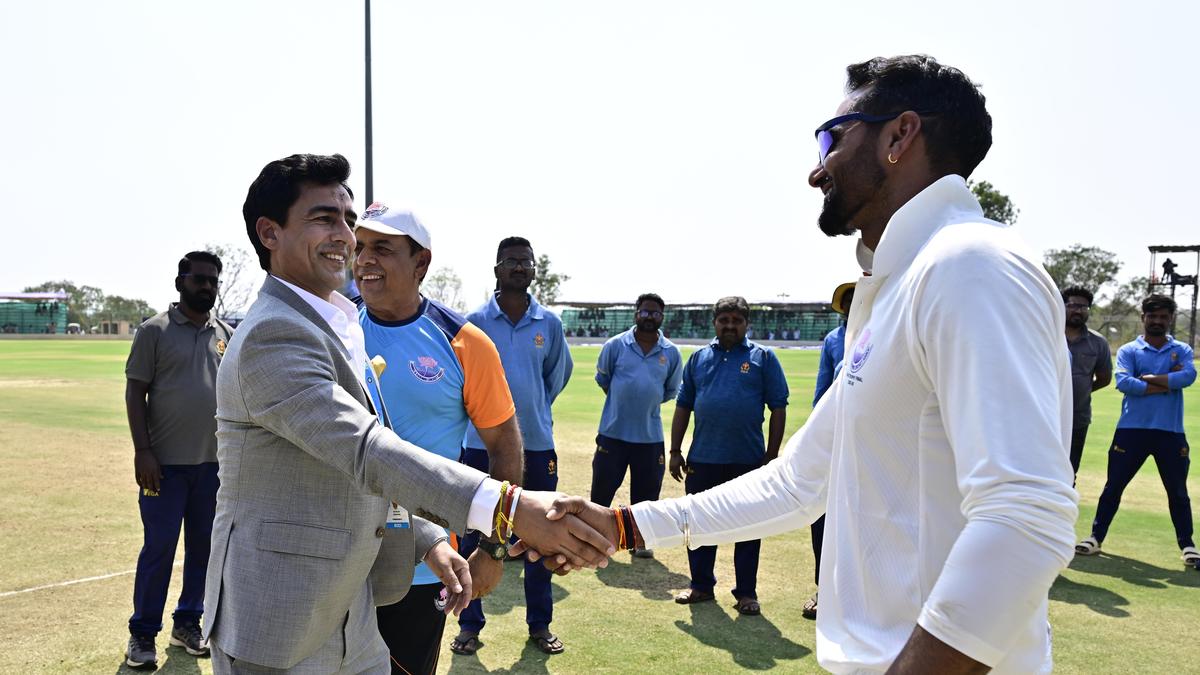
‘An environment where performance becomes the only currency’ – Mithun Manhas on his vision for J&K in Ranji Trophy

Five years ago, when Mithun Manhas returned home as part of the three-member sub-committee appointed by the Board of Control for Cricket in India (BCCI), he knew sentiment alone wouldn’t rebuild cricket in Jammu and Kashmir.
A former captain of the State side and a seasoned First-Class cricketer, Manhas had seen both the promise and the pitfalls of the system. The team had reached the Ranji Trophy quarterfinals a year earlier, but the COVID-19 pandemic had stalled momentum. Infrastructure was weak. Pathways were unclear. Morale was fragile.
“The vision was simple,” Manhas tells Sports stars. “Put the players first. If they need something, give it to them. Create an environment where performance becomes the only currency.”
Five years on, that philosophy has culminated in Jammu and Kashmir clinching its maiden Ranji Trophy title. “They’ve made us proud,” Manhas, now the president of the BCCI, says. “Back home, thousands of boys and girls are watching them. They are heroes now. They’ve already changed the mindset.”
From promise to process
Since making its Ranji Trophy debut in 1959-60, Jammu and Kashmir was rarely viewed as a heavyweight. There were flashes, including a knockout qualification in 2013-14 and another quarterfinal run in 2019-20 under mentor Irfan Pathan. However, consistency eluded the side.
When Manhas returned in 2021, the reality was stark. “There was nothing,” he recalls. “Even the square was more of a formality. Wickets were not up to the mark. Structurally, we had to start from scratch.”
During one of his visits to the Jammu Kashmir Cricket Association office, soon after taking charge, Manhas met Umran Malik, who had come looking for cricket balls. “He was already an IPL player by then, so I was surprised to see that he had to struggle to get some basic stuff. We got the office opened and provided him with the balls to practise,” Manhas says.
With Brigadier (retd.) Anil Gupta handling administration and strong backing from then BCCI secretary Jay Shah, the rebuilding began in earnest.
Manhas is candid about Shah’s role. “He was the first BCCI secretary to visit JKCA after its affiliation in 1957. That visit changed things. He spoke to players, saw the facilities, understood the gaps. After that, whenever we needed something, support was there.”
But financial backing alone doesn’t build a cricketing culture.
Also read | Irfan Pathan: We were building a J&K team, not a Jammu team or a Kashmir team
The talent hunt that changed everything
The first major step was launching a statewide talent hunt in April 2022 — something that had never been executed systematically before. During his stint with J&K, Pathan had started identifying players from the Jammu and Kashmir regions, but things went haywire after his exit and during COVID.
So, it was a Herculean task.
“We realised that we had to go district by district, village by village,” Manhas explains. “Earlier, there were clubs, but many were in dispute. Beyond that, there was no real structure.”
Coaches were sent across districts. Camps were organised for Under-16s first, gradually expanding to seniors and women’s cricket. Simultaneously, investment was made in education and certification — from just a handful of Level I and II coaches to more than 40 certified coaches today, along with physiotherapists and trainers.
“That ecosystem had to be created,” Manhas says. “Talent was always there. Structure wasn’t.”
The results began to show. Players started emerging not just from Jammu or Srinagar, but from Rajouri, Poonch and the Chenab Valley — areas that rarely featured in selection conversations before.
Preparing for India, not just J&K
Exposure was the next frontier.
One of the most significant technical decisions was introducing red-soil pitches at the GGM Science College ground in Jammu. Traditionally accustomed to local turf wickets, players often struggled on red-soil surfaces common in western and southern India. “We didn’t want our boys to feel alien when they travelled,” Manhas says. “So, we imported red soil from Mumbai.”
Today, the square includes both red-soil and black-soil wickets, allowing players to prepare for varied conditions. Teams now reach venues early to acclimatise, regularly compete in tournaments like the Buchi Babu Invitational in Chennai, and use appropriate match balls — Kookaburra for white-ball formats, Test balls for red-ball cricket.
“Our focus shifted from just practice to match exposure. Games matter more than nets,” he says. “Performance became the only selection criterion.”
Merit over politics
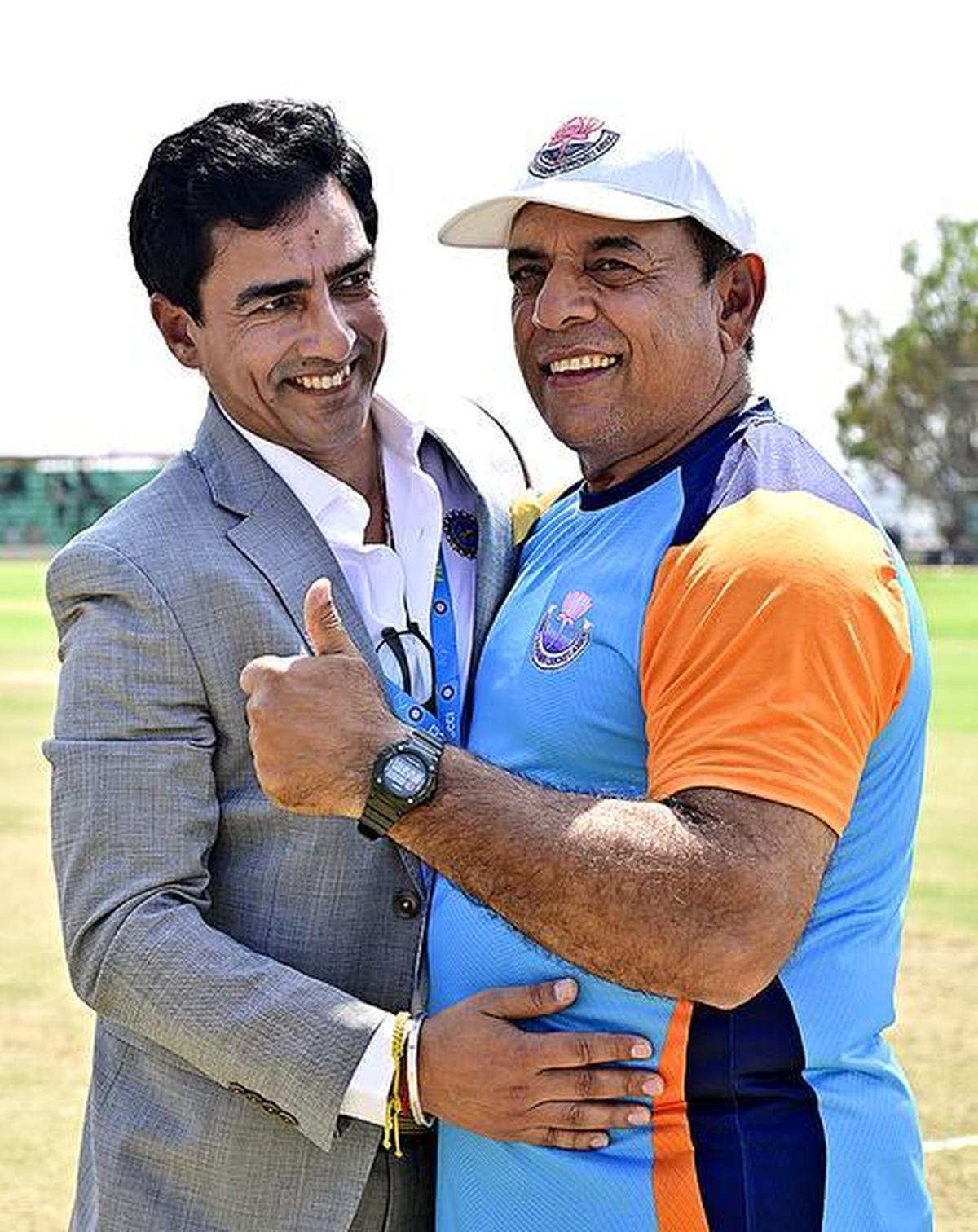
Reforms, however, rarely come without resistance. Manhas faced criticism for dismantling the old quota system that divided player representation between Jammu and Srinagar. “In sport, you cannot run on quotas,” he says firmly. “If all the best players are from Kashmir, we pick them. If they’re from Jammu, we pick them. Merit must prevail.”
He was also questioned for appointing Ajay Sharma as coach and Paras Dogra as captain.
“People said I was bringing in friends or people from Delhi. That wasn’t true. It was strategic,” Manhas explains. “Paras had played extensively in Himachal Pradesh — similar conditions. We needed someone who understood northern tracks. Ajay brought experience and discipline.” The support staff was similarly curated, including bowling coach P. Krishnakumar and fielding coach Dishant Yagnik. Stability replaced constant chopping and changing, and players responded with confidence.
The mindset shift
Over the past few seasons, Jammu and Kashmir have beaten heavyweights like Bengal, Madhya Pradesh, Mumbai and Baroda in their own backyard. These weren’t flukes. They were statements.
Manhas believes this journey doesn’t end with winning the Ranji Trophy. Rather, it is about creating an identity and giving young cricketers in Jammu and Kashmir a pathway that didn’t exist before.
“This is just the beginning. The big challenge left is the grounds. We now have a state-of-the-art academy in Jammu, with indoor facilities, a swimming pool and a gymnasium. We will be doing the same in Kashmir. We want stadiums to come up not only in Jammu and Kashmir, but in Rajouri, Poonch and the Chenab region as well,” Manhas says.
He may have moved on to the BCCI, but Manhas looked emotional as J&K lifted the title. After years of toil, there were tears of joy.

Comments are closed.