
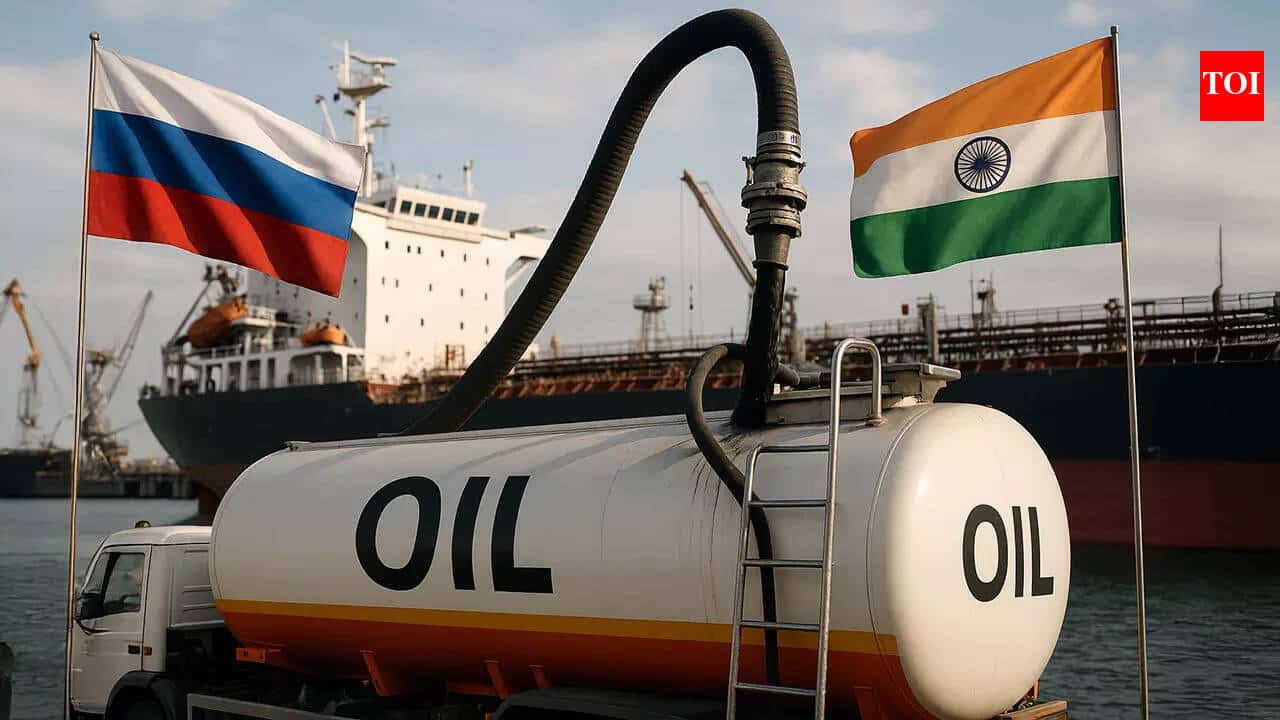

Speaking to reporters on Tuesday, White House press secretary Caroline Leavitt said the decision was taken because India had acted responsibly in earlier sanctions compliance.
“We came to this decision as our allies in India have been good actors and had previously stopped buying sanctioned Russian oil,” she said.
Temporary Approval to Stabilise Global Oil Supply
According to the White House, the decision was approved by Donald Trump and the US Department of the Treasury to address disruptions in global energy markets caused by the ongoing conflict involving Iran, Israeland the United States.
Leavitt explained that the shipments being allowed were already in transit.
She said the Russian oil heading toward India was “already at sea” and therefore would not provide significant financial benefits to the Russian government.
Treasury Secretary Supports Temporary Waiver
Earlier this month, US Treasury Secretary Scott Bessant confirmed that India would be permitted to buy Russian oil under a temporary waiver.
Speaking to Fox News, Bessent said India had previously complied with US directives to reduce Russian oil purchases.
“Indians have been very good actors. They stopped buying Russian oil when we ordered them. Now we are allowing them to accept Russian oil to create supply,” he said.
Trade Deal Eases Tariff Pressures
The announcement follows a new trade framework between India and the United States that significantly reduced tariffs on Indian goods.
Under the updated arrangement, tariffs imposed on India were lowered from 50 percent to 18 percent. Earlier, India had faced a proposed 25 percent tariff under President Trump’s “Liberation Day” tariff initiative.
The tariffs were later raised to 50 percent after Trump accused India of indirectly supporting Russia–Ukraine War through continued purchases of Russian oil.
While India has not officially committed to completely halting Russian oil imports, New Delhi has emphasised that its energy policies prioritise the needs of its population of more than 1.4 billion people.
West Asia Conflict Triggers Global Oil Crisis
The conflict involving the United States, Israel, and Iran has intensified pressure on global energy supply chains.
Iran recently warned that it could close the Strait of Hormuza critical maritime route through which nearly 20 percent of the world’s oil and gas supply passes.
Several major energy exporters rely on this route, including:
Saudi Arabia
Iraq
Kuwait
United Arab Emirates
Additionally, Qatar transports most of its liquefied natural gas exports through the same corridor.
India Takes Steps to Secure Domestic Energy Supply
As global supply concerns rise, India has started reviewing measures to manage energy demand.
The Ministry of Petroleum and Natural Gas has asked refineries to increase production of Liquefied Petroleum Gas (LPG) to ensure domestic availability.
Authorities have also formed a grievance redressal committee to address reports of shortages in commercial LPG cylinders across parts of the country.
Officials said domestic consumption will be prioritised while non-essential and commercial LPG use is currently under review.

Comments are closed.