
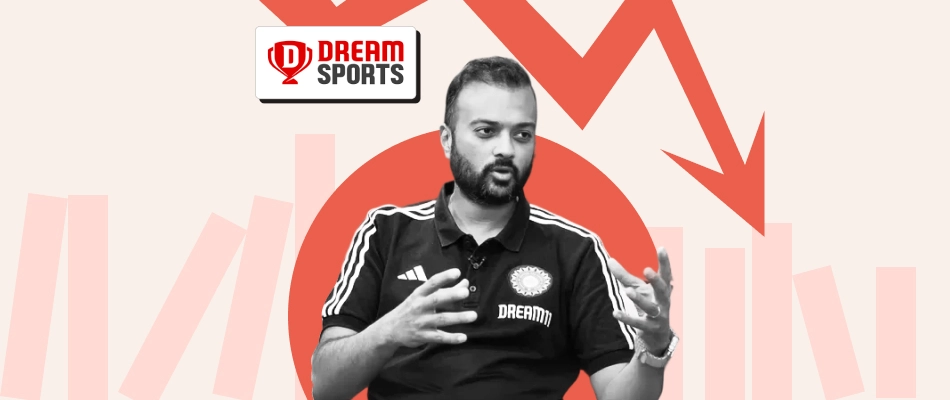

India’s online gaming landscape has undergone a dramatic transformation after the government introduced a ban on real-money online games in August 2025. One of the biggest companies affected by this move has been Dream Sportsthe parent company of the popular fantasy sports platform Dream11.
The regulatory shift fundamentally disrupted the company’s business model, wiping out nearly 95 percent of its revenue and all of its profitsaccording to company leadership. In response, Dream Sports initiated a sweeping internal restructuring that split the organisation into multiple smaller units operating like independent startups.
However, the restructuring has also led to significant employee departures, with more than 100 employees leaving the company since the changes were implemented.
Credits: Outlook Business
Attrition Rises as Employees Choose New Paths
Following the restructuring, Dream Sports redistributed a large portion of its workforce into the newly created startup units.
According to the company, around 700 employees were moved into these startups based on their expertise and interest in specific domains. Of these employees, around 15 percent chose to leaveopting either to join more established companies or to launch ventures of their own.
A company spokesperson explained that many of these employees had experience operating large-scale businesses rather than early-stage startupswhich may have influenced their decision to move on.
Despite the departures, Dream Sports said its overall attrition remains only slightly higher than the roughly 10 percent annual attrition rate it had before the gaming ban.
The company currently has around 950 employees across its ecosystem and has indicated that it is not actively hiringfocusing instead on retaining key talent during the transition.
From Unicorn to ‘Startup Mode’ Again
The restructuring marked a significant shift in strategy for Dream Sports.
In December, CEO Harsh Jain revealed that the company had effectively returned to “startup mode.” The firm divided itself into eight separate startup-style unitseach led independently with a focus on building new growth engines.
The move also came with major operational adjustments. For instance, Dream11once the company’s flagship revenue generator, now requires fewer than 200 employees in its new form as a sports entertainment platform.
To make the transition smoother for employees, Dream Sports removed bonus lock-in timelines for those who joined in the past few years. Workers who chose to leave were allowed to exit with pro-rata bonus payoutsgiving them flexibility during the company’s transformation.
Jain said the idea was to retain only those employees who were fully committed to the new startup-style culture.
The Eight Startups Emerging From Dream Sports
As part of its restructuring, Dream Sports reorganised its operations into eight distinct verticalseach operating like an independent startup.
These include:
Dream11 – the company’s flagship fantasy sports and sports entertainment platform
FanCode – a sports content and live streaming platform
DreamSetGo – a sports travel and experiences platform
Dream Cricket – a cricket gaming platform
Dream Sports AI – an artificial intelligence initiative including sports analytics app Dream Play and AI cricket prediction platform RushLine
Dream Money – a wealth management initiative
Dream Horizon – AI-driven software solutions
Dream Sports Foundation – the company’s philanthropic arm
This structure reflects the company’s attempt to diversify away from dependence on real-money gaming and build a broader sports technology ecosystem.
Cost-Cutting and Operational Changes
Alongside workforce restructuring, Dream Sports has also taken steps to reduce operational costs.
Earlier this year, the company moved its headquarters from Bandra Kurla Complex (BKC) to Worli in Mumbai. The new office, called Dream Sports Stadiumbrings employees from the company’s various brands under one roof.
The shift is intended to help teams collaborate faster and operate more efficientlywhile also reducing costs during a period of uncertainty.
IPO Plans Put on Hold?
Interestingly, Dream Sports had earlier shifted its corporate domicile from Delaware in the United States to India in Marcha move commonly known as reverse flipping.
Such a move is often seen as preparation for a domestic IPOsuggesting that the company may have been considering a public listing in India.
However, the sudden collapse of the real-money gaming industry has forced the company to rethink its near-term priorities.
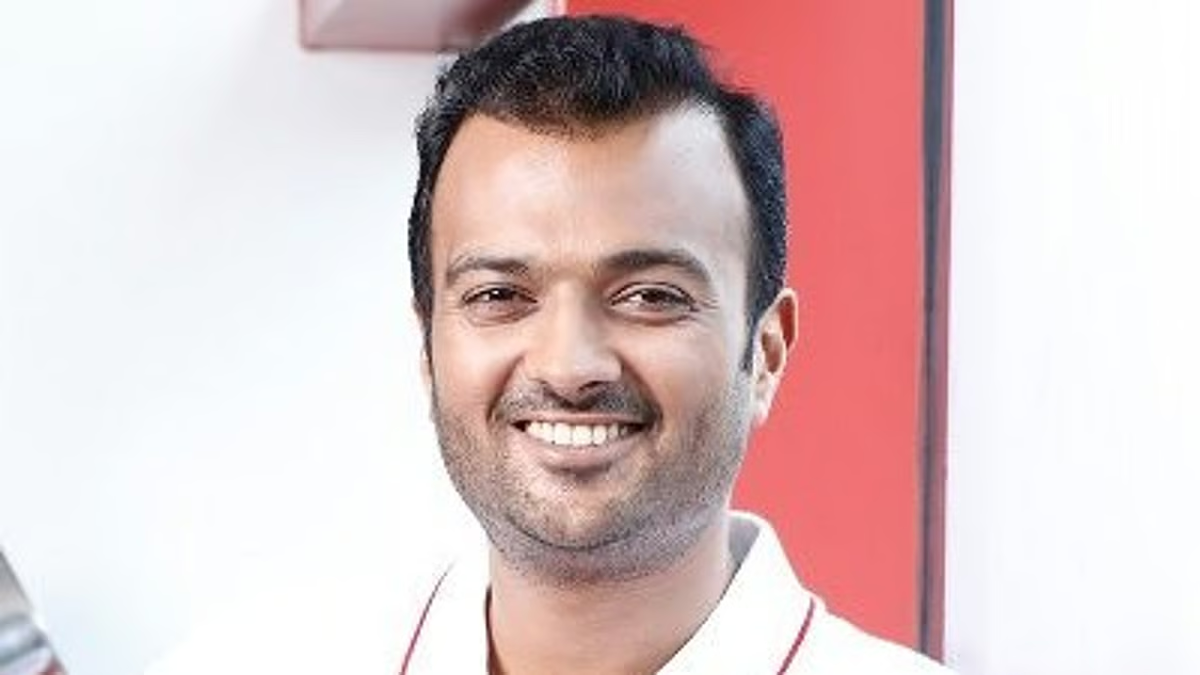
Credits: Outlook Business
A Wider Crisis Across India’s Gaming Industry
Dream Sports is far from the only company affected by the new gaming law.
The legislation prohibits online games where users deposit money with the expectation of winning financial rewardseffectively dismantling India’s $3.5 billion real-money gaming industry.
As a result, gaming companies across the country have been forced to cut costs aggressively. Industry estimates suggest that around 3,000 employees have been laid off across multiple companies.
Major firms impacted include Gameskraft, Zupee, Mobile Premier League, Head Digital Works, Games24x7, PokerBaazi, and Junglee Games.

Comments are closed.