
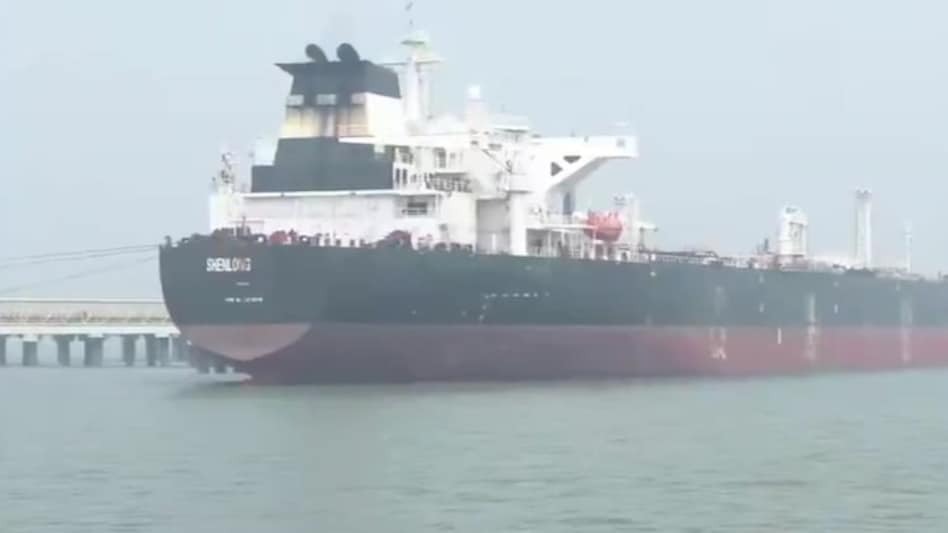
How did the oil tanker reach India safely amid the Iran-Israel war? The ship disappeared after turning off the signal

News India Live, Digital Desk: Amidst the war in West Asia, the most important route for maritime trade, the ‘Strait of Hormuz’ has turned into a battlefield. Recently an Indian oil tanker safely passed this area by hiding its location and identity. This successful operation has again brought into limelight the importance of ‘Dark Mode’ in maritime security. What is AIS (Automatic Identification System)? AIS is a mandatory digital system for every large ship plying at sea. How it works: This system keeps sending information about the ship’s identity, position, speed and direction to other ships and coastal authorities through radio signals (VHF) and satellite. Why needed: Its main purpose is to prevent collision between ships and streamline maritime traffic. Why did the Indian tanker switch off the signal? In tense areas, enemy forces or rebel groups track ships using AIS data and launch missile or drone attacks on them. Identity concealment: The Indian tanker switched off its AIS transponder as it entered the Strait of Hormuz. This made it ‘invisible’ to radar and satellite tracking sites (e.g. MarineTraffic). Threat Avoidance: Due to the signal being switched off, the attackers could not find out which country the ship belonged to and where it was going. Safe Passage: The tanker completed the journey to Mumbai maintaining “radio silence” and restarted the signal only after reaching Indian waters. Maritime Laws and Risks: Although switching off AIS may be considered illegal as per international maritime rules, Under Safety of Life at Sea (SOLAS) regulations, if the captain feels that keeping the signal on poses a danger to the ship, he can turn it off.

Comments are closed.