

Thailand on Tuesday instructed civil servants to take the stairs instead of elevators and to work from home for the duration of the crisis, Reuters reported.
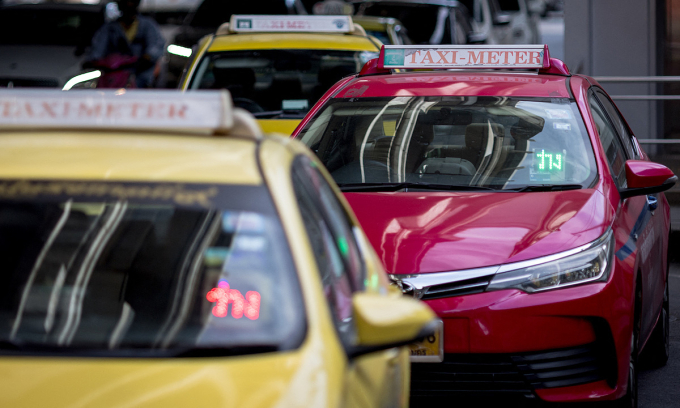
A row of taxis wait for passengers on a street in Bangkok on November 10, 2022. Photo by AFP |
Authorities also raised the temperature setting for air-conditioning to 27 degrees Celsius and plan to advise government employees to wear short-sleeved shirts instead of suits.
Nearly 68% of Thailand’s energy needs are met from natural gas. Over half of its liquefied natural gas is sourced from domestic production in the Gulf of Thailand, while 35% comes from imports, including 13% from neighboring Myanmar, according to the country’s Energy Regulatory Commission.
Vietnam has similarly urged businesses to allow employees to work from home to reduce the need for travel and transportation.
In the Philippines, officials are advocating for a four-day work week and have directed government personnel to limit travel to essential functions only, Nikkei reported.
Bangladesh moved forward a holiday, allowing universities to close earlier in an effort to conserve fuel, while Pakistan introduced a four-day work week for government offices and shut schools.
Meanwhile, India suspended shipments of liquefied petroleum gas to commercial users in order to prioritize household supplies, prompting concerns among hotels and restaurants that they could be forced to shut down without fuel.
Some governments are intervening more directly in energy markets. On Monday, South Korean President Lee Jae Myung said the country would impose a price cap on petroleum products, warning that the current situation poses a significant burden on the country’s economy, according to The Korea Times.
About 1.7 million barrels per day of oil destined for South Korea has been withheld due to the ongoing conflict.
Japan’s industry minister, Ryosei Akazawa, said on Wednesday that authorities have not ruled out tapping the country’s strategic oil reserves, adding that Japan “will take all possible measures to ensure stable supplies of energy.”
Also on Monday, Indonesia’s finance minister said the government would allocate IDR381.3 trillion (US$22.6 billion) for energy subsidies and compensate state energy companies such as Pertamina to keep fuel and electricity prices affordable.
Thailand plans to freeze cooking gas prices through May and encourage consumers to shift to alternative fuels such as biodiesel and benzene. Vietnam is also slashing environmental tax on fuel.
Oil markets have seen sharp swings in recent days. West Texas Intermediate (WTI) crude briefly climbed above $115 per barrel on Monday before fluctuating as conflicting statements emerged from Washington. By Thursday morning, WTI crude had retreated to above $94 per barrel.
The U.S. said Wednesday it would release 172 million barrels of oil from its strategic petroleum reserve in a bid to reduce oil prices that have soared due to supply shocks from the U.S.-Israeli’s attacks on Iran.

Comments are closed.