
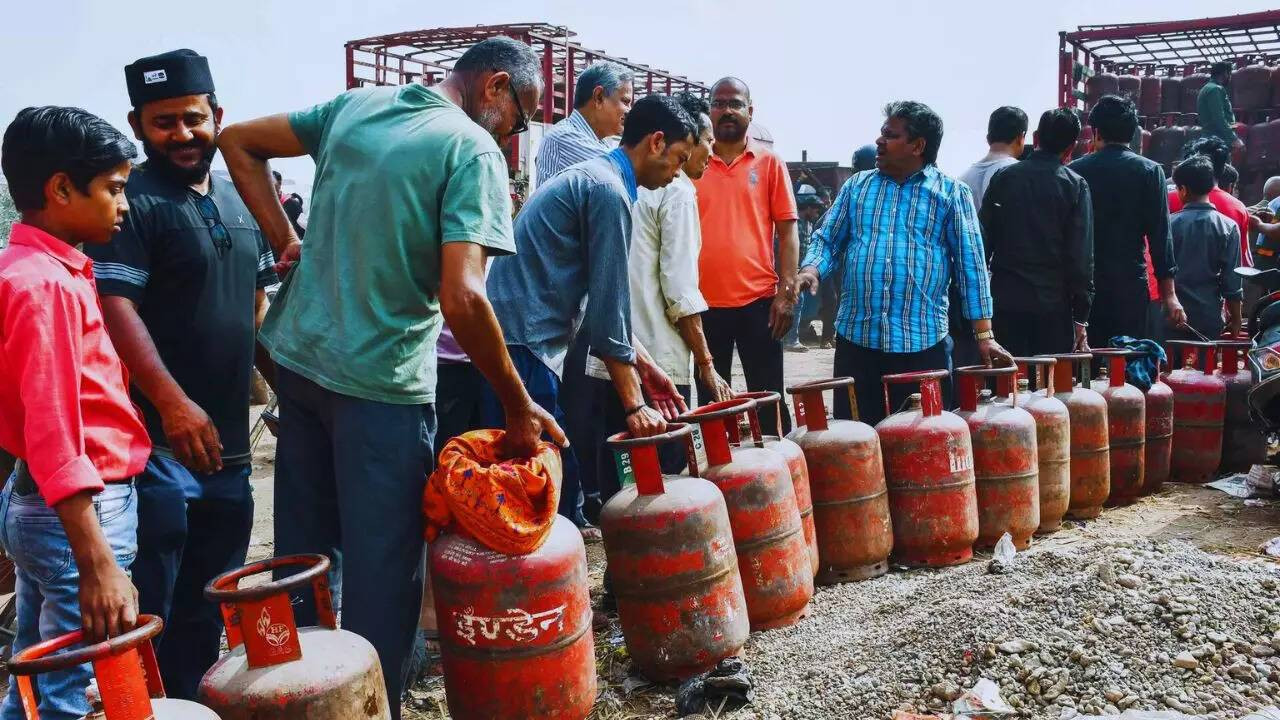
Government’s big appeal amidst increasing uneasiness on LPG, long lines and fast booking increased people’s concern

The uneasiness regarding LPG is clearly visible in many parts of the country. People have started booking cylinders in large numbers. Long queues were seen outside the gas agencies in many cities. The pressure on the online booking system has also increased. Many consumers complained of difficulty in booking. This is the reason why an atmosphere of fear was created among the common people. The situation has increased the concern of both households and small businessmen.
Has the government considered LPG a matter of concern?
The government has admitted that LPG is a matter of concern at this time. Sujata Sharma, Joint Secretary, Petroleum Ministry, said that the situation is being constantly monitored. She also said that there is no report of complete end of supply at any distributor center. The government appealed to the people not to believe in rumours. Also asked to avoid panic buying or over-booking. The government message is clear that be careful, but do not panic.
Was there talk of relief regarding petrol and diesel?
The government has presented a picture of relief regarding petrol and diesel. It has been said that sufficient amount of fuel is available at petrol pumps across the country. According to the government, the refineries are working at full capacity. Adequate reserves of crude oil have also been reported. That is, the maximum pressure is currently visible on LPG. The government has denied any major shortage regarding petrol and diesel. This can definitely provide some relief to the common people.
Is the condition of domestic and commercial gas different?
The biggest difference on the ground is visible between domestic and commercial gas. It has been said that priority will be given to domestic supply. But there have been complaints of slow delivery at many places. At the same time, the supply of commercial LPG is said to be seriously affected in many areas. Hotels, dhabas, caterers and other businesses are more troubled by this. Some institutions have to operate on limited gas. Its effect is on the markets, food shops and everyday life. Has also started appearing on the services of.
Has this crisis affected people’s everyday lives?
The impact of this crisis is now clearly visible on everyday life. In many cities, restaurants have reduced their menus. There have also been reports of hotels and dhabas being closed at some places. The demand for induction cooktops, rice cookers and electric appliances has suddenly increased. People have started making backup arrangements. That is, the concern about the kitchen is now changing the market dynamics as well. This is not just a story of gas, it has also become an issue of household budget and daily routine.
Has the government also started alternative arrangements?
Work has also started on alternative routes to reduce the pressure. Options like kerosene and coal have again been brought forward as a temporary relief. It has also been said to allocate additional kerosene to some states. Commercial consumers have been advised to take PNG connections. It has also been claimed to keep the domestic PNG and CNG supply normal. That means the government is not just appealing, but is also emphasizing on backup options. This has tried to reduce the pressure to some extent. Is going.
Is the real challenge now more about trust than supply?
The biggest thing in the whole matter is that the crisis is not only of cylinders but also of trust. The government is saying that the situation is under control. But long queues and fast bookings show that people’s confidence has wavered. Rumors and panic are making the situation more difficult. If both supply and information are good then the situation can be controlled. But if fear increases then the pressure can increase further. Right now the most important thing is that the right information reaches the people and the system is on ground. Also seen on.

Comments are closed.