
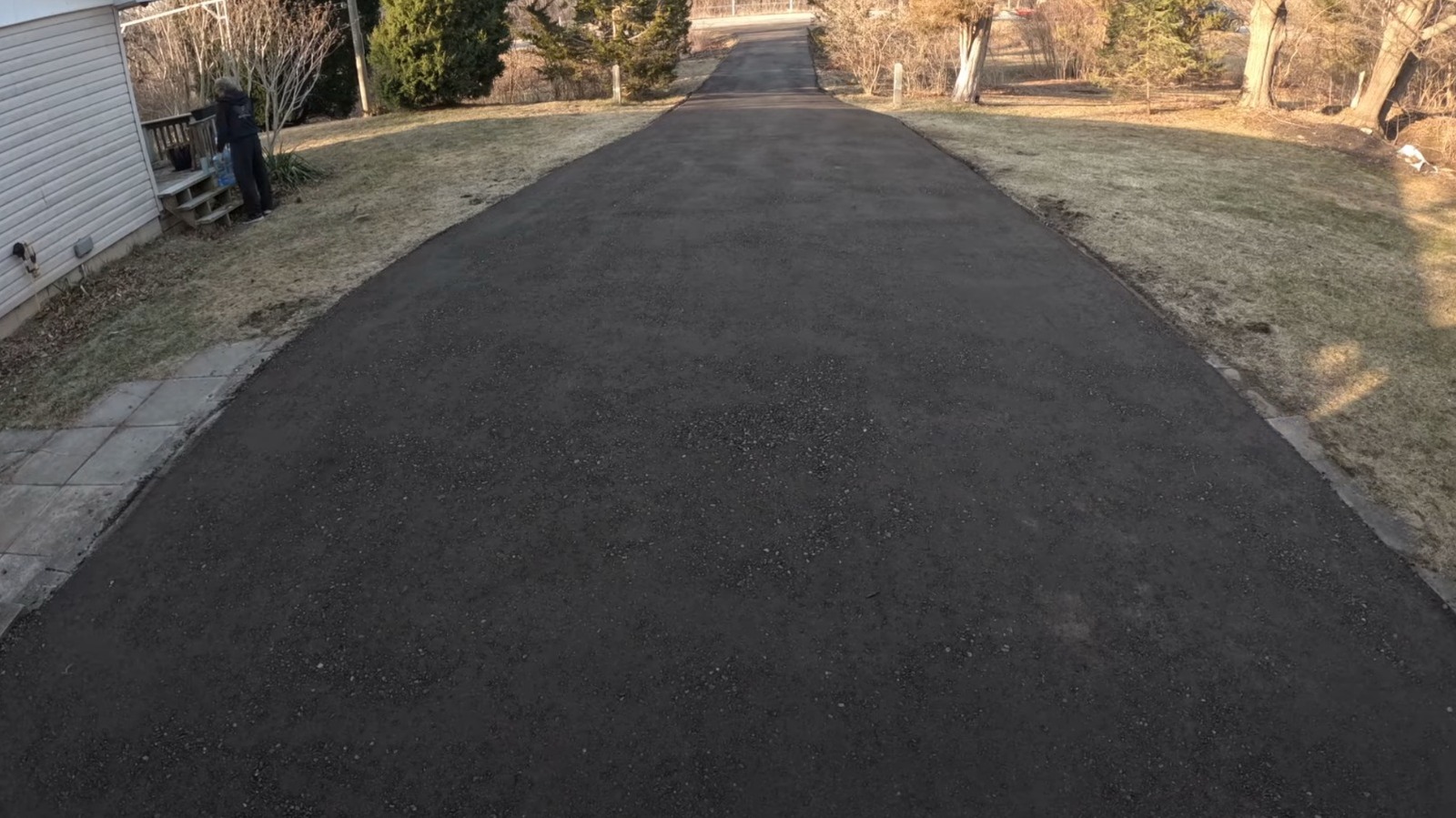

Driveways are generally quite durable, but they’re not perfect. Gravel driveways can get exceptionally messy and fall apart, while old, cracked concrete driveways require filling solutions to stay together. Beyond these tried-and-true materials, there’s another, more eco-friendly solution that has steadily gained traction among homeowners. Recycled asphalt pavement (RAP) driveways use old, crushed-up asphalt mixed with filler materials to create an effective asphalt alternative that appears fairly similar to any other driveway.
The fact that RAP doesn’t require new materials means it’s less energy-intensive, more eco-friendly, and cheaper to produce. This equates to installation savings, with some estimates placing RAP driveways at between $6.20 and $8.75 per square foot, while others claim it can cost less than $6. In comparison, some estimates put regular asphalt at $7 to $13 per square foot, with concrete costing between $6 and $15. Of course, the final cost will be influenced by driveway size, location, labor costs, and other individual factors. On average, a RAP driveway is likely to last around 20 years, so long as it’s properly taken care of. This involves tasks like routine resealing and re-compaction.
This may make it seem like a RAP driveway is the perfect solution to an old, crumbling driveway. However, much like other driveway types, the material has drawbacks that some may find aren’t worth the hassle.
Drawbacks to recycled asphalt pavement driveways
For all of its benefits, the recycled asphalt pavement driveway may not be the right choice for everyone. Some negatives are rather minor, such as RAP not being as aesthetically pleasing to some as a brand-new gravel or concrete driveway. Meanwhile, others are much larger, like potential groundwater contamination. RAP is porous and requires chemical binders to keep it held together. There is some concern that these chemicals can leech from the material when it rains, leading to water pollution. Unfortunately, there has yet to be conclusive research into this topic, so the impact of RAP driveways in this regard is somewhat uncertain.
Speaking of driveway breakdown, perhaps the biggest negative that plagues this material is cracking and crumbling. As an amalgamation of crushed-up materials, RAP driveways are tightly compacted and therefore more brittle than fresh asphalt. Thus, they’re more prone to breaking and cracking. Worse yet, moss, grass, and weeds can start growing if the cracks are large enough to expose the soil beneath the driveway. That’s why thorough preparation of the area where the driveway will go before setting it down is crucial.
While it has its share of issues, recycled asphalt pavement is a viable, budget-friendly, and largely environmentally conscious option that many homeowners could benefit from. It’s not the only alternative to a conventional driveway, though, and some may want to explore converting a solid driveway into a permeable one instead, especially if they want to reduce flooding.

Comments are closed.