
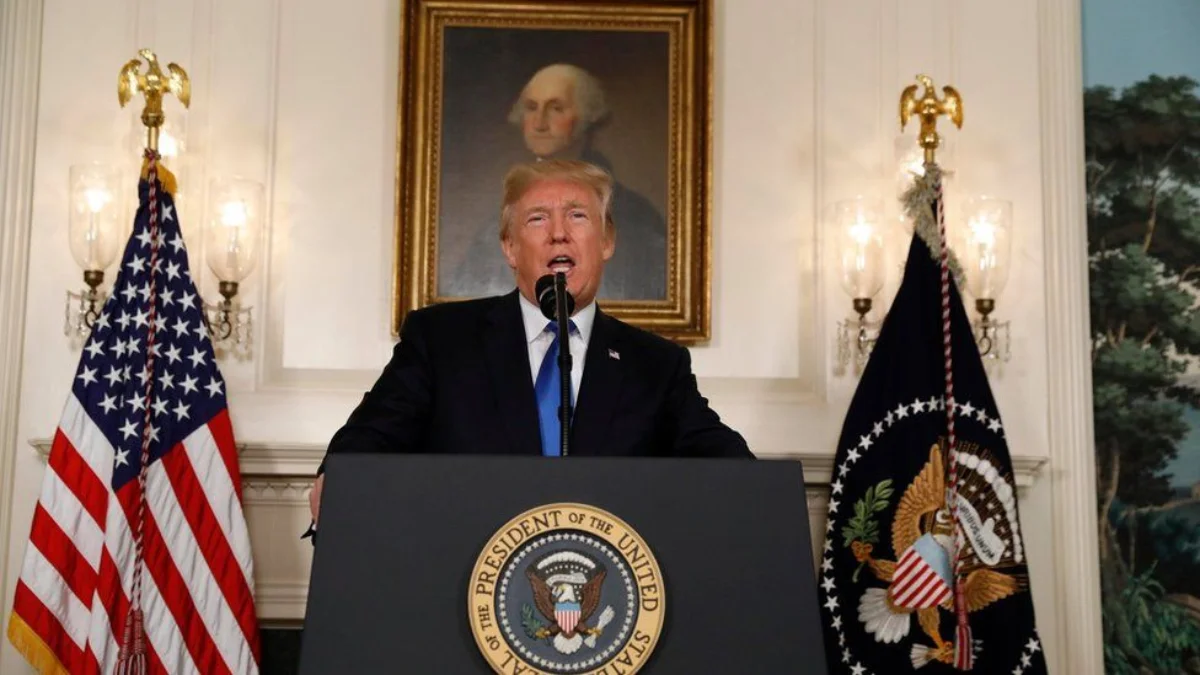
Trump’s remarks on oil dominance and Iran’s nuclear ambitions revive legal debate on energy geopolitics

A recent public statement by Donald Trump asserting that the United States benefits economically when oil prices rise, while emphasising the strategic priority of preventing Iran from acquiring nuclear weapons, has reignited debate among legal scholars and international relations experts. The remarks reflect a broader strategic narrative in which energy dominance and nuclear non-proliferation are presented as interconnected pillars of the United States national security policy. From a legal and geopolitical perspective, the statement encapsulates two distinct but closely related dimensions of global governance. The first concerns the economic and strategic implications of the United States position as a major oil-producing state. The second involves the complex legal framework governing nuclear proliferation and international efforts to prevent the spread of nuclear weapons. These issues intersect within a broader international environment characterised by geopolitical competition, volatile energy markets, and persistent concerns about nuclear security in the Middle East.
Energy dominance and the strategic implications of oil production
The assertion that the United States is the world’s largest oil producer reflects a transformation in global energy markets over the past decade. Advances in unconventional extraction technologies, particularly shale oil development, have significantly increased American petroleum output and reduced dependence on foreign energy imports. From the standpoint of international economic relations, energy production plays a critical role in shaping geopolitical influence. States that possess substantial energy resources often enjoy strategic advantages within global markets because they can influence supply dynamics and pricing trends. However, the relationship between oil prices and national economic benefit is complex. While higher prices may increase revenues for domestic producers, they can simultaneously impose economic burdens on consumers and industries reliant on petroleum products. Governments, therefore, face the challenge of balancing energy sector interests with broader economic stability. Legal frameworks governing energy markets further complicate this relationship. International trade rules, environmental regulations, and domestic energy policies all influence how production levels translate into economic advantage.
Nuclear non-proliferation and the legal framework governing atomic weapons
The second dimension of the presidential statement concerns the long-standing international effort to prevent the spread of nuclear weapons. The central legal instrument governing this effort is the Treaty on the Non-Proliferation of Nuclear Weapons. The treaty establishes a three-pillar structure that seeks to limit the proliferation of nuclear arms, promote peaceful uses of nuclear energy, and encourage gradual nuclear disarmament among states already possessing such weapons. Under the treaty, non-nuclear-weapon states agree not to pursue nuclear weapons programmes while nuclear-armed states commit to negotiations aimed at eventual disarmament. Iran remains a signatory to the treaty and therefore operates under international legal obligations not to develop nuclear weapons. However, disputes have arisen over the scope of its nuclear activities and whether certain enrichment capabilities could enable the development of nuclear weapons technology. International monitoring of Iran’s nuclear programme has been conducted by the International Atomic Energy Agencywhich verifies compliance with treaty commitments through inspections and technical oversight.
Preventive security and the legality of counter proliferation measures
Efforts to prevent nuclear proliferation often raise difficult legal questions regarding the use of economic sanctions, diplomatic pressure, and, in extreme cases, military action. International law generally prohibits the use of force against sovereign states except under circumstances recognised by the Charter of the United Nations. Nevertheless, some governments have argued that preventing the emergence of new nuclear-armed states constitutes a matter of global security that may justify robust enforcement measures. Economic sanctions have frequently been used as a tool to pressure governments suspected of pursuing nuclear weapons programmes. Such measures typically rely on national legislation and international cooperation rather than direct military intervention. Sanctions regimes targeting nuclear proliferation are often supported by resolutions adopted by international organisations and implemented through domestic regulatory frameworks. The legal legitimacy of preventive military action aimed at stopping nuclear weapons development remains highly contested within international law. Many scholars argue that such actions risk undermining the foundational prohibition on the use of force that underpins the modern international legal order.
Energy geopolitics and nuclear strategy in the Middle East
The Middle East occupies a unique position within the global strategic landscape because it simultaneously represents one of the world’s most significant energy-producing regions and a focal point of nuclear proliferation concerns. Regional instability can therefore influence both energy markets and security dynamics. The possibility that a regional power might acquire nuclear weapons raises concerns about strategic escalation, arms races, and potential disruptions to international trade routes. For energy-consuming nations, maintaining stability in the region remains a priority because geopolitical conflict can rapidly affect oil supply chains and market prices. United States policy toward Iran has long been shaped by these dual concerns. Efforts to limit nuclear proliferation are often accompanied by broader strategies aimed at maintaining stability in energy markets and protecting maritime shipping routes.
The role of presidential rhetoric in shaping international perceptions
Statements by national leaders frequently serve both domestic and international audiences. Political rhetoric emphasising threats posed by adversarial states can influence diplomatic negotiations, shape public opinion, and signal strategic priorities to allies and rivals alike. In this context, references to energy production and nuclear threats function as elements of strategic communication rather than purely factual descriptions of policy objectives. Such messaging may reinforce alliances with countries concerned about nuclear proliferation while simultaneously strengthening domestic political narratives about national security leadership. However, critics often argue that strongly worded rhetoric can also contribute to escalating tensions if it reduces opportunities for diplomatic engagement or compromise.
The enduring challenge of balancing energy interests and nuclear security
The presidential remarks ultimately highlight the continuing interplay between energy geopolitics and nuclear non-proliferation within global strategic policy. The economic influence associated with energy production and the security concerns associated with nuclear weapons development represent two of the most significant factors shaping international relations. Legal frameworks such as the Non-Proliferation Treaty and international nuclear monitoring regimes provide mechanisms for managing these challenges. Yet the effectiveness of these systems ultimately depends on sustained diplomatic engagement and cooperation among states. As global energy markets evolve and geopolitical tensions persist, the relationship between resource competition and nuclear security will remain a defining feature of international politics. The ability of governments to navigate these interconnected challenges within the boundaries of international law will play a crucial role in determining the stability of the global order.

Comments are closed.