
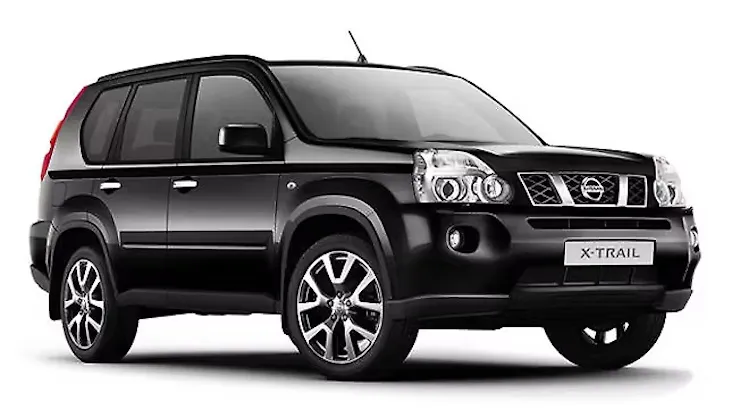

Nearly 15 years after purchasing a premium Nissan X-Trail that suffered catastrophic engine failure, a consumer in Kerala has finally secured justice. The National Consumer Disputes Redressal Commission has ordered Nissan Motor India and its Kochi-based dealer, EVM Automobiles Private Limited, to refund the entire purchase amount of Rs 28 lakh to the buyer. The national commission held both the manufacturer and the dealer jointly liable for a clear deficiency in service, putting an end to a protracted legal battle over inherent manufacturing defects.
The timeline of the breakdown
The dispute traces back to June 2011, when Jaison Lukose, a resident of Kottayam, purchased a brand-new Nissan X-Trail. Back then, the X-Trail was sold locally as a fully imported completely built unit, featuring a 2.0-litre diesel engine, and it commanded a premium price tag of approximately Rs 28 lakh. According to the original complaint, the ownership experience soured almost immediately. The SUV stalled on June 28, 2011, just six days after delivery, with only 780 kilometres on the odometer.
The buyer towed the vehicle to the authorised dealer’s workshop. Although it was returned to him the same day, the core mechanical issues were never fully resolved. The owner reported persistent engine noise and a severe lack of reliability, forcing multiple unscheduled service visits over the next few months. The situation culminated in a complete mechanical breakdown on September 27, 2011. The engine stopped abruptly after the SUV had covered just 11,922 kilometres, rendering the premium vehicle completely unusable.
Adulterated fuel versus technical defects

Frustrated with the lack of a permanent resolution, the buyer approached the state consumer commission in 2012, demanding a full refund of the vehicle’s cost along with Rs 10 lakh in compensation for the mental agony and inconvenience. In their defence, the manufacturer and the dealership heavily contested the claim of a manufacturing defect.
They argued that the catastrophic engine malfunction was the direct result of the owner using adulterated diesel mixed with kerosene, which severely damaged the fuel injection system and engine internals. They also stated that they had offered to replace the damaged engine under the standard vehicle warranty.
However, proving a manufacturing defect in consumer courts usually hinges on independent technical evidence. The state consumer forum commissioned an expert inspection of the vehicle to determine the exact cause of the failure. The resulting technical report categorically dismissed the fuel adulteration theory and confirmed that the engine suffered from an inherent design defect that led to its premature failure.
The final national ruling
Based on the expert findings, the Kerala State Consumer Disputes Redressal Commission ruled in favour of the buyer in December 2021. Nissan subsequently appealed this decision at the national level. The case was finally heard by a bench headed by Justice A P Sahi and member Bharatkumar Pandya.
The National Consumer Disputes Redressal Commission upheld the original finding that there was a severe deficiency in service. The bench agreed that a premium vehicle breaking down so early in its lifecycle due to a technical defect warrants a refund.
However, the national commission slightly modified the state forum’s order by removing the extra compensation and the previously imposed interest. The final directive ordered the manufacturer and the dealer to jointly refund the principal purchase amount of Rs 28 lakh within a strict two-month window. If the companies fail to clear the payment within this timeline, an interest rate of nine percent will be applied to the total amount.
For car buyers, this ruling underscores the extreme patience required to fight manufacturing defect cases, as the burden of proof heavily relies on independent technical validation. The joint liability aspect also prevents the common industry practice where automakers blame the dealership’s service quality while the dealer blames the factory’s production line.

Comments are closed.