
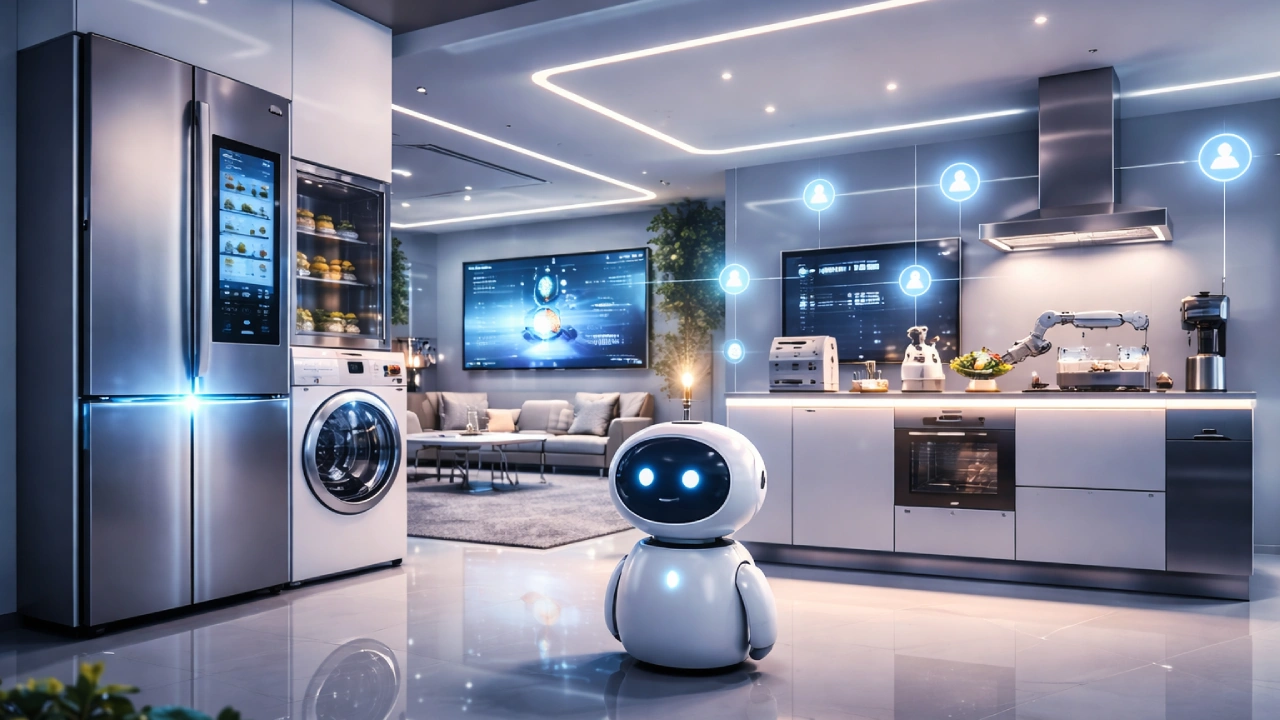

At the Appliance & Electronics World Expo (AWE 2026) in Shanghaiseveral appliance makers and tech companies presented emerging trends in the technologies powering home appliances.
Instead of displaying just one single type of appliance produced by an individual manufacturer (e.g., a refrigerator or washing machine), each manufacturer (e.g., Haier, Hisense, and Huawei) created an entire “home” within the venue, comprising many smart appliances all connected using an artificial intelligence (AI)-based platform.
While some manufacturers provided low-level examples of how smart homes could perform day-to-day tasks—from washing clothes and storing food to adjusting room temperature and preparing meals in the kitchen - the 2026 AWE event theme was very apparent.
The major difference between the smart appliances on display this year and those displayed previously was that the next phase of smart appliance technology will include more than just connected devices; educated by advanced artificial intelligence systems, smart homes will also understand their environment and take independent actions in response.
AWE 2026 Shows a New Direction for Smart Homes
The Appliance and Electronics World Expo took place in Shanghai from March 12th to 15th, 2026, showcasing a range of consumer electronics and home appliances. This was different from past shows, as significant portions of the exhibitor spaces were used to build out entire rooms rather than exhibiting individual products.
The attendees were able to view a variety of living spaces complete with AI-enabled appliances to manage their day-to-day life, creating a “zero-chore home” where all daily tasks are completed without any human interaction.
Haier Shows How AI Can Manage Daily Home Tasks
During the AWE 2026 event, Haier’s Smart Home unveiled its latest line of appliances, the “Seeker” series, which incorporates cutting-edge AI technology called “AI Eye 2.0.”
The AI Eye 2.0 system monitors activities in the home, such as identifying which type of fabric to wash in the washing machine or which type of storage to use for a specific food product in the kitchen.
Their Smart Home Brain Platform is a connected appliance platform that enables appliances to share information and automatically adjust themselves (for example, air conditioning to match the home’s temperature). Ultimately, the aim is to provide consumers with a much easier way to complete everyday household tasks and reduce the need for manual labor.
Hisense Brings AI Models and Home Robots
Hisense also had a large presence at AWE 2026. The company showed how its Xinghai AI model works together with DeepSeek technology to connect different appliances across the house.
In the demonstrations, refrigerators were able to detect the food stored inside and remind users when something might be running out. Washing machines could choose washing modes based on the type of clothes. Air conditioners also adjust cooling based on room conditions.
Hisense also showed a home robot called Savvy. This robot is designed to move around the house and help manage smart appliances. It can interact with devices and assist with small daily tasks.
In a connected home setup, robots like this could help operate appliances or support simple household routines.
Huawei Focuses on the Smart Home System
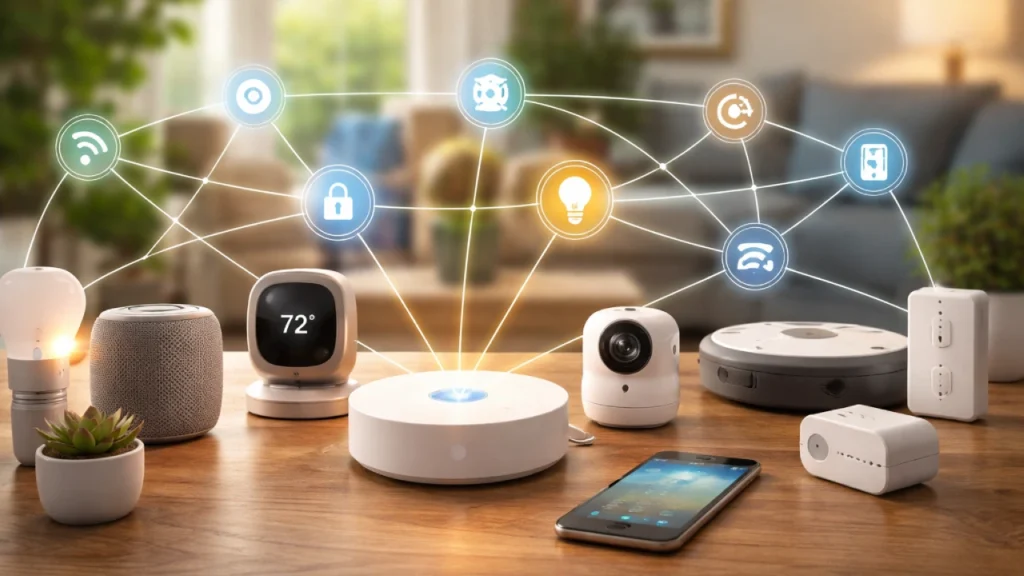
Huawei took a slightly different path at the event. Instead of focusing solely on appliances, the company demonstrated how its HarmonyOS system can connect everything in the home.
Huawei explained its “1+3+N” system.
In simple terms, one main controller acts as the brain of the home. Three interaction methods allow people to control devices through touch, voice, or automatic sensing. The “N” part represents many smart systems in the house, like lighting, security, entertainment, and appliances. These devices are connected to the core controller so they can communicate.
Huawei’s voice assistant Xiaoyi has been updated to v6.0, which has improved upon voice recognition, allowing it to perform multiple tasks via voice commands. So, say someone is going to bed: the system will simultaneously dim the lights, shut the blinds, and set the AC, all from that one command.
Smart Homes Are Moving Toward a “No-Chores” Future
Another idea many companies discussed at AWE 2026 was a home where daily chores are reduced as much as possible.
Demonstrations included robots assisting in the kitchen or with smart home appliances, showing how an AI system can help make life easier and what life could look like in the future with technology as an aid to everyday living.
Experts at the demonstration noted that robots alone cannot create fully automated homes; rather, the future of automated homes will be when appliances, robots, and AI systems communicate on a single platform.
The Smart Home Industry Is Changing
The technology shown at AWE 2026 makes one thing clear. The smart home industry is moving in a new direction.

In the past, companies competed by making better individual devices. Now the focus is on building full smart home systems where every appliance works together.
This type of smart home would help to alleviate the tedious chore of handling day-to-day responsibilities through automated processes and intelligent home systems and devices. It may take quite a while before we see smart homes become commonplace, but based on what we’re seeing at AWE2026, we are definitely heading in that direction.

Comments are closed.