
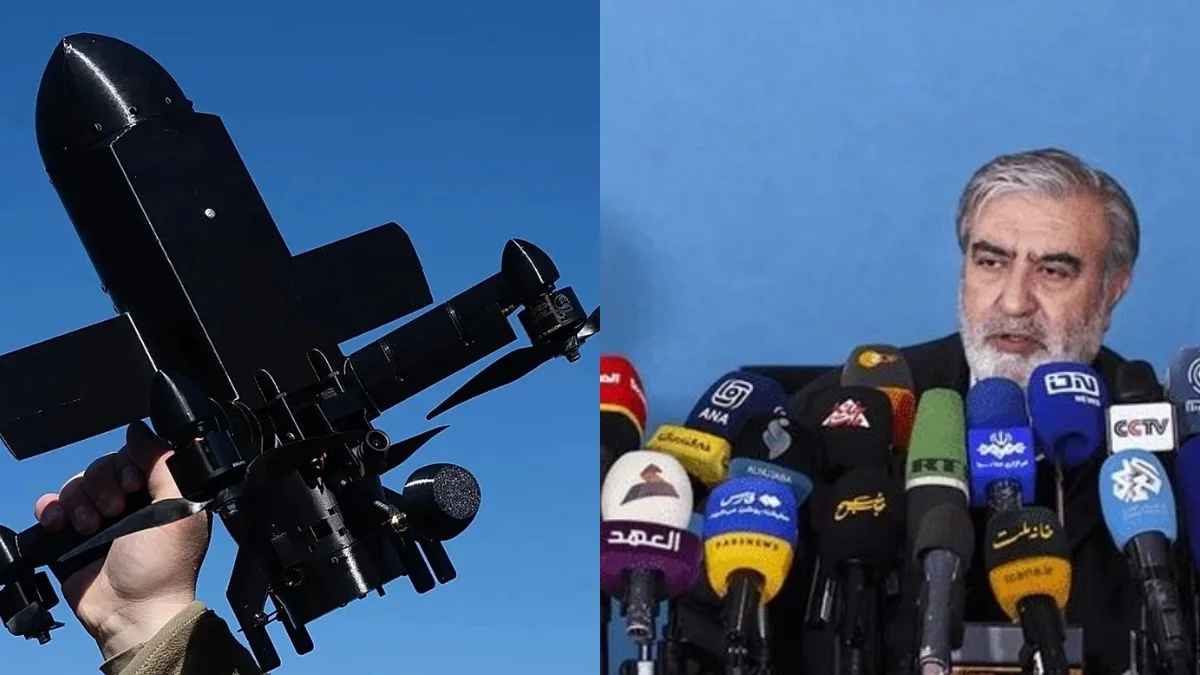

An Iranian lawmaker has warned that Ukraine’s reported involvement in providing drone-related security support to countries facing Iranian drone threats could make Kyiv a legitimate military target, raising fresh legal and policy concerns over the widening scope of drone warfare and international military cooperation.
Ebrahim Azizihead of the national security and foreign policy committee in Iran’s parliament, the Islamic Consultative Assemblysaid Ukraine’s assistance in countering Iranian-designed drones effectively places the country within the broader regional conflict. In a post on X (formerly Twitter)Azizi argued that by supporting efforts to neutralize Iranian drone capabilities used by Tehran and its allies, Ukraine has “effectively become involved in the war.”
The statement reflects growing geopolitical tensions surrounding the proliferation of unmanned aerial systems and the role of third-party states providing technological or operational support in modern conflicts. Legal experts say such support can raise questions under international law about whether a country providing military assistance could be viewed as participating in hostilities.
The remarks follow comments by Ukrainian President Volodymyr Zelenskyy indicating that multiple countries have sought Kyiv’s expertise in countering Shahed-type drones. Zelenskyy said at least eleven countries had requested Ukraine’s assistance in addressing security threats posed by these drones amid ongoing regional conflicts and Iranian military activities.
According to Zelenskyy, Ukraine has reviewed the requests carefully and is prepared to provide support selectively based on strategic partnerships and mutual security cooperation. He emphasized that assistance would primarily be directed to countries that have supported Ukraine’s own defense efforts.
“Some requests have already been met with concrete decisions and specific support,” Zelenskyy said, without publicly identifying the states involved.
Ukrainian officials have confirmed that Kyiv has already provided assistance in protecting U.S. military facilities in Jordanincluding the deployment of interceptor drones and specialized technical teams. The move highlights Ukraine’s growing role as a provider of counter-drone expertise following years of experience defending against drone attacks during the war with Russia.
Since the start of the full-scale invasion by Russia in 2022, Ukraine has developed an extensive multi-layered defense system designed to detect, track, and destroy hostile drones. The system includes mobile air defense units, electronic warfare technologies, and domestically developed interceptor drones capable of targeting incoming unmanned aerial vehicles.
According to Ukraine’s commander-in-chief Oleksandr Syrskyithe country’s drone interception systems have achieved significant success against Iranian-designed Shahed drones used by Russian forces. Ukrainian military data indicates that more than 70 percent of such drones targeting the capital region were intercepted by defensive systems in recent months.
Overall, Ukrainian officials estimate that their air-defense network currently intercepts roughly 80 percent of incoming drones, making the system one of the most extensive counter-drone frameworks developed during modern warfare.
Iran’s role in supplying Shahed-type drones has been widely documented by Western governments and international security analysts. Tehran has been accused of providing these drones to Russia following the invasion of Ukraine, and of transferring technical knowledge that enabled Russian production of similar systems.
The issue has become a central topic in international security policy discussions, particularly as drone technology spreads across multiple conflict zones.
Azizi’s remarks underline the legal and strategic complexities of military cooperation in the era of drone warfare. While international law generally permits defensive security cooperation between states, accusations that such support amounts to participation in armed conflict could escalate diplomatic tensions.
Analysts say the dispute highlights how technological assistance in defense systems can quickly become entangled in broader geopolitical rivalries, particularly as conflicts increasingly rely on unmanned weapons systems and cross-border security partnerships.

Comments are closed.