
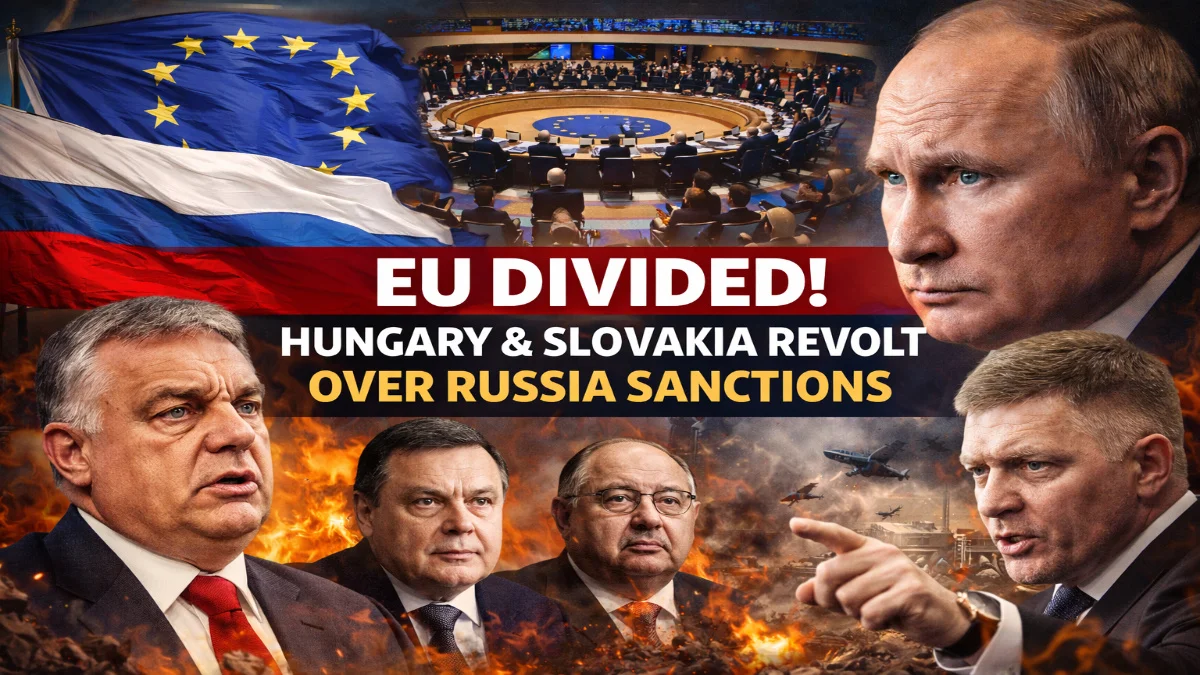

The Council of the European Union has decided to expand the sanctions regime against Russia through to 15 September to renew the economic and political pressure campaign by the bloc on the Moscow war against Ukraine. The ruling, which was upheld on Saturday, applies to about 2,600 people and groups and maintains a wide scope of restrictions such as travel bans, asset freeze and financial constraints.
The list of sanctions still contains some of the most influential Russian businessmen, including Alisher Usmanov and Mikhail Fridman who have been subject to EU sanctions since the initial stages of the event in Ukraine. Their inclusion persists to underscore the EU approach of reaching certain power brokers who are deemed to be close to the Kremlin officials and are likely to sway in the making of political decisions in Russia.
Nevertheless, the process of renewal was not that simple. The ruling revealed serious political undertones in the European Union especially because individual member states were challenging the extent and the equity of certain sanctions listing. Slovakia had campaigned hard to have Usmanov and Fridman removed to the sanctions list, threatening to block the full renewal of the sanctions system in case its demands were not met. Hungary supported the position, having often been more reticent about imposing punishment on Russia.
Nonetheless, at this pressure, Slovakia later reneged its objections. EU diplomats who participated in the negotiations said that Bratislava retreated after realizing that it was alone talking to member states. Although Hungary was at first sympathetic to the cause of Slovakia, she eventually dropped her own requests and voted against the renewal.
The result highlights the fact that the policy of sanctions used by the EU will demand the unanimity among all the participating states, which makes the procedure prone to political concessions and national interests. Every renewal cycle thus turns into a test of unanimity and a measurement of internal disunity within the bloc concerning the extent to which it should go against Moscow.
Even though the regime of sanctions was mostly maintained, the reviewing process resulted in the removal of seven persons off the list. One of them was Niels Troost, who in the year 2024 was officially sanctioned due to the alleged trading of Russian crude oil at a higher price than the price ceiling imposed on it by the EU. EU legal advisers were quoted saying that the facts on the case against Troost and another person were not that solid to warrant the retention of the restrictions.
The remaining evictions had been more technical. The deaths of five people resulted in their delisting, but the EU institutions regularly do this as part of the sanctions review to ensure the legal validity of the measures.
Although the decision guarantees the continuation of the sanctions pressure on Russia, it also points to the weak unity of the European Union on how to address the geopolitical and economic effects of the war as a whole. The economic implications of sanctions are an issue that still haunts several governments, especially the rising energy prices and disruptions to the trade that have hit European industries.
Simultaneously, certain EU governments believe that a strict system of sanctions is required, as it will ensure long-term assistance to Ukraine and ensure the credibility of the bloc in geopolitics. Since the beginning of the conflict, the EU has imposed several waves of sanctions against the Russian banks and the exports of Russian energy resources and technologies as well as against the individuals with close ties to the Kremlin.
However, the lack of agreement among member states still makes the action of the EU complicated in a time-sensitive manner. Hungary specifically has become a common stumbling block in deliberations regarding Ukraine related policies. Although the sanctions renewal sailed, nowadays Budapest is blocking a critical legal framework that would enable the EU to offer a EUR90 billion loan package to Ukraine, which is expected to stabilize the economy of the country and fund its spending on the war.
Hungary too has not approved a new sanction package on Russia, which is yet another indication of political tension within the bloc. To critics, Budapest is seen to be dismantling EU unity as the Hungarian officials state that they are guarding the national economic interests and want a better assurance of energy security and financial commitment.
The problem is likely to become a burning issue of European diplomacy in the nearest future. The EU leaders will be meeting the sanctions crisis and the stagnated financial package in a summit in Brussels on 19 March where the bloc will make an attempt to reconcile the increasing divisions between its member states.
The further consultations will probably decide whether the European Union is able to pursue a consistent long-term policy with regards to Russia and remain in support of Ukraine. As of today, the sanctions being extended, speaks of the fact that, regardless of internal squabbles, the EU is still determined to continue applying economic pressure on Moscow even as the political unanimity supporting the given strategy turns into an even more challenging endeavor.

Comments are closed.