
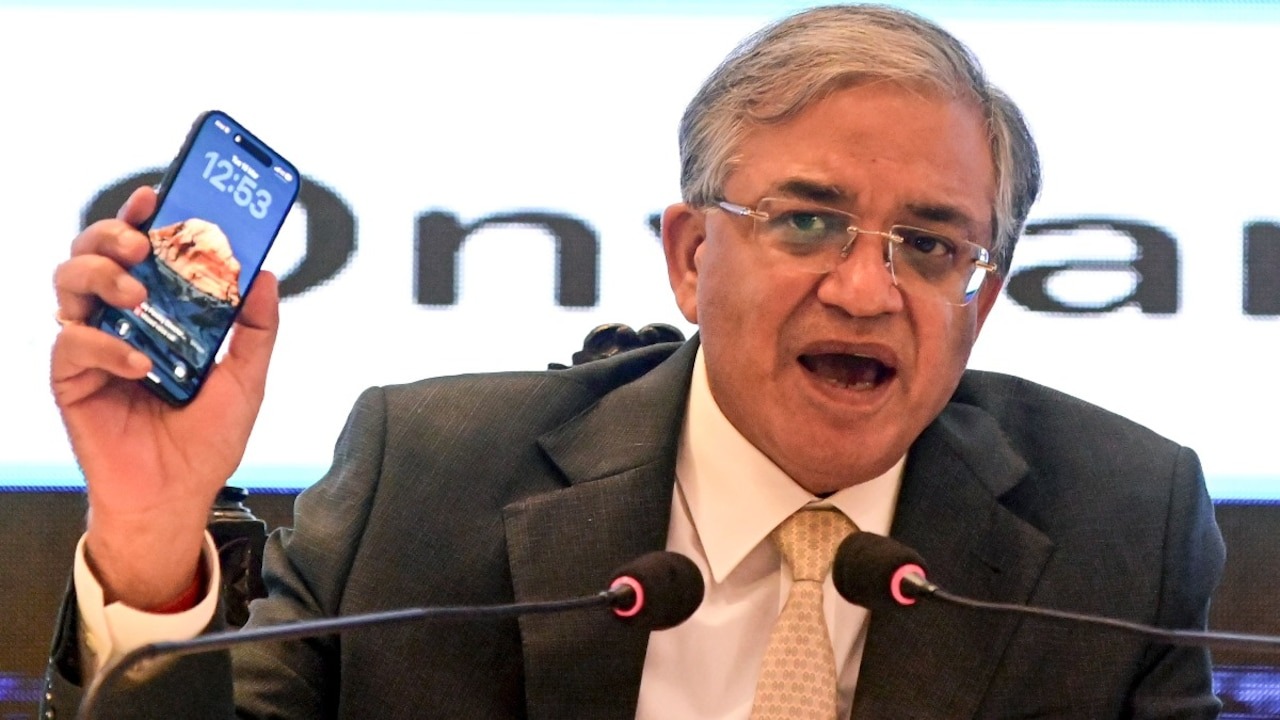
Will the opposition be able to remove Gyanesh Kumar? Know the difficult process of removing the Chief Election Commissioner from the post: – ..

News India Live, Digital Desk: Only the Parliament has the power to remove the Chief Election Commissioner of India. of the constitution Article 324(5) According to, CEC can be removed in the same manner and on the same grounds as Supreme Court Judge To. In common parlance it is called ‘Impeachment’, although in the Constitution this word is used only for the President.
Step-by-step process of removal (Constitutional Process)
Step 1: Initiation of Motion
Lok Sabha: at least 100 MPs Signature required.
Rajya Sabha: at least 50 MPs Signature required.
Opposition in Lok Sabha on 13 March 2026 130 and in Rajya Sabha 63 The signed notices of the MPs have been handed over to the secretaries.
Step 2: Decision of the Presiding Officer
The Speaker of the Lok Sabha or the Rajya Sabha Chairman can accept or reject the motion. At present the opposition has also prepared a no-confidence motion against Speaker Om Birla.
Step 3: Formation of Inquiry Committee
upon acceptance of the proposal 3 member committee It is formed in which:
A judge of the Supreme Court.
A Chief Justice of a High Court.
A distinguished jurist is involved.
Step 4: Voting in Parliament (Special Majority)
If the committee finds him guilty, then in both houses of the Parliament special majority Voting takes place from:
Majority of the total membership of the House.
of members present and voting Two-thirds (2/3) majority.
Step 5: Presidential Approval
After passing from both the houses, the file goes to the President and only after his signature the CEC is removed from the post.
Opposition’s Preparation and 7 big allegations (Opposition’s Preparation)
The INDIA alliance led by TMC (Trinamool Congress) has made 7 main allegations against Gyanesh Kumar:
Prejudicial Conduct: The commission is accused of working at the behest of the government.
Voter list rigging: Claim of removal of names of lakhs of valid voters during ‘Special Intensive Revision’ in Bengal and Bihar.
Discriminatory Practices: Not taking action on the complaints of opposition parties.
Violation of constitutional decorum: Harming the impartiality of the Election Commission.
Lack of data transparency: Delays or irregularities in sharing of election data.
Deploying Micro-Observers: Appointment of supervisors in selected areas in a biased manner.
Questions on appointment process: Protest against not including CJI in the selection committee.
For the first time in history (A Historical Move)
This in the parliamentary history of India first time is when notice is formally given to Parliament for the removal of a serving Chief Election Commissioner. Before this T.N. There was political protest against Seshan (1991) and Naveen Chawla (2006), but the case did not reach formal notice.

Comments are closed.