

The importance of atomic clock is considered very important in space programs. These are highly accurate time measuring instruments, which measure time based on the resonance frequency of atomic transitions occurring in elements such as rubidium, cesium or hydrogen. Atomic clocks are much more accurate than ordinary quartz clocks. Whereas ordinary clocks can make a difference of up to one second in a few days, the atomic clock makes a difference of only one second in about 100 million years. This extraordinary accuracy is critical for satellite-based navigation systems, as an error of just one nanosecond can cause a position error of up to 30 centimeters on Earth.
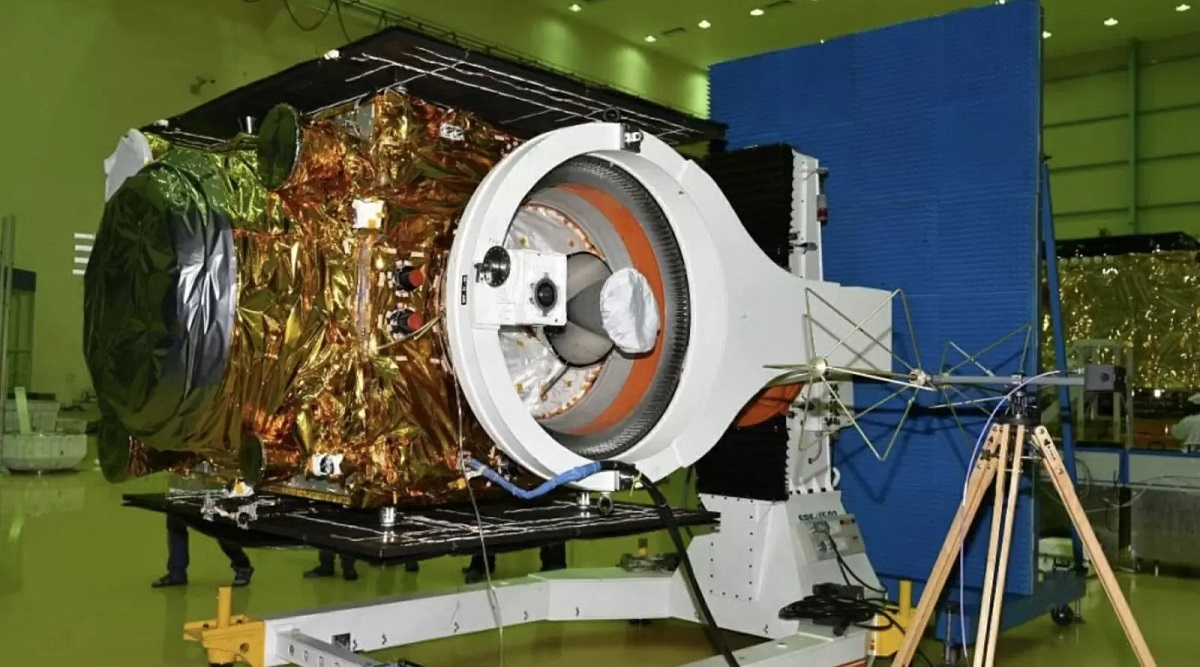
India’s Regional Navigation Satellite System is also known as Regional NavIC System. This system has also depended on atomic clocks since its early days. IRNSS-1F, an important satellite of this system, was launched in March 2016. This satellite was equipped with a rubidium atomic clock made in Switzerland.
Recently in March 2026, this clock stopped working after completing its scheduled service period of 10 years. Due to this, the satellite can now continue to provide limited services such as one-way message transmission, but is unable to provide accurate navigation services. This incident illustrates how important atomic clocks are to the reliability of satellite navigation systems.
Challenge of dependence on foreign technology:
Earlier, the navigation satellites of the Indian Space Research Organization used Rubidium Atomic Frequency Standard (RAFS), manufactured by the Swiss company Spectratime. Three atomic clocks were installed in each satellite for backup.
However, with time many of these watches became prematurely damaged. Such problems surfaced not only in India but also in the Galileo navigation system of Europe. An investigation by the European Space Agency in 2017 indicated that a short circuit during ground testing could be a possible cause.
Development of indigenous atomic clock:
However, considering the risks of dependence on foreign technology, India decided to develop indigenous atomic clocks. For this purpose, the Indian Rubidium Atomic Frequency Standard (iRAFS) project was started. Under this project, these watches were declared fully eligible by 2022–23. They were first used in the NVS-01 satellite, which was launched in May 2023. Since then, the same indigenous atomic clocks are being installed in all the satellites of the NVS series.
These watches are small in size, radiation-resistant and designed to withstand the harsh environment of space. Their estimated age is said to be 10 to 15 years.
independent time standard of india
The work of development of atomic clock in India is not limited to satellite only. The National Physical Laboratory India, a lab of the Council of Scientific and Industrial Research, developed the country’s first indigenous nuclear power plant between 2008 and 2011. These include cesium fountain and rubidium based watches.
They are used to maintain Indian Standard Time, the official time standard of India, which has an accuracy of about 2.8 nanoseconds.
According to experts, the shutdown of IRNSS-1F clock is definitely a challenge, but it has also made it clear how necessary is the development of indigenous technology. Atomic clocks developed by India will not only ensure continuity of satellite navigation services, but will also strengthen the country’s technological self-reliance.
Also read:
Bihar: NDA made preparations before Rajya Sabha elections, gave voting training to MLAs!
Iran fired ‘dancing missile’ for the first time; Know how dangerous is this ballistic weapon?
Shock to Trump’s naval alliance plan: Britain, Japan and Australia refuse to send troops

Comments are closed.