
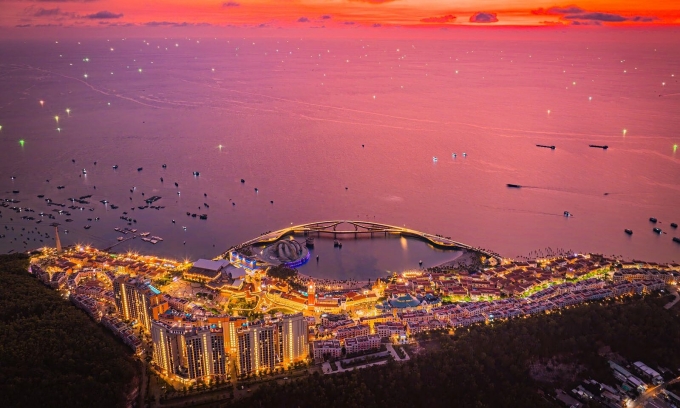

A clock tower inspired by Saint Mark’s Campanile bell tower in Venice, Santo Port, evoking white-domed buildings in Santorini, and cliffside scenery similar to Italy’s Amalfi Coast can all be found on the island. Set against white-sand beaches and turquoise waters, these elements form part of a growing architectural landscape shaped by international references.
Urban studies suggest that modern tourism destinations often build their appeal through diversity rather than relying on a single defining identity. Research published in the journal Sustainability notes that cities offering a mix of cultural activities, architecture and spatial experiences tend to strengthen their competitiveness in tourism.
Branding scholar Keith Dinnie has also argued that a city’s image is formed through multiple symbolic “layers,” with architecture playing a central role in shaping that narrative.
In Phu Quoc, this concept is reflected in the increasing presence of architectural styles influenced by different parts of the world.
Phu Quoc is increasingly integrating global architectural influences. Photo courtesy of Sun Group |
European architectural traditions have influenced urban landscapes worldwide for centuries. From the balanced proportions of Renaissance design to the symmetry of Neoclassical architecture, these styles have become widely recognized references in global urban planning.
Several tourism destinations have adopted similar approaches to develop distinctive identities. In the United States, the Bavarian-style town of Leavenworth recreates the atmosphere of a German alpine village, while South Korea’s Petite France draws inspiration from French culture and literature.
Phu Quoc has followed a comparable direction by incorporating Mediterranean-inspired elements such as Roman arches, coastal promenades and open piazzas. The aim is to create spaces where visitors encounter architectural motifs associated with different cultures within a single destination.
Adapting these designs to a tropical environment, however, requires adjustments rather than direct replication.
In Sunset Town, architectural features have been modified to suit the island’s climate. Windows are often smaller than those typically found in Mediterranean regions to reduce heat exposure, while thicker walls and bright exterior colors help reflect sunlight. Wide roofs and extended verandas provide shade and allow sea breezes to circulate through the buildings.
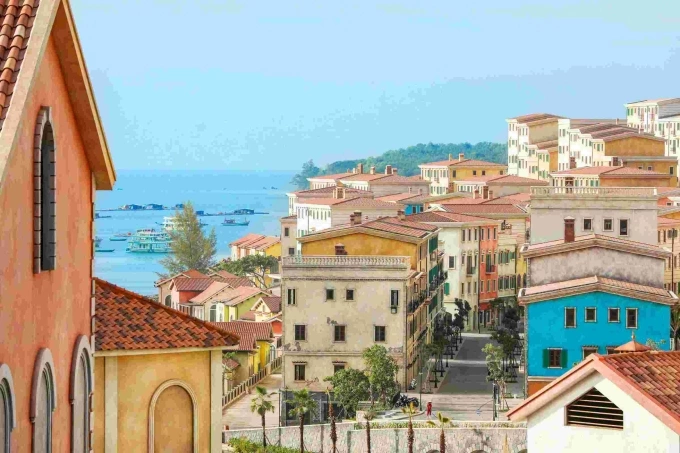 |
Santo Port features architectural elements inspired by Mediterranean coastal towns. Photo courtesy of Sun Group |
The master plan of Sunset Town also follows the island’s natural terrain. Public squares facing the sea, shaded walkways and layered elevations are designed to take advantage of the coastal landscape.
Through these adaptations, architectural references from Europe are integrated into Phu Quoc’s tourism environment. An example is the cable car station at Sun World Hon Thom, which is designed with inspiration from the Roman Colosseum, alongside the white-domed buildings of Santo Port overlooking the sea.
As The New York Times once noted, visitors can experience the cable car with a structure inspired by the Roman Colosseum in Phu Quoc.
Alongside historical references, newer projects add contemporary architectural elements to the island’s landscape.
One example is Kiss Bridge, designed by architect Marco Casamonti, which has become a popular spot for visitors gathering to watch sunsets and panoramic sea views.
Another project is Sun Signature Gallery, designed by architect Bill Bensley. The structure incorporates elements of mid-century modern design and serves as a venue for exhibitions and cultural activities.
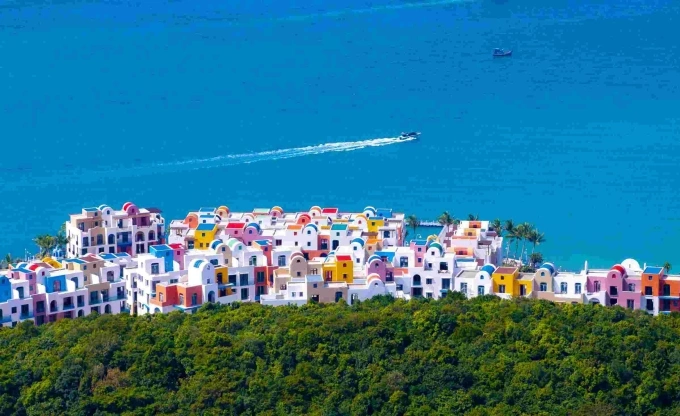 |
Festivals and events take place throughout the year around Phu Quoc Island’s architectural landmarks. Photo courtesy of Sun Group |
These developments form part of a broader tourism ecosystem that combines architecture, entertainment and cultural experiences.
Along promenades influenced by European urban design, visitors can explore a diverse culinary scene that blends international dining with authentic Vietnamese cuisine. Along the waterfront, entertainment venues regularly host multimedia performances and events., including Kiss of the Sea and Symphony of the Sea.
Together, these elements contribute to Phu Quoc’s evolving identity as an international tourism destination.
The presence of architectural styles from different parts of the world reflects an ongoing exchange of design ideas, adapted to a tropical setting and integrated into the island’s tourism development.
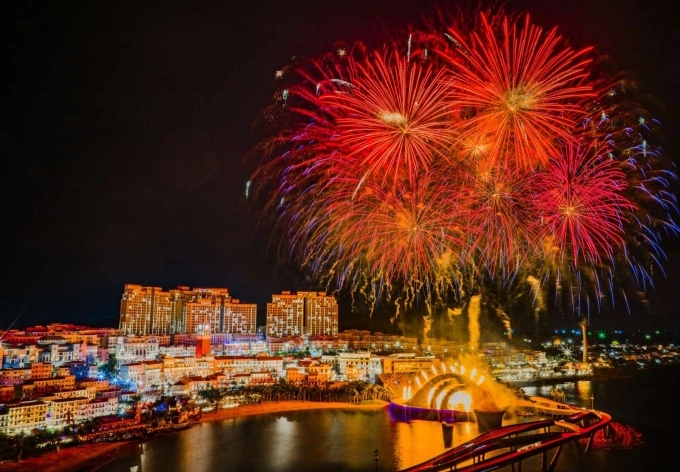 |
Fireworks show at Kiss Bridge, Phu Quoc. Photo courtesy of Sun Group |

Comments are closed.