

Blood cancer is not a single disease. It is a group of cancers that affect the blood, bone marrow, and lymphatic system, changing how blood cells are made and how they work. Because these cells help carry oxygen, fight infection, and control bleeding, the effects can show up in many different ways. Recognizing blood cancer symptoms early matters because the signs are often mistaken for weakness, infection, or stress. The good news is that there are different types of blood cancer, and many patients today benefit from advanced diagnosis and modern treatment options, including care at a cancer hospital in pune.
What Is Blood Cancer?
Blood cancer begins when abnormal blood cells start growing in an uncontrolled way. It usually starts in the bone marrow, where blood cells are produced, or in the lymphatic system, which is a key part of the body’s immune defense. Instead of developing into healthy cells that fight infection, carry oxygen, or help blood clot, these abnormal cells multiply and crowd out normal cells. That can weaken immunity, increase the risk of bleeding, cause anemia, and affect many organs over time. In simple words, blood cancer disrupts the body’s normal blood-making system and can interfere with overall health in ways that are sometimes subtle in the beginning.
Types of Blood Cancer
There are three main types of blood cancer, and each affects the body differently.
Leukemia
Leukemia is a cancer of the blood-forming tissues, especially the bone marrow. It mainly affects white blood cells, which normally help the body fight infection. In leukemia, these cells become abnormal and do not work properly. Leukemia may be acute, which develops quickly, or chronic, which usually progresses more slowly.
Lymphoma
Lymphoma affects the lymphatic system, including the lymph nodes and lymphocytes. These cells are an important part of the immune system. The two broad categories are Hodgkin lymphoma and Non-Hodgkin lymphoma. A common symptom is painless swelling of lymph nodes, especially in the neck, armpit, or groin.
Multiple Myeloma
Multiple myeloma is a cancer of plasma cells, a type of white blood cell that helps make antibodies. When plasma cells become cancerous, they can weaken the immune system, damage bones, and interfere with normal blood counts or kidney function. Some patients also develop bone pain, infections, or weakness.
Common Blood Cancer Symptoms
Blood cancer symptoms can vary depending on the type, but there are several warning signs that appear again and again across leukemia, lymphoma, and myeloma. Persistent fatigue and weakness are common because abnormal blood cells can lead to anemia or interfere with normal body function. Frequent infections may happen when the immune system is weakened. Unexplained weight loss and loss of appetite can be signs that the body is under stress from cancer. Fever or night sweats are also common, especially in lymphoma and leukemia. Easy bruising, bleeding gums, or frequent nosebleeds may happen when platelet counts are affected. Swollen lymph nodes can appear in the neck, armpit, or groin. Bone or joint pain may also occur, particularly in some leukemias and in multiple myeloma. These blood cancer symptoms are not always dramatic at first, which is why they are sometimes ignored for too long.
Early Warning Signs of Blood Cancer
The early signs of blood cancer are often easy to miss because they can look like everyday health problems. Constant tiredness may be blamed on work, poor sleep, or stress, but if it does not improve, it deserves attention. Pale skin can happen when blood counts drop. Shortness of breath may appear even with mild activity. Frequent nosebleeds or unusual bruising can be a clue that blood clotting is affected. Repeated infections may signal that the immune system is not working properly. Loss of appetite can also be an early concern, especially if it comes with weakness or weight loss. The challenge is that these early signs of blood cancer are not unique to cancer alone, so people often wait too long. But when several of these symptoms come together or persist for weeks, they should not be ignored.
What Causes Blood Cancer?
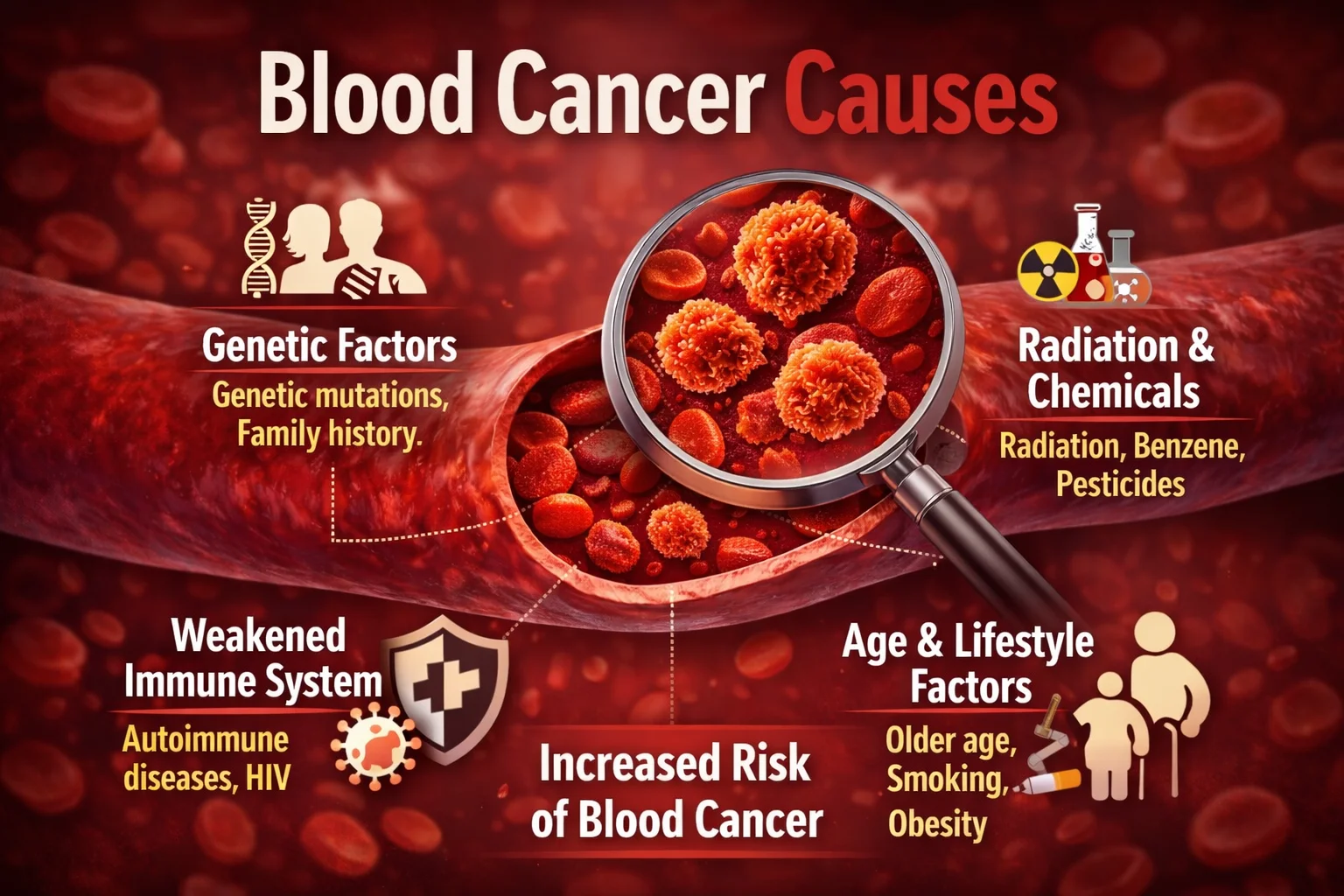
The exact blood cancer causes are not always clear, but experts know that blood cancers begin with changes in genes inside blood-forming cells. Certain risk factors may increase the chance of these changes. These include exposure to radiation, benzene and some other chemicals, a weakened immune system, previous cancer treatment in some cases, and family history for certain blood cancers. Smoking and other unhealthy lifestyle factors may raise overall cancer risk, though they are not the only explanation. Importantly, many people diagnosed with blood cancer do not have an obvious single cause. That is why awareness of blood cancer causes is useful, but symptom recognition and early testing remain just as important.
When Should You See a Doctor?
You should see a doctor if symptoms last more than 2 to 3 weeks, keep returning, or are getting worse. Frequent infections, unexplained bruising or bleeding, persistent fatigue, fever, night sweats, swollen lymph nodes, or unexplained weight loss should all be taken seriously. Early diagnosis matters because these conditions can progress quietly before becoming more obvious. If you notice persistent blood cancer symptoms, speaking to a doctor early can help you get the right tests and avoid delay. If needed, further evaluation at a cancer hospital in Pune can guide diagnosis and treatment planning.
How Is Blood Cancer Diagnosed and Treated?
Doctors usually begin with blood tests to look for abnormal blood cell counts or other warning signs. If something looks suspicious, further testing may include a bone marrow biopsy and, in some cases, imaging studies depending on the suspected type of blood cancer. Treatment depends on the exact diagnosis and stage. Common approaches include chemotherapy, targeted therapy, immunotherapy, and bone marrow or stem cell transplant in selected patients. Modern blood cancer treatment is often highly individualized, which is why accurate diagnosis is so important from the beginning.
Frequently Asked Questions
What Are The First Symptoms Of Blood Cancer?
The first symptoms often include tiredness, weakness, repeated infections, fever, night sweats, unusual bruising, or unexplained weight loss. Some people also notice swollen lymph nodes or breathlessness. Early blood cancer symptoms can be mild, so they are often ignored at first.
Can Blood Cancer Be Detected Early?
Yes. Blood cancer can sometimes be detected early through blood tests and by paying attention to persistent warning signs. Early medical evaluation is especially important when symptoms do not improve or when several symptoms appear together.
Is Blood Cancer Curable?
It depends on the type of blood cancer, how advanced it is, and how well it responds to treatment. Some blood cancers can be cured, while others can often be controlled for long periods with modern therapies.
Who Is At Higher Risk Of Blood Cancer?
People with certain genetic risks, exposure to radiation or harmful chemicals, weakened immunity, or a family history may have a higher risk. Still, some patients develop blood cancer without any clear known cause.

Comments are closed.