
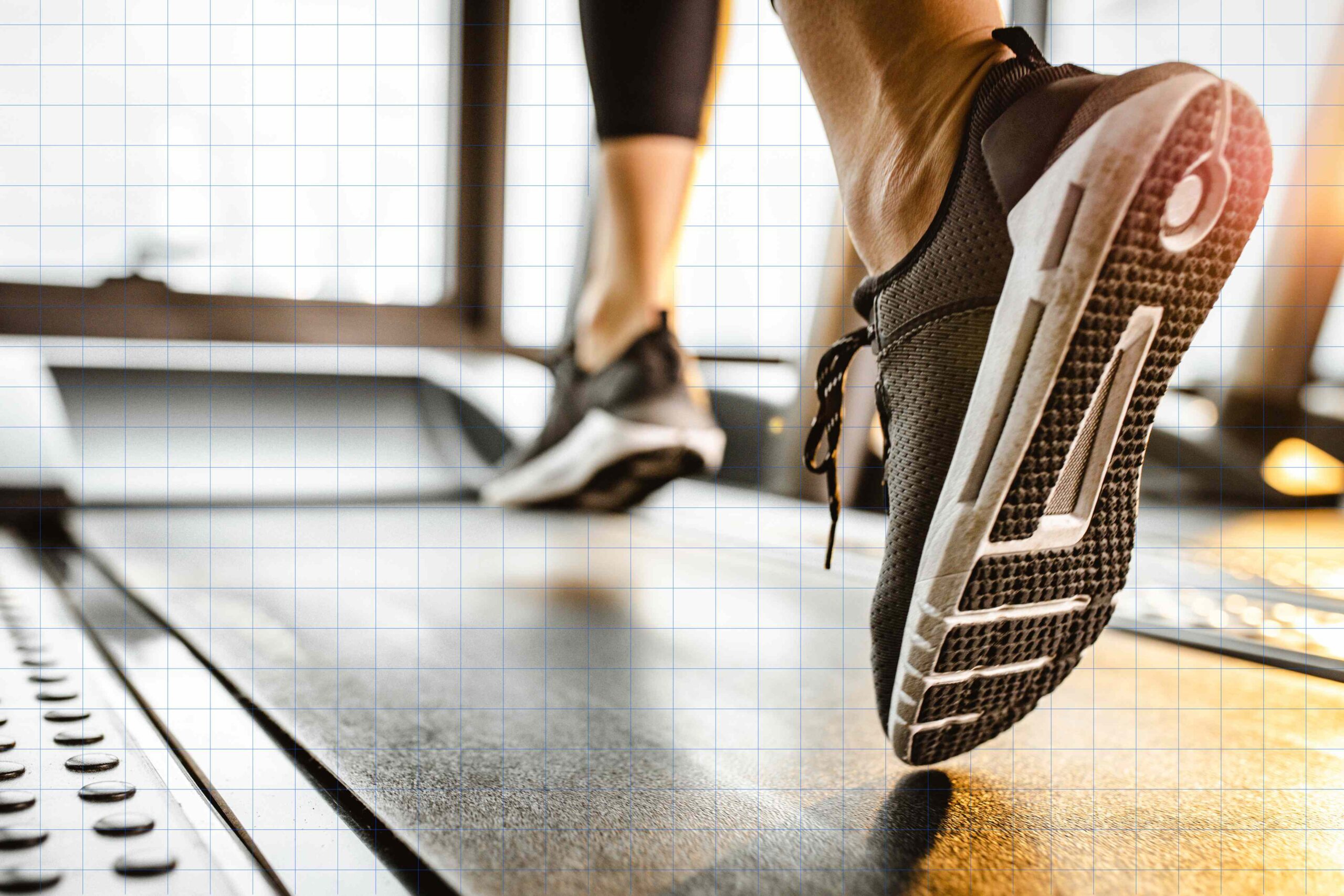

Save your soles while you sweat.
Reviewed by Dietitian Karen Ansel, M.S., RDN
Key Points
- Podiatrists say exercising in poorly fitted or worn-out shoes can cause pain and injury.
- Wearing the wrong shoes for your activity can also lead to foot problems.
- Be sure to wear properly fitted athletic shoes and replace them at least once a year.
It’s not just your muscles that are engaged during your workout—your feet are with you every step of the way. But some of your workout habits may be quietly leading to foot discomfort or pain. “Even for just a casual exerciser, the right shoe can dramatically influence foot health overall, as well as comfort and injury risk reduction,” says pedorthist Nicole G. Freels, C.Ped
What workout habits are most likely to cause foot troubles? To find out, we asked foot-health experts about the top exercise-related mistakes they see—and the foot-healthy habits to practice instead.
Here are their biggest pet peeves.
1. Wearing Poorly Fitting Shoes
The right fit is half the battle. Yet, one review study found that up to 72% of people wear footwear that doesn’t fit correctly. “A well-fitted athletic shoe provides shock absorption, stability and support for the natural mechanics of the foot,” says Freels. “Without that support the body often compensates. It will place additional stress on the plantar fascia, Achilles tendon, ankles, knees and even the lower back,” she explains. There are also potential blisters to contend with if shoes are too small or too loose.
Properly fitted athletic shoes should have a thumb’s width of space in front of the longest toe, and the heel should be secure but not too tight, says Freels. When shopping, keep in mind that your feet will swell during a workout. So, when you’re shopping for exercise shoes, go toward the end of the day or after a workout when your feet are swollen.
2. Wearing Worn-Out Shoes
Worn-out shoes don’t absorb shock effectively or control the motion of your feet well. That can leave you open to alignment issues that cause overuse injuries. What’s challenging is that looks can be deceiving, says podiatrist Joshua Treimer, DPM While you may know it’s time to toss your pair when they’re falling apart, they’re probably giving you signals earlier than that. “I tell my patients to use change in function to determine the remaining lifespan of your shoes,” says Treimer. (The same goes for orthotic inserts.) Here’s an example: Let’s say you’re doing the same level of activity today as you were one year ago when you got your shoes. But now, previous aches and pains are resurfacing, or new ones are forming that are unrelated to an injury or specific event. That means it’s time to change out your shoes, says Treimer.
3. Not Wearing the Right Shoes for Your Activity
Most athletic shoes can be used for most activities, says Treimer. But for the best fit and function, he recommends looking at the main movements of your sport and matching the shoe to them. For example, if you are moving forward, then wear a walking or running shoe. However, if you are moving side-to-side with changes in direction, or acceleration and deceleration, he recommends a cross-trainer shoe. These shoes will have the appropriate toe box and tread to support your body’s movements.
4. Wearing Nonathletic Footwear in the Gym
Yes, this does happen—and more than people realize, says Freels. Certain shoes are right for exercise, but others, such as sheepskin-lined boots or slippers (you know the ones), slip-on clogs and flat canvas shoes, are not.
“Not all shoes are designed for exercise,” says Freels. The shoes listed above are all examples of footwear that are problematic for the gym because they’re unstable, bulky, lack cushioning or arch support, and/or have minimal stability or heel control, she says. Along with that, exercising barefoot on a hard surface (such as working out at home) can increase stress on the plantar fascia and Achilles tendon, Freels adds. “Most causal exercise routines can benefit from a proper athletic shoe that stabilizes the foot and absorbs impact,” she says.
Foot-Healthy Strategies to Try Instead:
To keep your feet happy and healthy, follow this expert-backed advice:
- Get Fitted Properly: Go to a quality shoe store with knowledgeable employees who know about athletic footwear, rather than ones that try to sell you any shoe. They can help you find the proper fit and make shoe recommendations, says Treimer.
- Replace Your Sneakers Every Year: However, if you are a frequent exerciser, you may need to get a new pair more often. For running or walking, replace your athletic shoes after 300 to 500 miles. For other sports, retire them after 45 to 60 hours of activities, like basketball, aerobic dance or tennis.If you’re not sure if your shoes need replacing, look for a deformed or compressed midsole, uneven wear on the bottom or noticeable creasing.
- See an Expert If You’re in Pain: Many overuse injuries start with mild discomfort that people try to push through, says Freels. Visit a health care provider—preferably a podiatrist—if you have foot or ankle pain. This is especially important if you have diabetes, a change in the skin of your feet, pain, burning or numbness, or if you experience an injury that does not improve within 24 hours.
Our Expert Take
Wearing the right athletic shoes is important for foot health for all types of exercisers. Common mistakes podiatrists see are wearing poorly fitted or worn-out shoes, not wearing the right shoes for your activity and wearing nonathletic shoes during a workout. You can practice foot-healthy habits by getting properly fitted for shoes that match your movement patterns or sport, and replacing sneakers after one year (or more often if you exercise frequently). If you have any lingering foot problems, don’t go it alone. See a health care provider, like a podiatrist, to help you get back on your feet.

Comments are closed.