
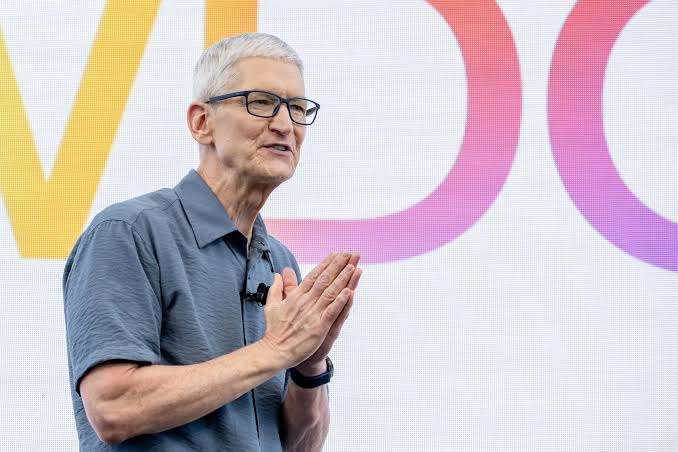
Tim Cook Rejects Retirement Speculation, Signals Continued Focus on Apple’s Long-Term Vision

Tim Cook has moved to dispel growing speculation about his future at Apple Inc., making it clear that he is not preparing to step away from the role anytime soon.
During a recent television appearance with Michael Strahan on ABC News, Cook addressed rumours suggesting he may be considering a reduced role or eventual retirement. He dismissed the claims outright, indicating that such narratives have circulated without any factual basis.
The comments come at a time when leadership transitions in major technology firms often spark intense market speculation. Cook’s direct response appears aimed at reassuring investors, employees, and customers that Apple’s leadership structure remains firmly in place.
A Longstanding Relationship With Apple
Cook’s association with Apple spans nearly three decades, making him one of the most enduring figures in the company’s modern history. Since joining the organization in the late 1990s, he has played a central role in its operational and strategic evolution.
Reflecting on his journey, Cook emphasized the depth of his connection to the company. His tenure has not only been defined by longevity but also by a consistent commitment to Apple’s broader mission. Even after years at the helm, his engagement with the company’s work appears unchanged.
This sense of continuity is particularly significant in an industry where leadership changes can often signal shifts in direction. Cook’s reaffirmation of his role suggests stability at a time when Apple continues to navigate rapid technological and economic changes.
Apple at 50: Reflecting on a Legacy of Innovation
The discussion around Cook’s future coincides with a milestone moment for Apple as it marks 50 years since its founding in 1976. The anniversary has prompted reflection on how the company has influenced multiple sectors over the decades.
From its early days in personal computing to its dominance in consumer electronics, Apple has consistently shaped how technology is used in everyday life. Products like the iPhone redefined mobile communication, while the company’s ecosystem of hardware and software has become deeply embedded in both personal and professional environments.
Cook also highlighted Apple’s contributions to creative industries, pointing to tools that have enabled designers, filmmakers, and musicians to produce and distribute content more efficiently. In addition, the company’s growing emphasis on health and wellness technology continues to expand its reach beyond traditional consumer electronics.
Devices such as the Apple Watch have introduced features focused on fitness tracking and health monitoring, reflecting a broader shift toward integrating technology with personal well-being.
Apple’s Approach to Artificial Intelligence
As artificial intelligence becomes a defining force in the tech industry, Cook outlined Apple’s measured stance on the technology. Rather than presenting AI as inherently transformative or risky, he framed it as a tool whose impact depends on how it is applied.
A key aspect of Apple’s strategy is its emphasis on privacy. The company has consistently prioritized processing user data directly on devices, reducing reliance on external servers. This approach is intended to give users greater control over their information while still enabling advanced functionality.
For tasks that require more computational power, Apple relies on its Private Cloud Compute system. This hybrid model allows the company to balance performance with security, aligning with its long-standing focus on protecting user data.
Cook’s comments reflect Apple’s broader philosophy of adopting emerging technologies cautiously, ensuring they align with the company’s values before being widely implemented.
Major Investment Plans in the United States
Cook also shed light on Apple’s significant financial commitments within the United States. The company plans to invest approximately $600 billion over the next four years, underscoring its focus on strengthening domestic operations.
This investment is expected to support the expansion of manufacturing capabilities, particularly for critical components such as semiconductors and iPhone glass. Increasing production within the U.S. could help Apple reduce supply chain vulnerabilities while also contributing to local job creation and economic growth.
Despite this domestic push, Apple’s manufacturing output will continue to serve a global market. The company remains deeply integrated into international supply chains, and its U.S. investments are part of a broader strategy to balance global reach with regional resilience.
Watching Trade Policy and Legal Developments
Trade policy remains another area of attention for Apple. Cook acknowledged ongoing developments following a ruling by the Supreme Court of the United States that deemed certain tariffs unlawful.
While he did not outline specific actions Apple might take, he indicated that the company is closely monitoring the situation. Any decisions regarding potential tariff refunds or adjustments will depend on how legal proceedings unfold.
For a company with a complex global supply network, changes in trade regulations can have significant financial and operational implications. Apple’s cautious stance suggests it is taking time to evaluate the broader impact before making any moves.
Engaging With Policymakers
Cook also addressed criticism related to his interactions with political leaders. He clarified that these engagements are driven by the need to discuss policy issues that directly affect Apple’s business, rather than any political alignment.
Maintaining access to decision-makers, according to Cook, is essential for navigating regulatory environments and ensuring that the company’s perspective is represented in policy discussions. These conversations often focus on areas such as trade, taxation, and technology regulation.
This approach is consistent with how many global corporations operate, balancing the need to engage with governments while maintaining a focus on business objectives.

Comments are closed.