
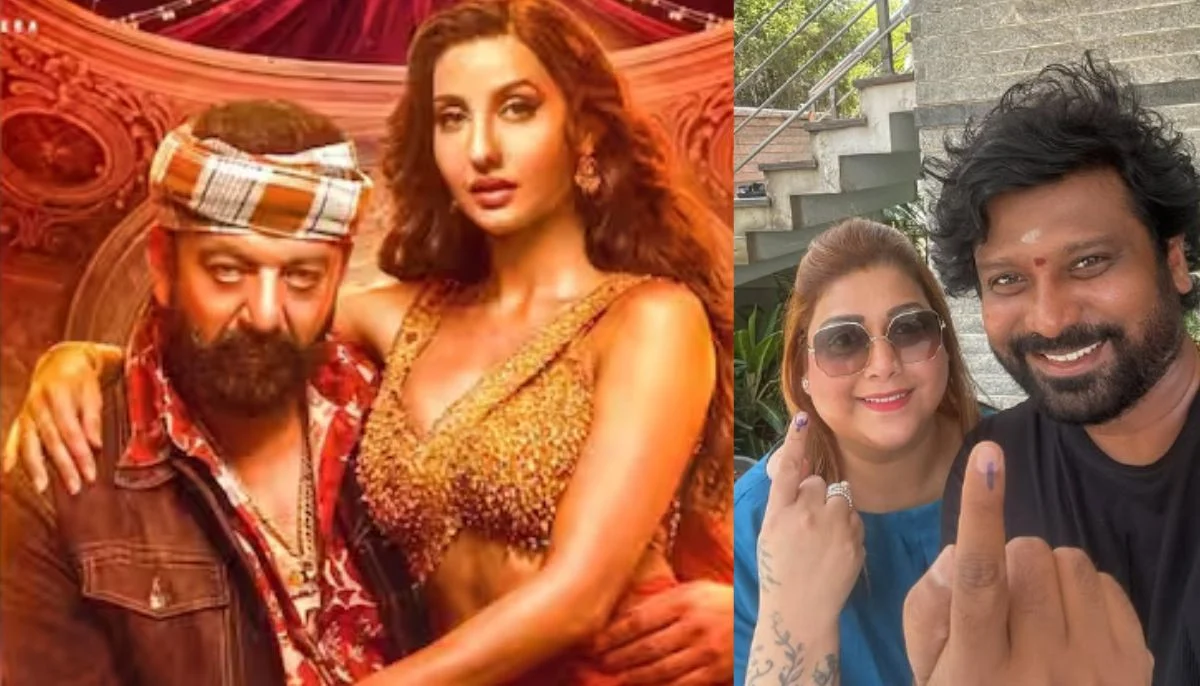

The latest track Sarke Chunar Teri Sarke from KD The Devilfeaturing Nora Fatehi and Sanjay Dutt, sparked a heated debate over its lyrics and dance moves.
Following complaints from industry bodies and the public, the Hindi version of the song was removed from YouTube after objections from the All Indian Cine Employees Association( AICWA) and complaints filed with the CBFC and the Ministry of Information and Broadcasting.
Amid the growing counterreaction, Rakshita, wife of the film’s director Prem, shared her thoughts on Instagram. She highlighted what she called “selective outage,” pointing out that earlier films and songs with similar themes, such as choli ke peach and Dreamum Wakeupumhad not faced the same criticism.
She wrote, “Yes yes I have seen it all. I know you guys are tagging me in random people’s posts. The fact is I know what’s written. I know what’s happening. My stand on whether I am for it or against it doesn’t matter, when songs like Peelings, Dreamum Wakeupum, like Choli ke Peeche or 100s like these came out it seemed fine. But one song creates massive news.”
Rakshita also defended her husband’s work, emphasizing the difference between critique and abuse.“Just because some films don’t do as well as the others does not mean he is a bad filmmaker. You have the right to abuse him, yes. But do you have the right to abuse him? No.”
She addressed the larger issue of content consumption today, noting that films with violence or sexual content are widely accepted, and said, “Prem is a Kannadiga as much as all of you are. You have the rights to tell him what’s right and what’s not. But being abusive does not help anyone.”
Rakshita further discussed the challenges faced by the Kannada film industry. “Selling a film to an OTT platform or a TV channel is one of the biggest challenges for a Kannada director today. No matter how much publicity one does, reaching heights like other cinema markets is extremely difficult.”
Defending the director’s promotional strategy, she added, “Prem achieves his goals with his kind of publicity. We accept audience feedback and try to improve every film. But online abuse only shows the negative side of social media.”
She concluded with a message of reassurance and gratitude. “Thanks to all the concerned ones. I am truly grateful. Prem, our baby, and I will do what is right in the end. Trust us. Smile more and love more. Stop tagging me in random posts. I have said what had to be said.”
Rakshita’s statement brought a new dimension to the debate, raising questions about audience sensitivities, industry double standards, and the line between critique and online abuse.

Comments are closed.