

After months of anticipation, BMW has pulled the wraps off the all-new i3 sedan—its first proper electric answer to the iconic 3-Series. And this time, it feels like the brand has found its footing again.
Built on BMW’s Neue Klasse architecture, the i3 isn’t just another EV—it’s a reset. While the iX3 crossover got the platform first, this is the car many were actually waiting for. The good news? It doesn’t disappoint.
A Design That Feels Like BMW Again
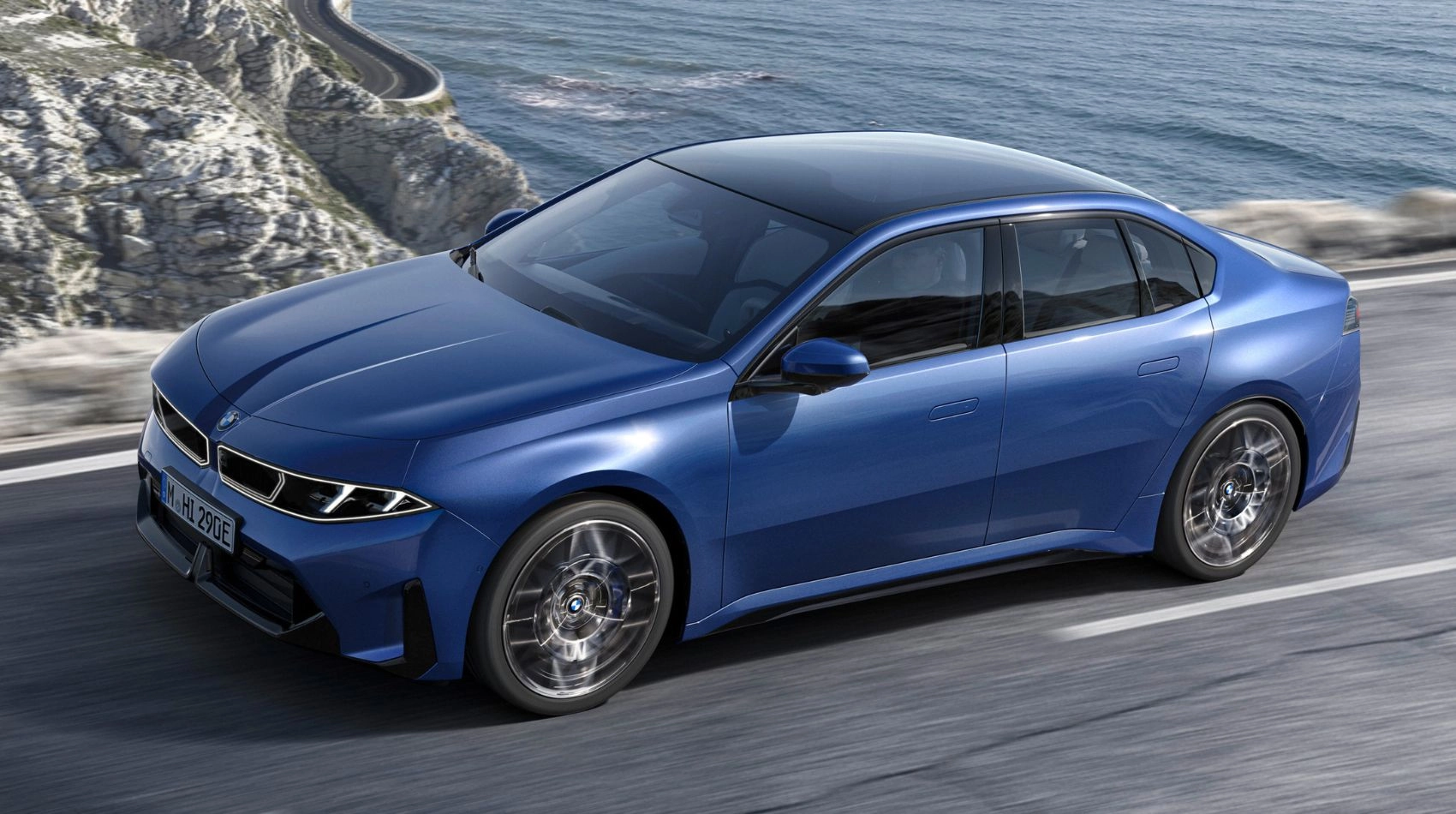
Let’s start with what hits you first—the design. The i3 keeps much of the Vision Neue Klasse concept’s clean, tightly wrapped proportions, but tones things down just enough for production.
The front end reimagines BMW’s controversial kidney grille. Instead of a gaping opening, it’s now a slim lighting signature stretching across the width, with a subtle inner outline hinting at the classic grille shape. It’s bold, but not overdone.
From the side, the car looks properly balanced. Short overhangs, a long wheelbase, and a low stance bring back that classic BMW sedan silhouette. Even the Hofmeister kink makes a return—though now it’s interpreted in a more modern way.
At the rear, a full-width light bar adds a contemporary touch, but it’s cleaner and more cohesive than what we’ve seen on recent BMW models. Overall, it’s a design that feels confident rather than experimental.
Performance and Range That Matter
Under the skin, the i3 shares a lot with the iX3, including its 800-volt electrical system. That means faster charging and better efficiency right out of the gate.
BMW hasn’t confirmed battery capacity yet, but expectations point to around 109 kWh. What’s more impressive is the range—an estimated 440 miles (EPA), which comfortably puts it among the top-tier electric sedans.
Fast charging goes up to 400 kW, and there’s also vehicle-to-load capability, turning the car into a mobile power source when needed.
The first version out of the gate, the i3 M50 xDrive, packs 463 horsepower and 478 lb-ft of torque. That’s serious performance territory. BMW also hints at more variants to come, including a rear-wheel-drive option and even a high-performance quad-motor M version.
A Cabin That Looks Ahead
Step inside, and the i3 continues the Neue Klasse theme. The layout is minimal but tech-forward, with a central touchscreen angled toward the driver and a wide panoramic display acting as the instrument cluster.
It’s a big shift from traditional BMW interiors, but not in a way that feels alien. If anything, it’s cleaner and more intuitive.
There’s also an option for a four-spoke steering wheel—an unusual design choice that might divide opinions.
Where It Sits in BMW’s Lineup
The i3 is expected to overlap with the i4 in both price and positioning. But here’s the thing—the i4 is based on an adapted combustion platform, while the i3 is EV-first.
That alone gives it a strong case to eventually replace the i4 altogether.
BMW has also confirmed that the next-generation 3-Series will closely mirror the i3’s design language, even though the two will sit on different platforms.
The Bigger Picture
What this really means is simple—BMW is getting serious about its electric future, and the i3 sedan is the clearest sign yet.
It’s not just about specs or range. It’s about identity. And for the first time in a while, this feels unmistakably like a BMW.

Comments are closed.