
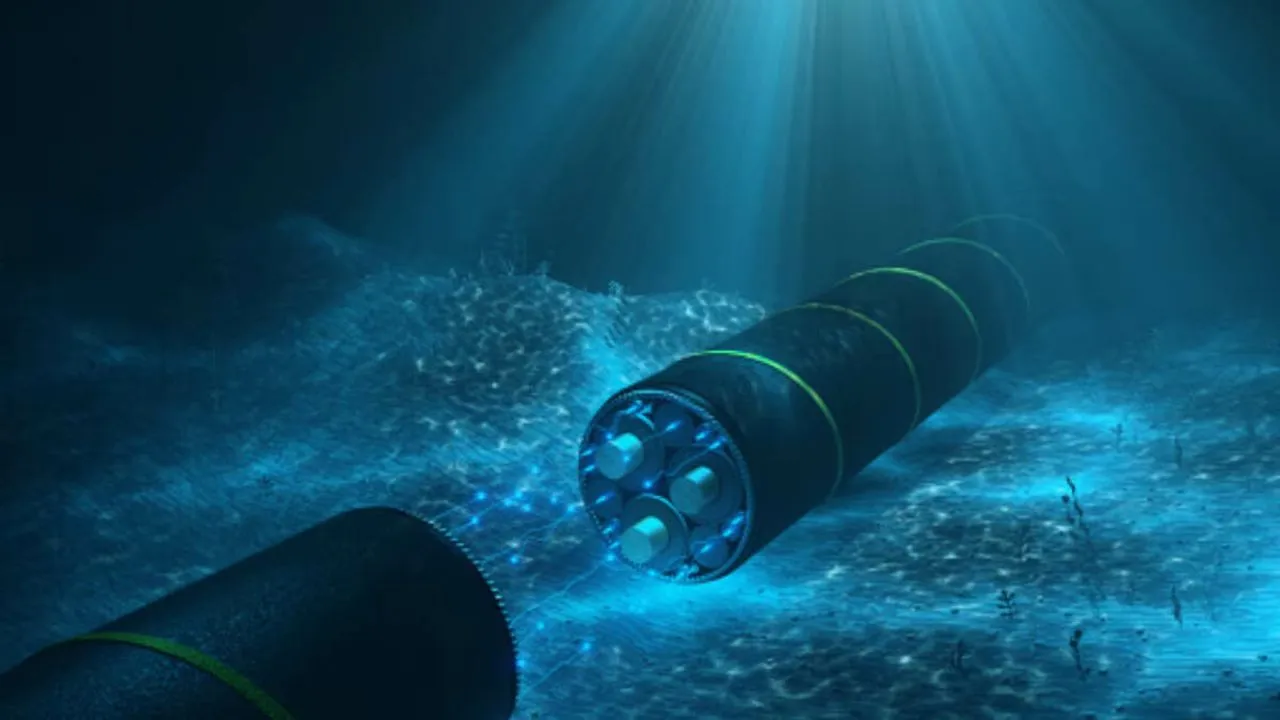
Now there will be shortage of internet too! What is Iran doing 200 feet below the sea? One step can cause devastation

Iran Internet Cables: Amid the escalating war between Israel and Iran, the importance of the Strait of Hormuz has now increased due to another reason – the fiber optic internet cables passing through it. These cables, which are laid 200 feet deep under the surface of the ocean, are the basis of the entire world’s Internet network. This network is the lifeline for video calls, bank transactions, cloud services and other digital services. Now the threat to these cables has increased, because Iran has blocked the Homurz Strait, which has not only affected the oil supply but also put the digital network in crisis.
More than 20 vital undersea internet cables pass through the Strait of Hormuz, connecting data traffic between Europe, Asia, and Africa. Some of these important cables like AAE-1, FALCON, Gulf Bridge International, and Tata-TGN Gulf directly support India’s internet connectivity. If there is any damage to these cables, data traffic between Asia, Europe and Africa could be disrupted, slowing down internet speeds and putting pressure on many digital services.
Can Iran Affect the Internet?
Iran cannot directly shut down the entire world’s internet, but it can deliver a major blow by damaging the cables passing through the Strait of Hormuz. This may disrupt data traffic between Asia, Europe and Africa, causing internet speeds to drop and many services to be affected.
What effect will this have on India?
Many of India’s international internet cables go through the Persian Gulf, passing through the Strait of Hormuz. If these cables are affected, internet speed in India may decline. Along with this, international calls, cloud services, online banking and AI based services may also be affected.
Why are cables difficult to repair?
To repair these cables laid under the sea, special ships and state-of-the-art technology are required. In war situations, these ships avoid taking risks, due to which even a small fault cannot be rectified for months. Last year, attacks by Houthi rebels in the Red Sea caused damage to many internet cables, and a drop in internet speeds in parts of Asia and Africa.
Does the world have a backup plan?
Backup systems exist to some extent, such as diverting data through other routes, but these reduce data transfer speeds. Completely reliable backup systems are still limited, and due to this the entire world could face a major impact.
What will happen if both roads are closed?
If both the Homer and Red Sea routes are affected simultaneously, it could result in a global digital crisis. Internet speeds may drop significantly, data transfers may be delayed, and many global services may be disrupted. The impact of this crisis will be visible not only on technology, but also on banking, healthcare and global trade.
Also read- American fighter jet F-35 came under Iranian attack, had to make emergency landing, see VIDEO
Therefore, the security of the Homurz Strait and the Red Sea region during the war is not just limited to oil supply, but has also become a serious issue for global digital networks and Internet connectivity.

Comments are closed.