
Assembly Election 2026: Is the politics of Puducherry not ‘local’ but controlled from Delhi?

Like the country’s capital Delhi, Puducherry, despite being a union territory, has a system of assembly. Voting for 30 seats will be held on April 9. Whereas the election results will come on May 4. Like other election states, the election campaign has reached its peak there too. The politics of Puducherry has often revolved around the question whether the decisions here are in the hands of the local people and leaders or the real control is with Delhi. Being a small union territory, its power structure is different from that of the states and this difference brings it to the center of the “Delhi vs Local” debate.
UT status is the root of ‘Delhi Control’?
Puducherry is not a full-fledged state but a union territory, where administrative powers are divided between an elected government and a centrally appointed Lieutenant Governor (LG). According to the Constitution, the final authority in many matters rests with the Lieutenant Governor, who is directly answerable to the Central Government. This system repeatedly becomes the cause of conflicts and strengthens the perception that the real power lies with Delhi.
Read this also:Cinema to Politics: After Jayalalitha and Ramachandran, is the superstar effect ending?
Does Delhi get a chance to ‘intervene’ in the battle of LG vs CM?
Puducherry witnessed several open conflicts between the elected government and the Lieutenant Governor. Especially the controversy between V. Narayanasamy and Lieutenant Governor Kiran Bedi took this debate to the national level. Narayanasamy repeatedly alleged that the central government was interfering in the decisions of the state government through the LG. This strengthened the narrative that ‘Delhi’ has more influence than ‘local’ in Puducherry.
National parties dominate the politics of Puducherry. Like Bharatiya Janata Party and Congress Party. Major decisions of these parties, such as the selection of the Chief Minister or the alliance strategy, are often decided in Delhi. For example, at the time of forming or toppling a government, the role of local MLAs appears limited, while the central leadership becomes decisive.
Is coalition politics the basis of ‘Delhi Control’?
Hung assemblies or coalition governments are often formed in Puducherry. In such a situation, the importance of small parties and independent MLAs increases, but the role of national leadership becomes important in making the final equation. It has been seen many times that the way for the formation or fall of the government is cleared only after the meetings held in Delhi.
There are many such examples in Puducherry, where local government schemes got stuck due to the intervention of LG. The elected government feels limited since the Lieutenant Governor has the final authority on issues like approval of files, budget allocation and appointments. This creates the impression that the government elected by the people is not completely independent.
Read this also:From Jayalalitha’s ‘shadow’ to new party: Who is VK Sasikala, why is ‘Chinnamma’ in discussion again?
Do public issues get buried in ‘Delhi vs Local’?
This tussle also affects the general public. Development schemes, welfare schemes and administrative decisions are sometimes affected due to political conflicts. Instead of local issues, power struggle becomes the center of discussion, due to which the real questions of the public are left behind.
Although the narrative of ‘Delhi Control’ is strong, it is not the whole truth. Local politics of Puducherry, caste equations, regional identity (like Karaikal, Mahe, Yanam) and influence of local leaders also play an important role. Election results are ultimately decided by the people, and sometimes local issues become the reason for change of power.
What is the solution – autonomy or better coordination?
Political experts of Puducherry believe that the solution to the conflict lies either in giving more autonomy to Puducherry or in setting clear boundaries of work between the Lieutenant Governor and the government. Until this balance is struck, the debate of ‘Delhi versus local’ will continue.
In fact, the politics of Puducherry is neither completely ‘local’ nor completely under ‘Delhi control’. This is a hybrid model, where there is a constant battle for balance of power between the two. But it can definitely be said that Delhi’s influence is more visible in the current system. This is the reason why this question arises again and again.
The main competition between whom?
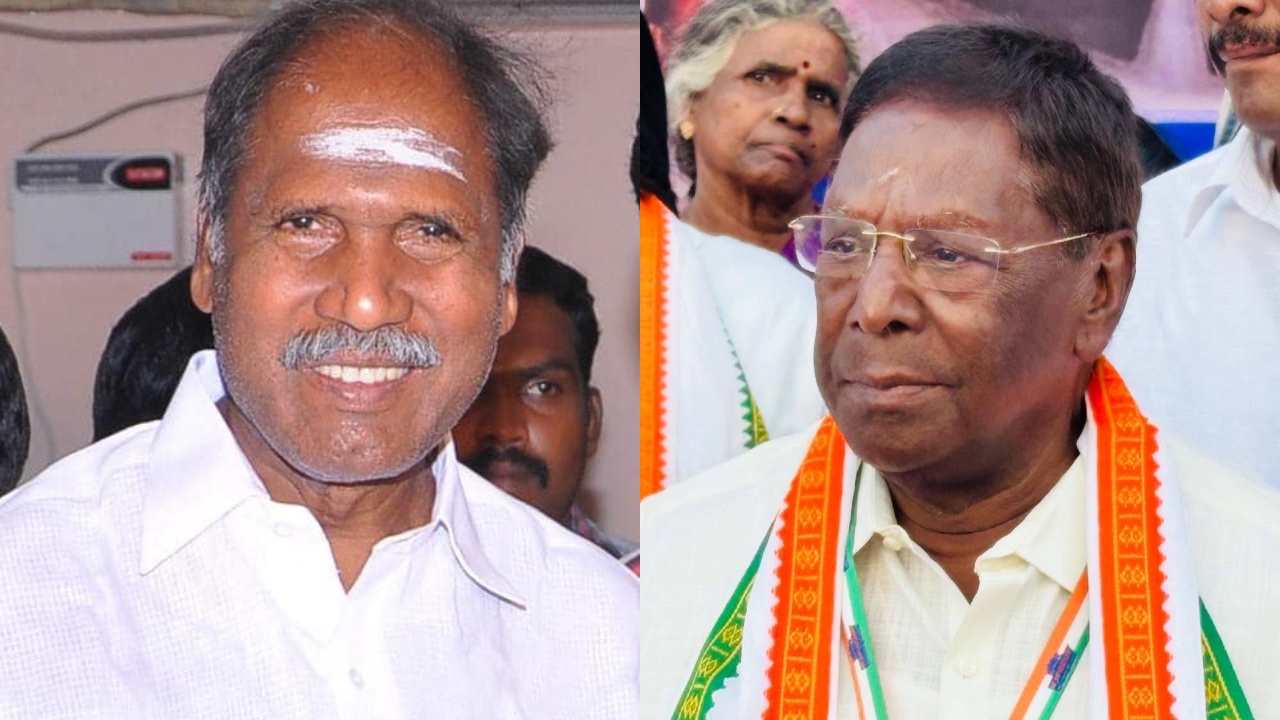
The main contest in the Puducherry Assembly elections traditionally seems to be confined between two big political factions. On one side, the NDA alliance led by Bharatiya Janata Party and on the other side, the alliance led by Congress Party. If we talk about faces, the most prominent name in the NDA camp is N. Rangasamy, who is the leader of All India NR Congress and is also the current Chief Minister. Rangasamy’s image has been that of a grassroots and popular leader, hence the entire narrative of NDA largely revolves around him. Whereas BJP provides backup at the level of organization and resources.
At the same time, the Congress Party has no dearth of faces in the opposition camp, but the lack of a clear and universally accepted Chief Minister candidate is often considered its weakness. Earlier V. Narayanasamy was seen in this role, but after him the party is looking for a new leadership. Apart from this, Dravida Munnetra Kazhagam also plays an important role in the alliance with Congress and the influence of Tamil Nadu politics is visible here also. However, DMK usually plays a backseat role and does not appear as the CM face.

Comments are closed.