
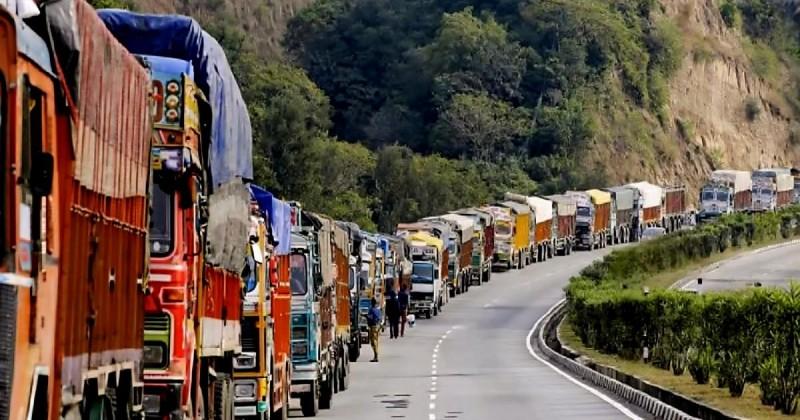

For decades, the stretch between Ramban, Digdol, and Panthyal on National Highway-44 was known by a name locals rarely uttered without concern — Khooni Nallah. Falling rocks, landslides, heavy rains, and a high number of fatal accidents frequently brought traffic to a halt. Travellers often found themselves stranded for hours, sometimes even days, waiting for the road to clear.
Today, that narrative is changing with the construction of the four-lane twin-tube tunnels from Digdol to Panthyal in the Ramban–Banihal section of NH-44.
Ratan, a resident of Digdol, recalls how unpredictable travel used to be. “Earlier, when rocks fell or during heavy rains, people were often forced to wait for days on either side. Now, we can reach from Digdol to the Ramsoo–Magarkote side in just five minutes. I sincerely thank the government for this project,” he says.
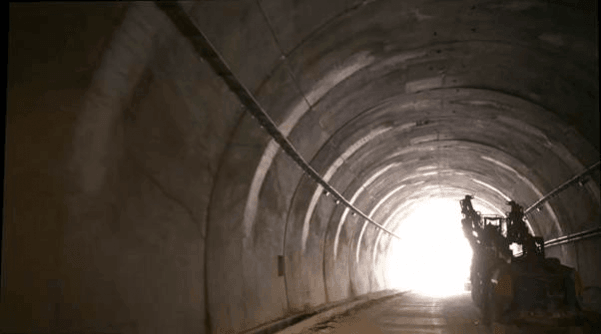
Part of the ongoing four-laning of the Ramban–Banihal section of NH-44, the Digdol–Panthyal Twin Tube Tunnels mark a significant step towards strengthening connectivity in this challenging Himalayan terrain. Located high in the Himalayas, the Ramban–Banihal stretch forms a vital link connecting the Kashmir Valley with the rest of India. Known for its steep terrain and frequent landslides, this section has long posed challenges for travellers and transporters alike.
To make this critical route safer, faster, and more reliable, a major infrastructure initiative by the Ministry of Road Transport and Highways is nearing completion — the Digdol–Panthyal Twin Tube Tunnel project.

A Corridor of Strategic Importance
The project represents a crucial step towards strengthening all-weather connectivity along the Jammu–Srinagar National Highway. Once completed, it will significantly reduce travel time between Jammu and Srinagar, directly benefiting goods transporters, tourists, local residents, and security agencies in terms of both time and cost.
Additionally, reduced travel time will facilitate faster movement of the Army and other security personnel along this vital corridor, enabling quicker responses during emergencies and enhancing strategic connectivity in the region.
Safer Roads, Easier School Days
For Naresh, another resident of Digdol, the impact is already visible in everyday life, especially for children. “Earlier, accidents were almost a daily occurrence, and traffic jams were common,” he says. “Travelling to Ramban was difficult, and our children faced many problems commuting to school.”
Long travel hours meant children returned home exhausted, leaving little time to study. “By the time they reached home, they barely had the energy or time to focus on their studies,” he adds.
With improved connectivity, the situation is rapidly changing. “Now, we can reach Ramban in about five minutes. Travelling has become much easier. Our children return home earlier and can spend more time studying. In the coming years, accidents will also reduce, and travel time will be saved,” Naresh explains.
Key Highlights of the Project
- Project: Four-lane Digdol–Panthyal Twin Tube Tunnels in the Ramban–Banihal section of NH-44
- Location: Jammu & Kashmir
- Tunnel Length: Northbound – 2.6 km and 0.619 km; Southbound – 3.08 km
- Project Cost: ₹866.37 crore
- Current Physical Progress: 87.2%
- Advanced Engineering in Difficult Terrain
The tunnels are being constructed using the New Austrian Tunnelling Method (NATM), a widely adopted technique for underground excavation in complex geological conditions. Work began simultaneously in 2022 and has progressed rapidly, with the project now nearing completion.
Excavation has been carried out using a combination of heading and benching techniques to ensure structural stability and safety throughout the construction process.
Towards Safer, All-Weather Connectivity
Once operational, the twin-tube tunnels will significantly enhance safety along the Ramban–Banihal stretch. By diverting traffic through the mountains instead of landslide-prone slopes, the project will reduce exposure to shooting stones and weather-related disruptions, ensuring reliable all-weather connectivity throughout the year.
From Hazardous Curves to Safer Tunnels
Across the Ramban–Banihal section, tunnel and bridge construction is progressing steadily, marking a major step towards modernising this vital highway corridor. For daily commuters, the transformation is already evident.
Where travellers once waited for hours — sometimes days — vehicles will soon pass safely through these tunnels in minutes. For residents like Ratan and Naresh, this transformation represents a significant change, turning a once difficult and uncertain journey into a safer, faster, and more reliable part of everyday life.

Comments are closed.