
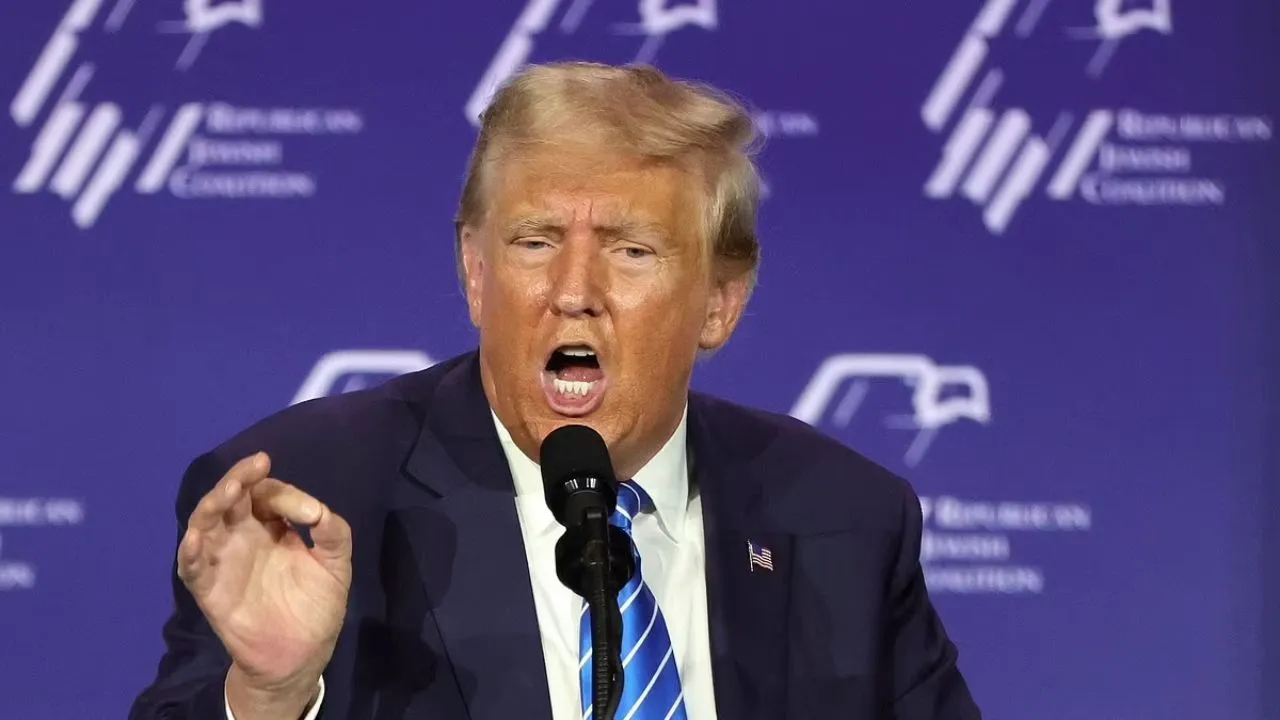
Trump’s patience with Hormuz is over! Gave 48 hours ultimatum to Iran, said – if the path is not opened then we will plant bombs

Trump Iran Hormuz Strait Ultimatum: US President Donald Trump has given Iran a 48-hour ultimatum, in which he said that if Iran does not reopen the Strait of Hormuz within this time limit, America will completely destroy their energy infrastructure. After Trump’s threat, once again an atmosphere of fear was created in the entire world. Because the Strait of Hormuz is very important for global oil and gas supply.
Trump also said in his threat that this action would start with Iran’s largest power plant, although he did not clarify which power station he meant. President Trump issued this warning on his social media platform ‘Truth Social’ But it is given.
Attack on Israeli nuclear sites
Trump’s threat has come at a time when Iran has launched a major missile attack in the Israeli cities of Dimona and Arad, in which more than 100 people have been injured. The city of Dimona houses Israel’s major nuclear facility. Iran has described the attack as a response to the attack on its Natanz nuclear plant, while Israel has denied involvement in the attack. The situation has become even more tense, and it is being seen as a serious diplomatic crisis.
Iran’s blockade of the Strait of Hormuz has also shaken the global energy market, causing oil prices to rise wildly. These rising prices have become a serious problem for President Trump as he faces the upcoming midterm elections.
Also read: Iran took revenge from Israel… Missiles fired at nuclear city ‘Dimona’, nuclear base was engulfed in smoke – VIDEO
Lindsey Graham warned
Along with this, Donald Trump’s close advisor and Senator Lindsey Graham has warned the countries of the world that America will not keep its military bases in those countries which will not allow the use of American military bases in the conflict against Iran. This statement indicates a major change in international diplomacy. This development could have deep implications for global politics and security, and points to possible changes in America’s stance.

Comments are closed.