
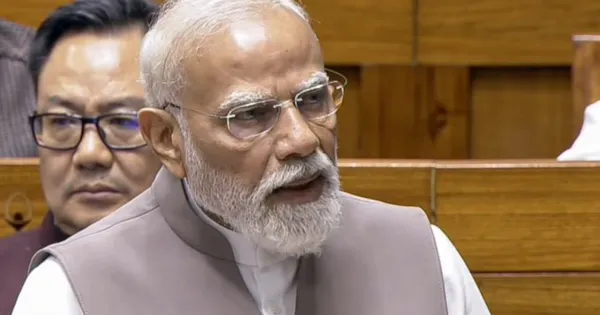
From Iran-Israel war to Hormuz Strait… 5 important things about PM Modi’s speech in Parliament, know what is special

New Delhi: Amidst the Iran-America-Israel war, Prime Minister Narendra Modi gave an important address in the Lok Sabha on Monday, 23 March 2026. He spoke at length on the rising tensions in West Asia, the blockage of the Strait of Hormuz and its implications for India. PM Modi stressed that India is emphasizing diplomacy to prevent war and for peace, while also giving priority to the country’s energy security and safety of citizens.
The speech underlines India’s strong position and preparedness amid the global crisis. Let us know what are the 5 most important things of his address.
1. Situation in West Asia worrying, but India alert
PM Modi said that the ongoing war in West Asia is “worrying” and “alarming”. It is having a profound impact on the global economy, trade and energy supply. India is constantly monitoring the situation and is making efforts to reduce tension and end the conflict through diplomacy. He made clear that attacks on commercial ships and blockage of international waterways such as the Strait of Hormuz are “unacceptable”.
2. Energy crisis due to blockage of Hormuz Strait, but India is ready
The Prime Minister made special mention of the Strait of Hormuz, through which a large part of the world’s oil and gas passes. Due to the war, movement of ships has become challenging, which may affect the supply of petrol, diesel, LPG and fertilizers in India. But over the past 11 years the government has diversified energy imports from 27 to 41 countries, increasing the Strategic Petroleum Reserve to more than 5.3 million metric tons (and planning to expand to 6.5 million). Domestic consumers are not facing any major problems due to this.
3. Safety of Indians abroad top priority
The PM said that the security of about 1 crore Indians living in Gulf countries is the biggest responsibility of the government. More than 3.75 lakh Indians have returned home safely since the war began (including more than 1,000 from Iran, mostly medical students). Indian missions are in constant touch and special evacuation operations can be conducted if needed. CBSE has made arrangements for alternative assessment by postponing/cancelling the examinations in the Gulf.
4. Sensitivity to farmers and common citizens
The government is committed to helping farmers in view of the potential impact of the war on fertilizer and fuel prices. The focus is on increasing MSP, improving irrigation facilities and promoting new technologies. Also, steps are being taken to increase domestic production of LPG (of which 60% requirement is dependent on imports) and to give priority to common consumers. The PM said, “The government is sensitive, alert and ready to provide every assistance.”
5. India’s economy strong, stable despite uncertainty in the world
India’s economy remains stable amid the global crisis. The government is focusing on increasing investment, employment generation and accelerating development. The PM appealed to Parliament to send a “unanimous” message on this crisis, so that the world can see India’s solidarity.
This address of PM Modi not only highlights India’s energy and security strategy, but also underlines India’s active role for global peace. The government has already reviewed the long and short term measures by holding a meeting of the Cabinet Committee on Security (CCS).

Comments are closed.