
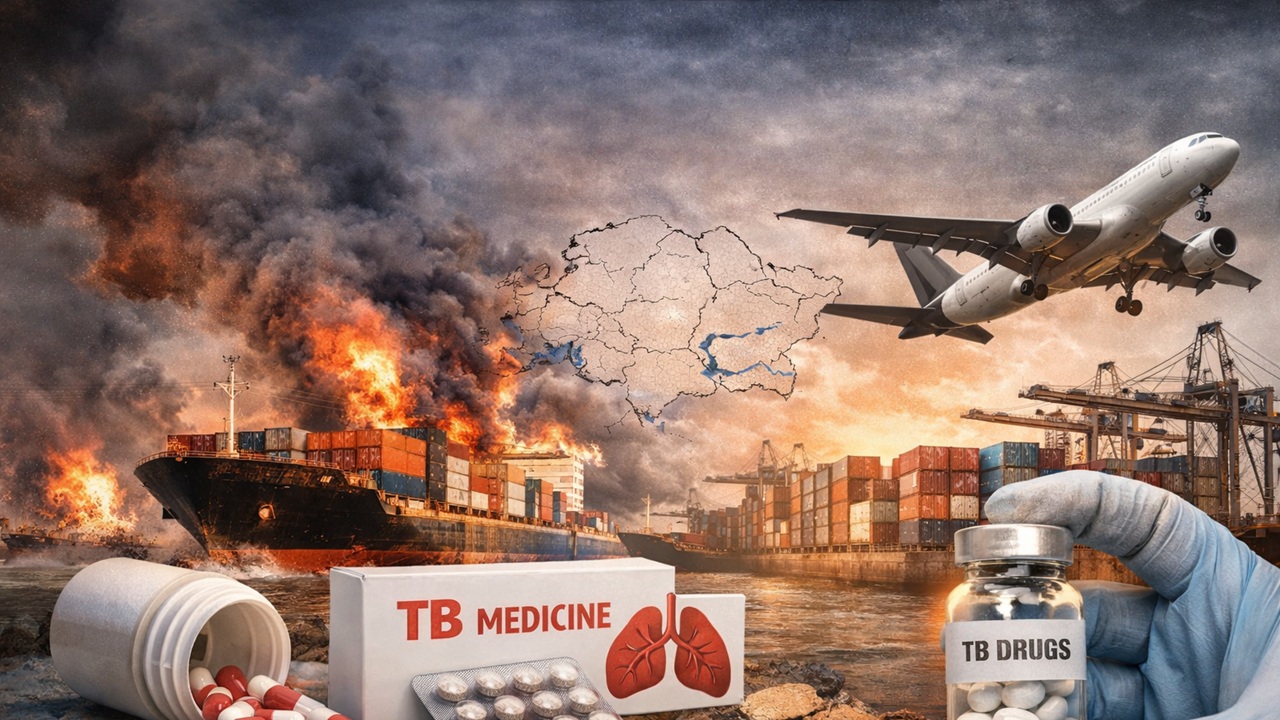

Ram Khandare, Mumbai: On the background of World TB Day, an alarming matter has come to the fore. Because of the Gulf conflict The global drug supply chain has been disrupted. This has a direct impact on the export of TB drugs from India, especially to countries in Central Asia, where there is a long delay in reaching the drugs.
India is considered to be the world’s leading ‘generic drug supplier’ country. Countries like Kazakhstan, Uzbekistan, Kyrgyzstan, Tajikistan and Turkmenistan are heavily dependent on India. Medicines required for the TB control programs of these countries are mainly supplied from India. However, the conflict in the Gulf is currently forcing changes in air-cargo and shipping routes. As a result, problems such as increased transit time, increased freight costs, and delays in supply have arisen. Although medicines are available in India, they do not reach the concerned countries in time, increasing the risk of interruption in treatment.
World TB Day 2026: Early treatment of TB in pregnancy is essential; Expert warning for mother-baby safety
How are the results?
- The Gulf region is a global air-cargo and shipping hub
- Increase in transit time and cost due to route change
- Delay in drug delivery
- Possibility of treatment interruption
TB drugs supplied by India
General TB: Isoniazid, Rifampicin, Pyrazinamide, Ethambutol
MDR TB: Bedaquiline, Delamanid, Moxifloxacin, Linezolid
Others: Fixed dose combination drugs (FDC), pediatric formulations
“The Gulf conflict has had a direct impact on the export of TB drugs. The supply to countries in Central Asia, in particular, has been severely disrupted. Currently, exports are down to around 40 percent. The problem is not a ‘drug shortage’ but a ‘supply chain bottleneck’,” informed PWDA CEO Hiren Shah.
“The effects of war are not limited to borders. They reach from our homes to hospitals. Maintaining an uninterrupted supply of medicines is the biggest public health need today. While there is no shortage of medicines now, availability may be affected in the future,” commented ICMR and International Union Against TB and Lung Disease, medical expert Dr. Given by Rajendra Tatu Nanavare.

Comments are closed.