

Centre tells Parliament that foreign elements are systematically using narcotics smuggling to fund terrorist groups

The union government confirmed that foreign-based elements—with clear links to Pakistan—are systematically using narcotics smuggling in Jammu and Kashmir and Punjab as a financial pipeline to bankroll terrorist organisations operating across the country.
According to a document shared by the government in the Rajya Sabha, the Minister of State for Home Affairs, Nityanand Rai, admitted that money earned through narcotics smuggling is used to fund terror groups.
The government’s statement marks one of its most explicit acknowledgements yet of what security agencies have long termed “narco-terrorism” — the deliberate weaponisation of the drug trade to generate and launder funds for terror outfits.
The minister confirmed that intelligence inputs had established a direct connection between cross-border drug flows and the financing of terror networks active in the two border-sensitive regions.
“Foreign-based elements are involved in facilitating narco terrorism by pushing narcotics across the border to generate funds for financing terrorist activities in Jammu & Kashmir and Punjab.”
— Nityanand Rai, Minister of State for Home Affairs

According to the minister, the smuggling operations employ a dual-track strategy. Traditional ground-level networks use human agents and couriers to infiltrate narcotics across the porous border. Simultaneously, and with increasing frequency, unmanned aerial vehicles — commonly known as drones — are being deployed to airdrop consignments of drugs from across the Pakistani border into Indian territory, bypassing conventional security checkpoints.
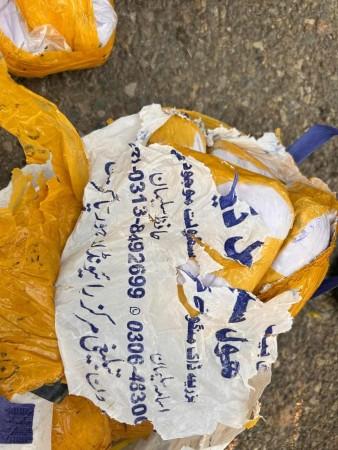
The scale of the seizures underscores the severity of the challenge. In the Union Territory of Jammu and Kashmir alone, security and law enforcement agencies have seized 21,265 kilograms of narcotics over the past three years — an amount worth crores of rupees on the illicit market.
The figures for the neighbouring state of Punjab are even more staggering: a combined 210,397 kilograms of drugs have been recovered in the same period, reflecting both the intensity of the smuggling push and the concerted response by state and central agencies.
292 drones recovered along the Pak border in 2025 alone
On the drone menace specifically, the minister revealed that 292 drones, or unmanned aerial vehicles, were seized or recovered along the international border with Pakistan during the year 2025 alone. This figure, security analysts note, represents only the devices physically neutralised — the actual number of successful drops is believed to be significantly higher, posing an ongoing challenge for border-guarding forces such as the Border Security Force (BSF).

The disclosure has renewed debate among defence and policy circles about the adequacy of India’s counter-drone architecture along the western frontier. Drone-based smuggling has emerged as a preferred tactic for cross-border networks because it reduces the risk of human carriers being intercepted, allows for rapid delivery, and makes tracing the source of a consignment considerably more difficult for investigating agencies.
International action against drug fugitives
- 66 fugitives wanted in drug-related cases have been identified by Indian agencies
- 24 Red Notices published through Interpol for arrest and extradition
- 25 Blue Notices published to gather intelligence on suspects
- 5 fugitives successfully deported from UAE, Malaysia and Sri Lanka in 2025
Turning to the international dimension of the crackdown, Rai informed the House that the government has identified 66 fugitives wanted in drug-related cases who are believed to be sheltering abroad. Interpol machinery has been actively engaged, with 24 Red Notices — the highest-level international alert used to seek the provisional arrest of wanted persons pending extradition — and 25 Blue Notices, used to gather information about the movement and activities of individuals, published against these suspects.
Crucially, five of these fugitives were successfully deported back to India in 2025, in coordinated action involving the United Arab Emirates, Malaysia, and Sri Lanka. The deportations signal a degree of international cooperation in targeting the overseas operatives who help orchestrate cross-border drug flows, even as challenges remain in securing action from jurisdictions with no extradition treaty with India.
The revelations come at a time of heightened security alertness in Jammu and Kashmir, where security forces have been battling a resurgent insurgency that analysts say is being sustained in part through the very financial channels the minister described. The convergence of terrorism financing and large-scale drug trafficking — long a feature of conflict zones globally — appears to be firmly taking root along India’s western border, demanding a multi-agency, multi-nation response that extends beyond law enforcement alone.

Comments are closed.