

102
There is a particular kind of horror reserved for bureaucratic violence. Not the horror of rage or panic, but the horror of planning — of officers in rooms, weeks before the killing, writing down targets, timings, and force assignments. Operation Searchlight, launched on the night of 25–26 March 1971, belongs to that category. It was not a crackdown that spiralled. It was not an army that lost control. It was a programme, approved at the highest levels of the Pakistani state, to destroy the Bengali population of East Pakistan by organised military force. And it ran almost exactly as designed.
That distinction matters enormously and it is the one that Pakistani official memory has spent fifty-five years trying to collapse. The Plan Came First. The Pretext Came Later.
By February 1971, the operational blueprint for Searchlight had already been signed off by President General Yahya Khan and Army Chief General Abdul Hamid Khan. This is not inference or allegation. It is documented fact. The plan existed before the final breakdown of political negotiations, before the last pretence of dialogue had been abandoned. The generals were not responding to a crisis. They were creating the conditions under which their pre-written response would appear justified.
The political trigger Sheikh Mujibur Rahman’s decisive democratic victory in the December 1970 elections, and the junta’s refusal to honour it was, in this light, less a cause than a convenience. The Bengali majority had won power through legitimate means. The military had decided, apparently well in advance, that it would not allow that to happen. The elections did not provoke Operation Searchlight. They provided its cover story.
General Tikka Khan, installed as both governor and Eastern Command chief, was the operation’s architect on the ground. His stated objectives reducing the Bengali “majority to a minority,” wanting “land only, not the people” were not the improvisations of a commander under pressure. They were the articulation of a policy already encoded in the plan he was executing.
A Strike Package, Not a Riot
What happened in Dhaka on the night of 25 March was structured like a military operation because it was one. H-hour was set for late at night maximum surprise, minimum resistance. Multiple targets were hit simultaneously, requiring the kind of coordination that only months of preparation can produce.
The order of battle reads like a conventional assault. The 14 Infantry Division and 57 Brigade formed the core strike grouping in the capital, with battalions 18 Punjab, 32 Punjab, 13 Frontier Force, 22 Baluch assigned to specific objectives. Artillery and armour were integrated into the assault. Air defence and military intelligence detachments were embedded throughout. Major General Rao Farman Ali ran a dedicated control room at Martial Law Headquarters, coordinating the Dhaka operation in real time.
The targets were Dhaka University, the Rajarbagh Police Lines, and Pilkhana the East Pakistan Rifles headquarters. These were not chosen at random. They were the concentrations of Bengali intellectual life, Bengali policing capacity, and Bengali paramilitary force. Eliminate them simultaneously, the logic ran, and organised resistance becomes impossible before it can begin.
Most revealing of all was the deployment of 3 Commando Battalion from Pakistan’s Special Services Group elite soldiers built for high-value operations against external enemies. On the night of 25 March, they were directed at political targets and civilian leadership nodes inside Pakistan’s own territory. A country does not deploy its special forces against its own citizens by accident, or in panic. It does so when it has planned to, and when it has decided those citizens are the enemy.
Rape as a Line Item
The violence did not end when the opening-night objectives were secured. What followed across East Pakistan over the subsequent months was a country-wide campaign in which rape was used as a deliberate instrument not a byproduct of undisciplined troops, but a systematic tool for destroying Bengali identity and will.
Estimates of Bengali women assaulted by Pakistani forces and allied militias range from tens of thousands to several hundred thousand. Women were abducted, held in camps near military cantonments, and subjected to repeated assault over months. The targeting of Bengali Muslim women by an army that had explicitly framed its campaign as a defence of Islam is not an irony. It is evidence. It tells you that the ideological justification was always a fiction, and that the actual objective was the destruction of a people, not the protection of a faith.
What the Numbers Rule Out
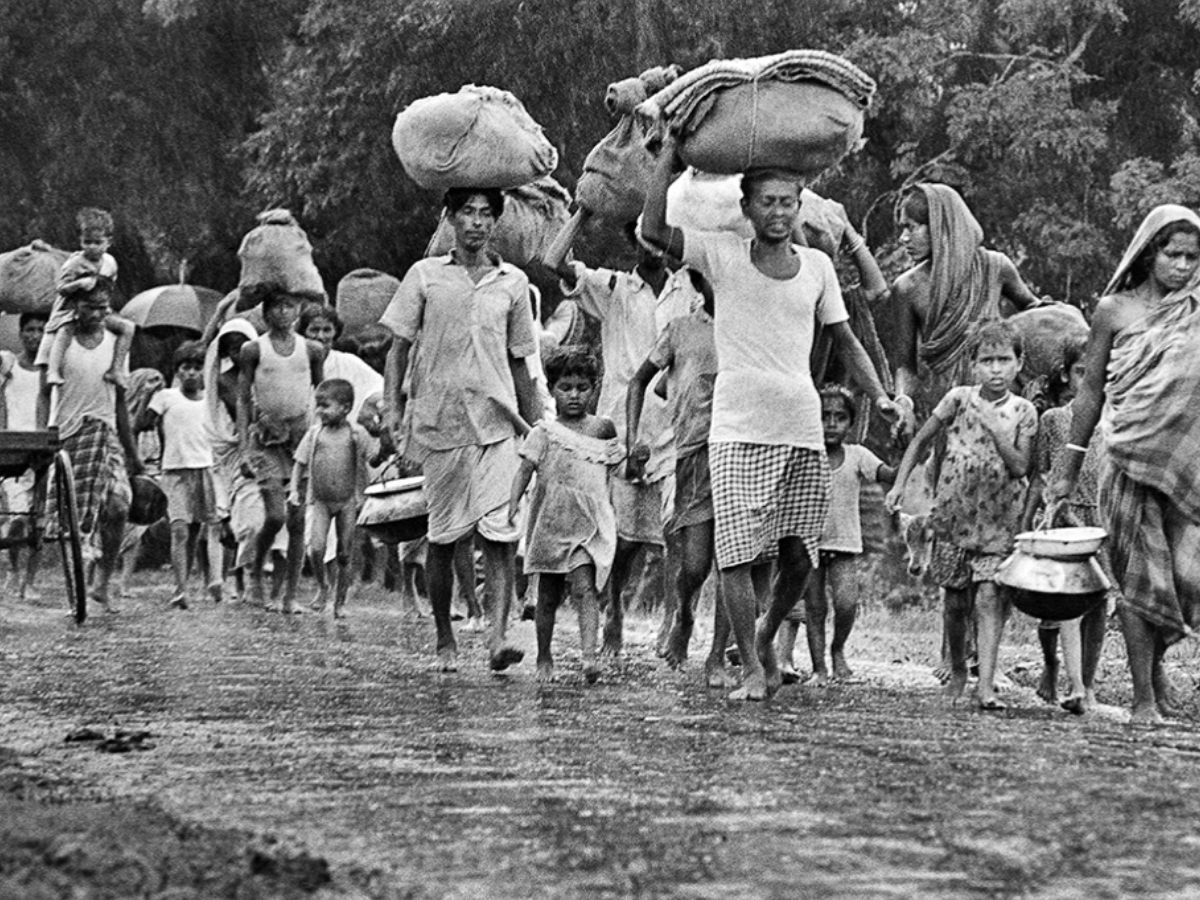
The question of scale is, in the end, the argument that forecloses every Pakistani counter-narrative. Estimates of Bengalis killed over the course of 1971 range from 300,000 to 3,000,000. Ten million people fled as refugees into India. Millions more were internally displaced. Mass graves uncovered after the war’s end contained bodies that were bound, blindfolded, and mutilated evidence of execution, not combat.
These numbers are not consistent with a security operation, however harsh. They are not consistent with collateral damage, or with the breakdown of discipline in the field. They are consistent with one thing: a military institution that had made a decision, at the command level, that an entire population was expendable — and had built an operational plan around that decision.
The Accountability That Never Came
No Pakistani general has been prosecuted for what happened in East Pakistan. No formal apology has been issued to Bangladesh. The operational record the approvals, the orders, the chain of command from Yahya Khan and Abdul Hamid Khan down through Tikka Khan, Rao Farman Ali, and the brigade commanders who executed their instructions sits largely unengaged by the state that produced it.
This is not an oversight. Denial, in cases like this, is itself a form of policy. To acknowledge the plan would be to acknowledge the intent. To acknowledge the intent would be to acknowledge that what happened in 1971 was not war, not counterinsurgency, not a regrettable excess but a programme of organised killing, drafted in offices, approved by named men, and run on a schedule.
The machinery of Operation Searchlight was meticulous. The machinery of its denial has proven, fifty-five years on, equally so. One of them needs to stop.

Comments are closed.