

The pace of adoption is increasing. According to Fortune Business Insights, Japan’s cloud services market is projected to grow from $23.37 billion in 2025 to $84.12 billion by 2032, representing a compound annual growth rate of 20.1%. The market for cloud platforms such as Infrastructure-as-a-Service (IaaS) and Platform-as-a-Service (PaaS) reached 2.28 trillion yen in 2024, supported in part by the migration of legacy systems.
Despite this growth, legacy migration remains a complex process.
Many Japanese companies continue to rely on enterprise systems developed decades ago. While these systems are often stable, they may lack the flexibility required for evolving digital operations.
One of the primary challenges is system architecture. Legacy environments are typically tightly integrated, with applications, databases, and internal services closely interdependent. Migrating individual components without affecting the broader system requires detailed assessment and planning.
Enterprises may adopt different approaches, including rehosting (lift-and-shift), refactoring for cloud compatibility, or rebuilding systems using modern architectures. The appropriate approach depends on system complexity, risk tolerance, and long-term business objectives.
A further constraint is the availability of cloud engineering expertise. Migration projects require capabilities in cloud architecture, automation, data migration, and security. In some cases, limited in-house experience can affect project timelines and execution.
Business continuity is also a key consideration. Enterprise systems in sectors such as manufacturing, logistics, and finance often require uninterrupted operation, leading many organizations to adopt phased or incremental migration strategies.
Cloud infrastructure is becoming increasingly central to Japan’s digital economy, supported by the growth of artificial intelligence (AI), data analytics, the Internet of Things (IoT), and hybrid work models.
Enterprises are adopting platforms such as Amazon Web Services, Microsoft Azure, and Google Cloud to support scalable operations and enhance system resilience.
As a result, cloud migration is often viewed as a step toward more data-driven business models.
Migrating legacy systems involves both technical and organizational considerations, requiring structured planning and execution.
Kaopiza Vietnam-based IT service provider, supports enterprises in modernizing legacy environments and transitioning to cloud-based architectures. The company focuses on implementation and system reliability alongside project execution.
With experience working with Japanese clients, Kaopiz participates in the design, migration, and optimization of cloud systems aligned with operational requirements.
Cloud migration projects typically begin with an assessment of the existing IT environment, including system architecture, application dependencies, data structures, and security requirements. Based on this assessment, a migration roadmap is developed.
Rather than large-scale transitions, incremental migration is commonly adopted. Applications are migrated in stages while maintaining system availability, allowing teams to evaluate performance, identify integration issues, and support operational continuity.
After deployment, optimization becomes an ongoing process, including improving resource utilization, strengthening monitoring and automation, and enhancing scalability and reliability.
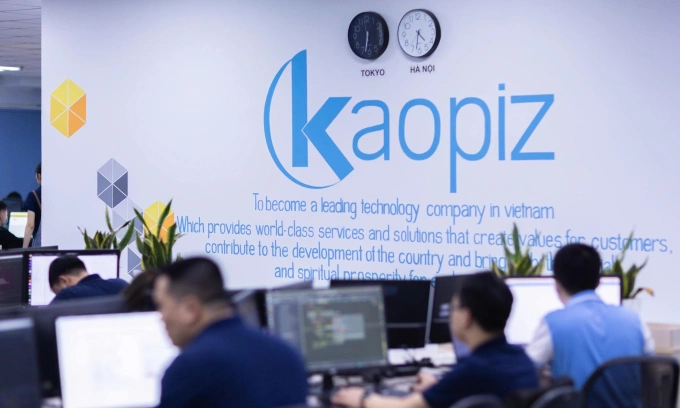
Engineers work on software development at Kaopiz’s office in Hanoi headquarter. Photo courtesy of Kaopiz |
In Japan, enterprise platforms such as ERP, CRM, and production management systems play a central role in daily operations. Migrating these systems requires both infrastructure expertise and familiarity with business workflows.
By combining cloud engineering capabilities with enterprise software development, service providers can support system modernization while maintaining operational stability.
When implemented effectively, cloud migration may provide several operational benefits. Cloud infrastructure enables flexible scaling of computing resources, which can improve performance and cost efficiency. It can also support system resilience through monitoring, automated backups, and disaster recovery mechanisms.
Modernized systems may facilitate integration with technologies such as AI, analytics, and automation, supporting product development and operational responsiveness.
Cloud migration represents not only a technical transition but also a shift toward more flexible and data-oriented operations.
For Japanese enterprises, modernizing legacy systems remains a complex undertaking. Structured migration strategies and careful execution are important factors in maintaining system stability while enabling longer-term innovation.
Email: marketing.jp@kaopiz.com
Japan Office: 3F, 3-8-8 Minami Ikebukuro, Toshima-ku, Tokyo
Tel: 03-5809-2633
Singapore Office: 1 Raffles Place #19-61, One Raffles Place Tower 2, Singapore 048616
Vietnam Office – Hanoi: 1-2-4-5F, CT1-C14 Bac Ha Building, To Huu Street, Dai Mo Ward, Hanoi
Tel: 024-6652-2105
Vietnam Office – Da Nang: 12F, SHB Da Nang Building, 06 Nguyen Van Linh Street, Hai Chau Ward, Da Nang
Tel: 024-6652-2105

Comments are closed.