
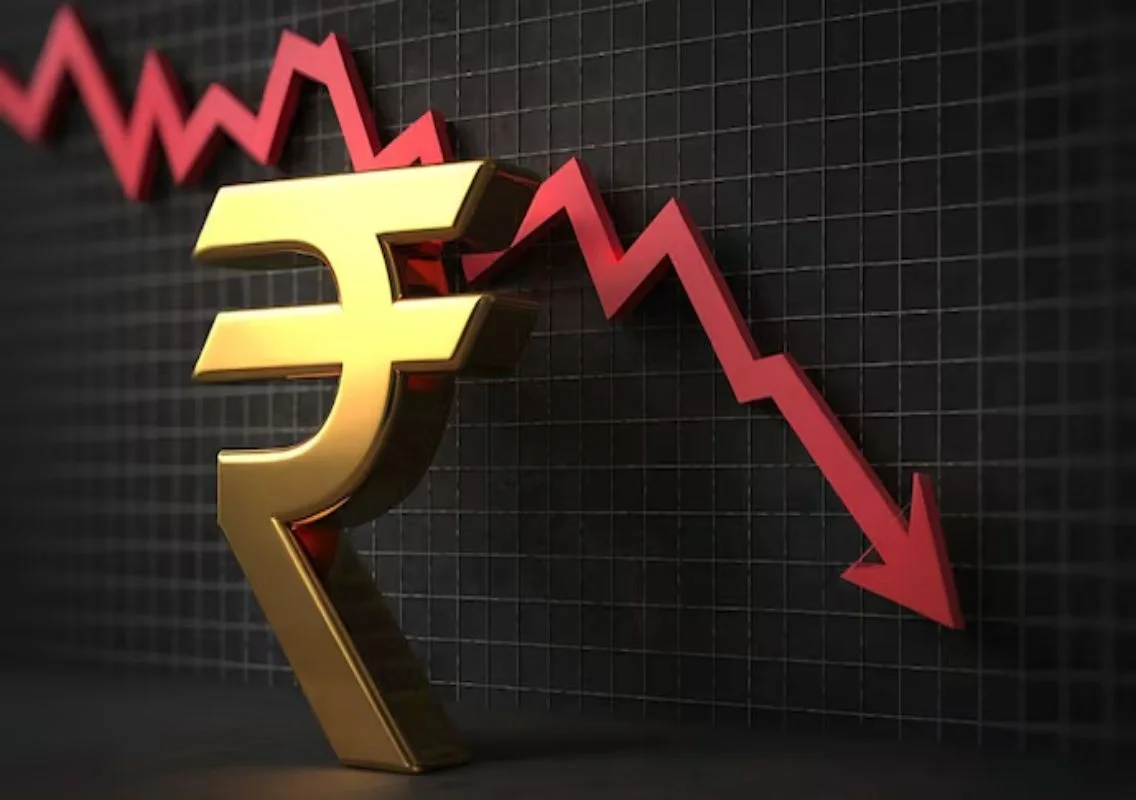

Mumbai: The Indian rupee plunged to a record low on Friday, breaching the 94 mark against the US dollar amid mounting global uncertainty and rising crude oil prices.
The domestic currency fell to 94.1575 per dollar during the day, weakening beyond its previous all-time low of 93.98 recorded earlier this week. Since the escalation of tensions in the Middle East late last month, the rupee has depreciated by nearly 3.5%, reflecting sustained pressure on the currency.
Energy crisis weighs heavily on rupee
The sharp decline in the rupee is closely linked to fears of an ongoing energy supply disruption triggered by geopolitical tensions in the Middle East.
India, one of the world’s largest oil importers, is particularly vulnerable to rising crude prices. As oil prices remain above the $100 per barrel mark, the country’s import bill increases significantly, leading to higher demand for dollars and weakening the rupee.
The ripple effects are being felt across global markets. Equity markets have come under pressure, while bond yields have moved higher, signalling investor concerns over inflation and slowing economic growth.
For India, the impact is more pronounced due to its dependence on energy imports, making the rupee sensitive to fluctuations in global oil prices.
Inflation and growth concerns deepen
The weakening rupee has also raised concerns about inflation and economic growth.
Higher crude oil prices tend to push up domestic inflation by increasing fuel and transportation costs. This could prompt the Reserve Bank of India to consider tightening monetary policy in the coming months.
Analysts have already begun revising India’s growth forecasts downward, factoring in the risks posed by elevated oil prices and global instability.
There are also expectations that interest rates could rise over the next 12 months if inflationary pressures persist. A tighter monetary policy environment could impact borrowing costs and overall economic activity.
Risk of further depreciation
Market experts warn that the rupee could face additional downside in the near term if current conditions persist.
Global brokerage firms, including Bernstein, have indicated that the currency may weaken further, with projections suggesting it could slide towards 98 per dollar this year.
The primary concern lies in India’s current account deficit, which could widen if oil prices remain elevated for an extended period. A higher deficit typically exerts downward pressure on the currency.
Conclusion
The rupee’s fall past the 94 mark highlights the growing impact of global geopolitical tensions and rising energy costs on India’s economy. While the near-term outlook remains uncertain, the trajectory of crude oil prices and developments in the Middle East will play a crucial role in determining the currency’s movement in the coming months.

Comments are closed.