
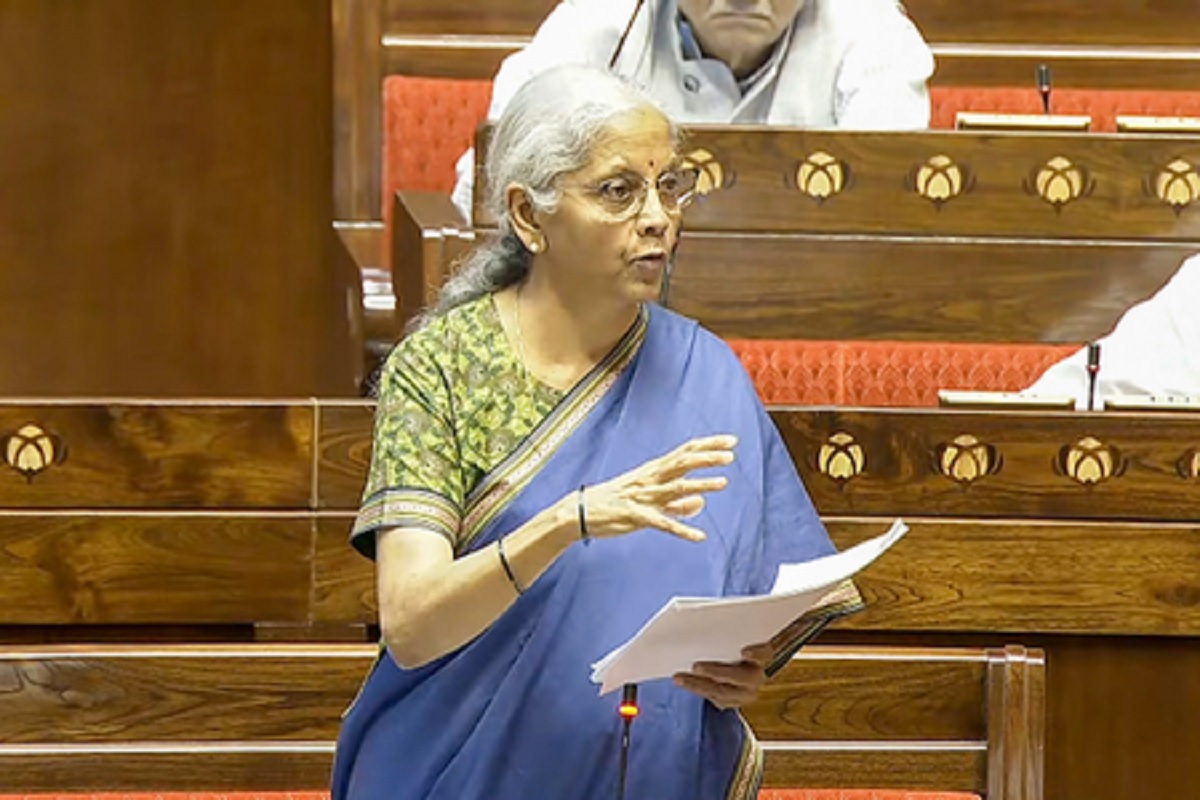

The Lok Sabha passed this bill on March 25 with 32 amendments. After this, there was a brief discussion on it in the Rajya Sabha and Finance Minister Nirmala Sitharaman answered the questions of the MPs, after which the bill was approved.
The total expenditure in the Union Budget 2026-27 has been kept at Rs 53.47 lakh crore, which is 7.7 percent more than the current financial year (till March 31).
This budget proposes a capital expenditure of Rs 12.2 lakh crore for large infrastructure projects, which will boost growth and employment in the economy, which is Rs 2.2 lakh crore more than last year.
The Finance Minister said that an ‘Infrastructure Risk Development Fund’ will be created for faster completion of big projects.
He has also set a target of reducing the fiscal deficit to 4.3 percent of GDP for 2026-27. The government is working towards maintaining financial stability along with economic growth. Fiscal deficit means the difference between the total expenditure and total income of the government.
The government will borrow net Rs 11.7 lakh crore to meet this deficit in FY 2027, while total market borrowing is estimated at Rs 17.2 lakh crore.
In the budget, along with strengthening the infrastructure sector like highways, ports, railways and power projects, emphasis has been laid on increasing manufacturing in 7 strategic sectors and bringing MSMEs forward.
The Finance Minister said that the government has kept a strong focus on public investment while maintaining fiscal discipline and monetary stability.
He also said that India’s debt-to-GDP ratio has declined to 56.1 percent in FY 2025-26, which is targeted to be further reduced to 55.6 percent in FY 2026-27.
He said that reduction in this ratio will reduce the burden of interest payments, which will help in keeping the fiscal deficit low and making more resources available for development works.

Comments are closed.