
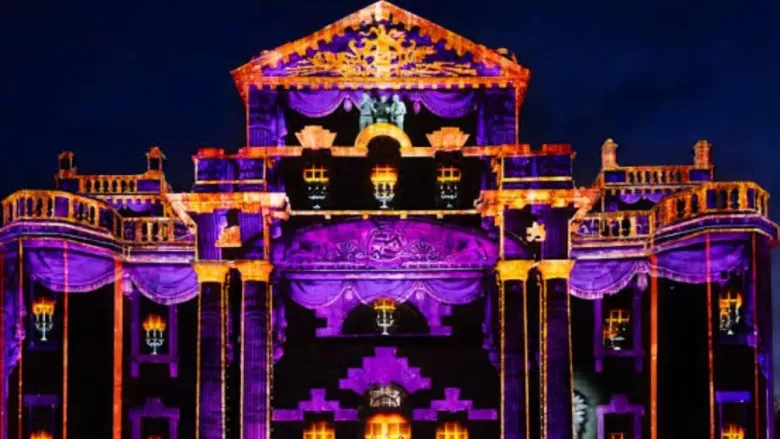

summary: The new generation will come face to face with history through a laser show in Britain.
A special campaign has started in Britain to connect the youth with traditions and history. The 1000 year old heritage will be brought alive through a laser show in the historical hall.
UK Heritage Preservation Mission: Nowadays the new generation is becoming so accustomed to modernity that their distance from traditions is increasing. Now a new campaign has been started in England to bridge this gap. An initiative has been launched under the National Trust’s The Curtain Raises program to connect the younger generation with the traditions of Britain. Through this the youth will be told about history and culture.
According to the information that has come to light, under this campaign an effort will be made to bring alive Britain’s 1000-year-old heritage and the English Baroque architecture of the 18th century. An effort will be made to create awareness among the young generation through a special laser show at the historic Seaton Delval Hall.
Campaign to connect the young generation with culture
The event is being held at the hall, which has been the legacy of the Delaval family since 1066, located in Northumberland. This hall has been witness to historical events ranging from the great fire of 1822 to being used as a prisoner of war camp in the Second World War. Declared a public heritage in the year 2009.
Laser show will be organized
In this hall, a laser show under the Vanbrugh 300 series has been put on as part of The Curtain Raises programme. The entire show is dedicated to the memory of the architect Sir John Vanbrugh. He was a famous playwright and architect whose art gained recognition not only in the country but across the world.
what is english baroque architecture
English Baroque architecture is a grand, dramatic and impressive style that developed between 1660–1725, following the Great Fire of London of 1666, by architects such as Christopher Wren, John Vanbrugh and Nicholas Hawksmoor. This style is known for its symmetrical structure, huge domes, ornate interiors and display of power and wealth, the prime example of which is St. Paul’s Cathedral.
What is its specialty?
The main objective of this style was to create awe. In its structure the central part is large and ornate, with symmetrical wings on the sides. Domes and arches are a prominent feature, signifying power. The interiors made extensive use of fine carving, sculpture, and gold work. Double doors and large, grouped windows are its hallmark. Brick and stone were used prominently in this.
Which architects built
Sir Christopher Wren: He rebuilt St. Paul’s Cathedral and many other churches in London.
Sir John Vanbrugh: He built grand buildings like Blenheim Palace and Castle Howard.
Nicholas Hawksmoor: Worked closely with Vanbrugh on several projects.

Comments are closed.