
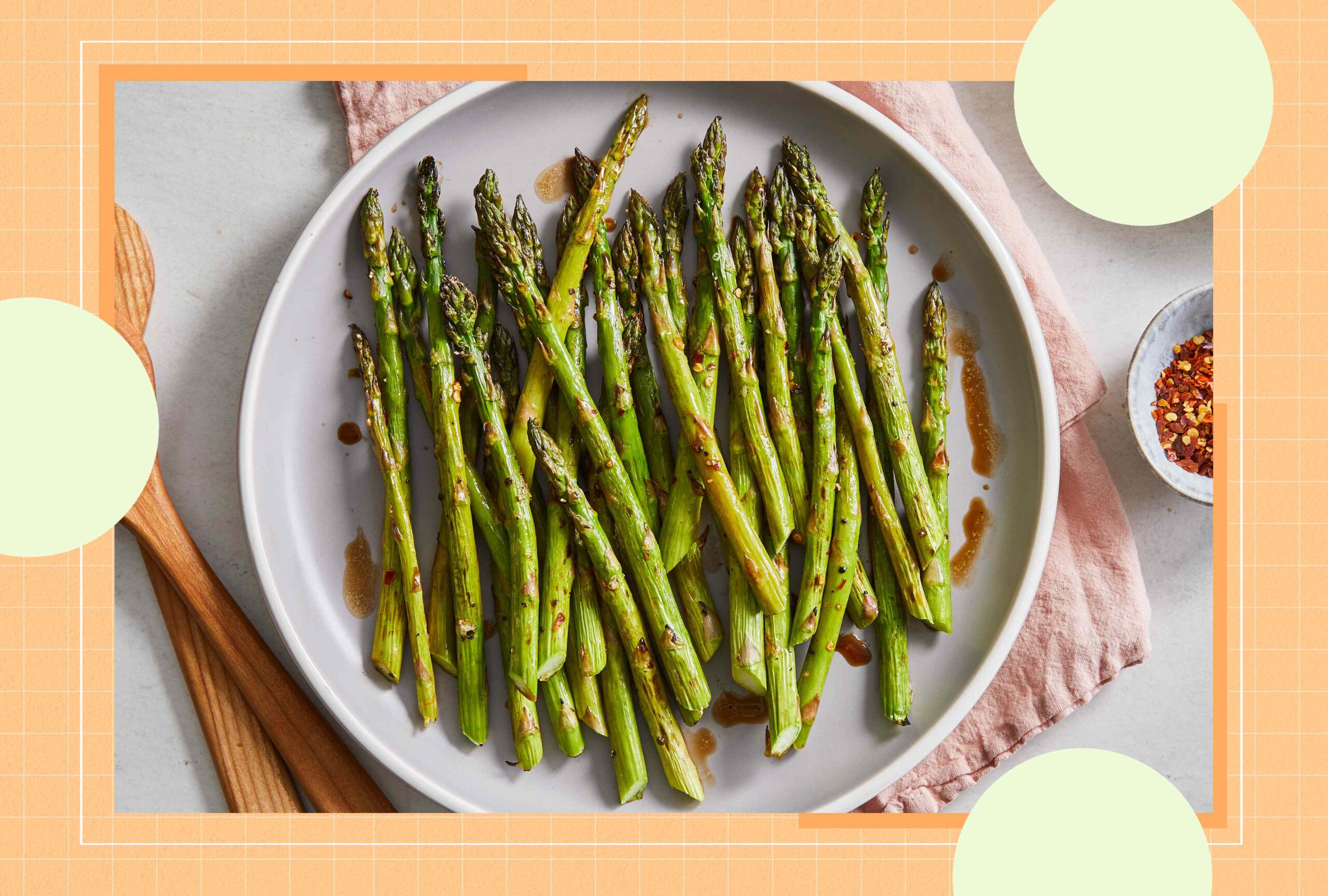

Sure, it’s delicious in lots of ways, but this chef-approved technique comes out on top.
Reviewed by Dietitian Lisa Valente, M.S., RD
Key Points
- Roasting asparagus in the oven is the top cooking method for chefs.
- All you need is a hot oven, a little prep and simple seasoning for perfectly cooked spears.
- Try lemon, Parmesan, soy sauce or toasted seeds to upgrade the vegetable.
Asparagus is one of the few vegetables that signals the unofficial start of spring. Cooking it perfectly every time can be tricky, and because the season is short, we want every bunch to be its best. So we asked four professional chefs for their favorite cooking methods, and a clear favorite emerged. Whether cooking for a packed dining room or a quick weeknight meal, each chef turned to the oven. Here’s why roasting won out as the best cooking method for asparagus and how to do it at home.
Chefs’ Favorite Way to Cook Asparagus
Ask any of these four chefs how they cook asparagus, and roasting is their clear favorite. The reason is simple. A hot oven does things to asparagus that a pot of water can’t. The dry heat removes moisture, concentrates the natural sugars and creates browning, leading to deep, savory flavor. Plus, the cooking method matters when it comes to nutrient retention—some dry-heat methods have been shown to preserve or even increase certain nutrients in asparagus compared to raw.
“Roasting is my absolute favorite,” says Carla Contrerasa podcast host and former chef. Seasoning “simply” with “olive oil, salt and pepper concentrates the flavor,” she says. She loves eating it freshly roasted, but also thinks it’s fantastic for a “leftover makeover.” For example, she likes adding it to her next-day frittata or blending it into a quick pureed soup for lunch. “Nothing goes to waste,” she says.
For Casey Corna classically trained chef, food anthropologist and host of Magnolia Network’s Recipe Lost and Foundroasting is all about pushing it to the edge. “Getting a little char on asparagus is one of the best seasonings you can add to [it],” she says. “Tossing them in a little olive oil with salt and throwing them in a high-heat oven just makes them taste amazing.” The thing about roasting is that it doesn’t need much to deliver a lot. Plus, she adds, “Cooked asparagus is great hot and cold.” She recommends cooking “extra to keep in the fridge and put in salads.”
Suzanne Podhaizer, a freelance writer and former chef, makes the nutrition case for roasting as much as the flavor one. “I like roasting because it’s unfussy,” she says, noting that you don’t lose the same amount of nutrients as when the spears simmer in water. She’s especially fond of roasting thicker, more mature stalks that can take the heat and develop a real depth of flavor.
Cleo Valeriothe chef de cuisine at Toronto’s Mildred’s Temple Kitchenapplies the same logic in her professional kitchen, though for large-batch service, she opts for a pre-blanch before roasting. But when cooking at home, her go-to is straight into a hot oven with olive oil, salt, pepper and a drizzle of honey. “It works like magic,” she says.
How to Roast Asparagus at Home
The allure of roasting asparagus is that it barely asks anything of you. A sheet pan, a drizzle of oil, a hot oven and some salt and pepper—that’s almost the whole story. But a few small details make the difference between good and genuinely great stalks.
Prep the Spears: Before anything goes near the oven, you have to deal with the ends. Once harvested, the base of the spears can lose moisture, becoming woody and tough. Corn’s approach is the most commonly known: “Just bend the spear gently in half, and the bottom will snap right off.” The stalk naturally breaks at the exact point where tender meets fibrous, so you don’t need to measure anything.
Podhaizer adds that for a more polished result, you can peel the lower portion of each spear—something restaurant cooks do routinely. But don’t toss those woody ends. If you’re up for it, you can follow in Contreras’ footsteps, who says she likes to save those tough parts. She’ll juice them or cook the ends and pass them through a fine-mesh strainer to make pureed soup. “I did this when I was a young cook,” she says. One more prep note worth knowing: If you’re shopping at a farmers’ market, wash your asparagus well, especially after rain, says Contreras. Fresh-picked spears can carry sand and grit that you really don’t want showing up at the dinner table.
Season Simply: Asparagus that’s cooked well doesn’t need much. Toss the prepped spears with olive oil and season with salt and pepper. That’s all you really need. If you’re like Valerio, you can also add a drizzle of honey to help round out any bitterness. Either way, aim for an even, light coating—just enough to encourage browning.
Roast Hot and Watch the Clock: An oven temperature of 400° to 425°F is the sweet spot for our chefs. Most asparagus is done in 10 to 15 minutes, depending on thickness, but the real cue is visual. “You can stop them when they’re brilliant green if you want crunch, or let them brown a bit for deeper flavor,” says Podhaizer. Both are delicious; it’s just a question of what you’re going for. One thing all our chefs agree on is avoiding going too long. “Don’t overcook them,” says Corn, adding, “Like many green veggies, asparagus is best when still a little crisp.” If it goes limp and loses color, you’ve gone too far.
Common Mistakes to Avoid
Roasting is forgiving, but a few mistakes are easy to make. The tips are often skinnier and cook faster than the stalks, so you may need to divide them. “Asparagus tips are thinner and cook more quickly than the bottom portions,” says Podhaizer. For a very uneven bunch, she suggests cooking the tips and stalks separately to get the right doneness.
Adding to that same logic, a delicate pencil-thin spear and a thick market stalk are not the same vegetable when it comes to cooking. Adjust your temperature and timing accordingly. “The most important thing is choosing a cooking technique that’s appropriate for the girth of your particular asparagus bunch,” she says.
Finishing Touches That Take It to the Next Level
While salt and olive oil are top choices, a few pantry staples will take your spears to the next level. “Don’t miss the opportunity to add a bit of acidity,” says Podhaizer. Corn likes to finish with lemon juice, in particular, because she says it “brings out the herbaceousness of the asparagus.”
Along with a drizzle of lemon juice, Valerio loves adding grated Parmesan cheese for a creamy texture. The combination creates “a savory, umami-rich dish.” But whether it’s a squeeze of lemon, a dash of good vinegar or a simple vinaigrette, the addition of acid helps to wake up all those roasted flavors and balance the asparagus’s natural earthiness.
A little fat can also add richness and round out the dish. Podhaizer loves finishing with the nutty, toasty flavor of browned butter or even “regular old melted butter,” which she calls “a beautiful complement to asparagus. Toasted nuts or seeds are a great match, too,” she adds.
Podhaizer also enjoys leaning into asparagus’ natural affinity for savory with soy- or miso-based sauces, anchovies, shellfish or a shower of toasted nuts or seeds. “Asparagus loves umami flavors,” she says. And it’s a useful lens for building a more layered dish without overcomplicating things.
The Bottom Line
At the end of the day, roasting is a bit of a slam dunk for any vegetable prep. If you haven’t gone the oven route, it’s time to give roasting a try. It’s a method that respects the integrity of the asparagus while requiring almost no active “chef-ing” on your part. You get a concentrated, nutty flavor, a satisfying snap and a boost of nutrients, and it’s mostly hands-free. Just trim the ends, toss with olive oil, season well and slide the whole thing into a hot oven. In about 10 minutes, you’ll have asparagus that’s tender, slightly caramelized at the edges and full of flavor—the kind that makes you wonder why you ever did it any other way.

Comments are closed.