
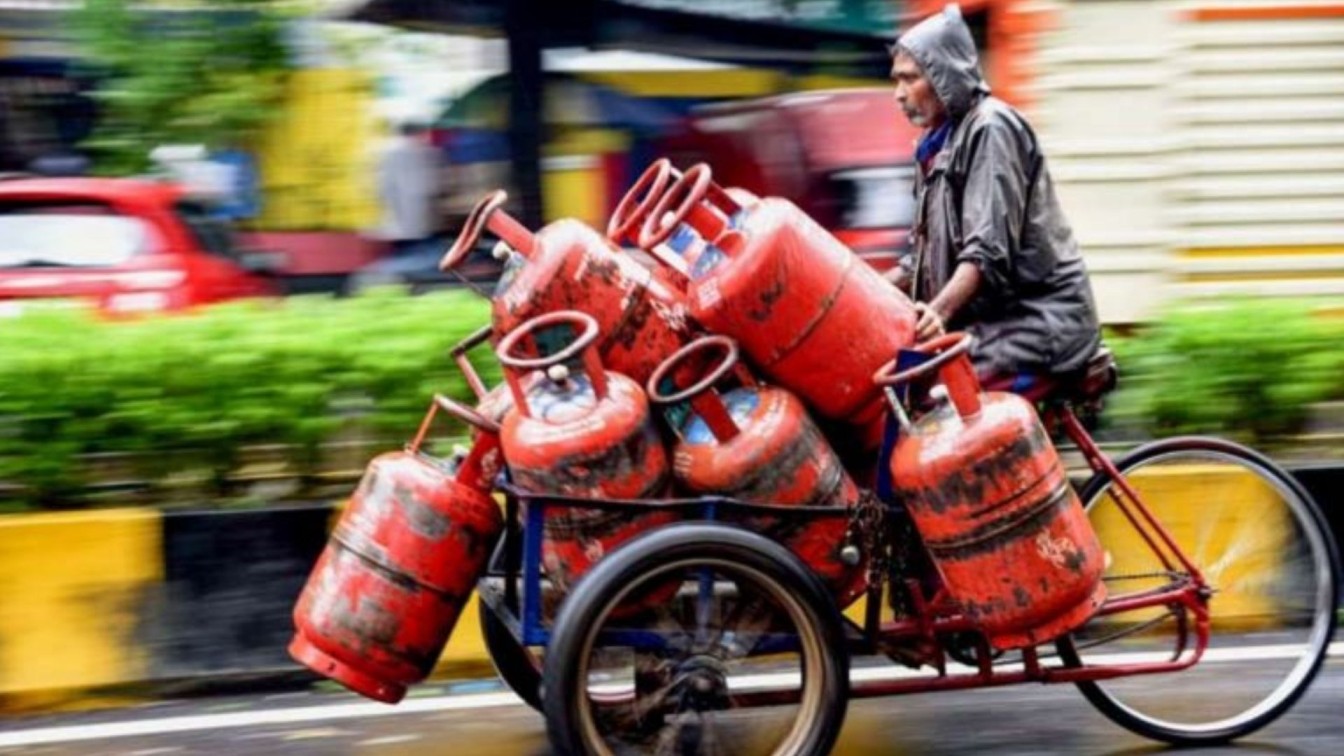

The focus of the Indian government is to shift most of the people to piped natural gas i.e. PNG. In a recent order, the government said that in areas where there is PNG facility, the delivery of Liquefied Petroleum Gas (LPG) will be stopped after three months if PNG connection is not taken. Now the question is arising that why is the Indian government focusing so much on PNG instead of LPG? Where does this gas come from in the country and is there no problem in its supply chain?Let us understand…
Piped natural gas mainly contains methane. It is delivered to homes through pipe network. In this system there is no need to refill the cylinder again and again. On payment of the bill, supply continues for 24 hours. PNG is transported from one place to another across the country in the form of Liquefied Natural Gas (LNG).
Also read: ‘A married man can also live-in’, the court reversed its own decision?
If we talk about LPG, it is extracted from oil refineries. India imports 60 percent of its LPG requirement. Of this, 90 percent comes via the Gulf of Hormuz. Due to the Iran war, tanker movement in the Gulf is not normal. Due to this, the supply of LPG is also being affected.
PNG is produced on a large scale within the country. It is prepared from LNG coming from outside. Every year India imports about 25 million metric tons of LNG. India imports 50 percent of its natural gas requirement. India imported about 41 percent of LNG from Qatar. At the same time, 19 percent of LNG was purchased from America.
Natural gas is produced in the country from Assam, Tripura and Krishna-Godavari (KG) basin. Only Assam and Tripura provide 13 percent of the country’s total gas supply. India mainly produces LNG from Qatar, Australia and the US. There are more than 332 million LPG connections across the country. Whereas PNG has 16.2 million domestic connections.
Also read: AAP is preparing to dispose of Congress in Gujarat before 2027, understand the plan
LPG contains a mixture of butane and propane. It is filled in the cylinder in liquid form. According to Sujata Sharma, Joint Secretary, Petroleum Ministry, our import dependence for LPG is much more than the import dependence for PNG or LNG. In the case of PNG, we produce 50 percent domestically. For this reason, shifting from LPG to PNG is in the national interest.

Comments are closed.