
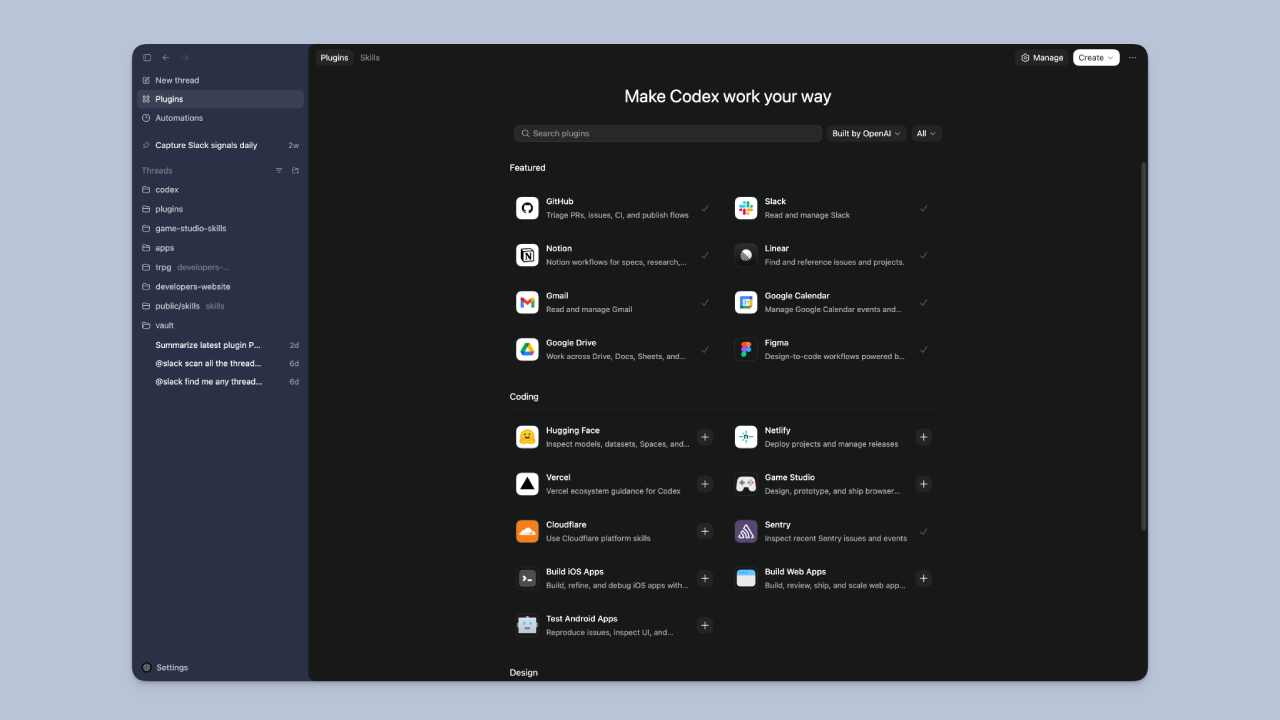

OpenAI has taken a significant step forward in enterprise AI development by introducing a new plugin system for its Codex assistant. This Codex update move signals a transition from being a powerful code generation tool to becoming a more integrated and customizable AI coding agent. By enabling plugins, OpenAI is positioning Codex as a flexible platform capable of interacting with external tools, services, and enterprise systems.
The development reflects a broader shift in artificial intelligence from standalone models toward ecosystem-driven platforms that can adapt to specific workflows and organizational needs.
From Code Generator to Intelligent Coding Agent
Codex, the AI model behind tools like GitHub Copilot, has mainly focused on generating and suggesting code. While it was effective, its role was mostly limited to interpreting prompts and producing code snippets.
With the addition of plugins, Codex becomes a more autonomous assistant. It can now connect to external APIs, gather data, complete tasks, and fit into larger development pipelines. This changes it from a passive helper to an active participant in the software development process.
The upgrade meets the increasing demand for AI systems that not only help but also take action, managing repetitive tasks, streamlining workflows, and raising developer productivity.
What the Plugin System Enables
The plugin system allows developers and organizations to expand Codex’s capabilities beyond its base model. Plugins can connect Codex with various tools, including:
- Version control systems
- Project management platforms
- Cloud infrastructure services
- Internal enterprise databases
For instance, a plugin could enable Codex to fetch project requirements from a task manager, generate code to match, and then push updates directly to a repository. This integration cuts down on manual work and simplifies development processes.
Moreover, plugins allow real-time interaction with external data sources, making Codex more aware of context and responsive to changing situations.
Enterprise Governance and Control
One key aspect of the plugin system is its emphasis on enterprise governance. As organizations increasingly use AI tools, concerns about security, compliance, and oversight have become crucial.
OpenAI’s plugin framework tackles these issues by letting enterprises set how Codex interacts with their systems. Companies can:
- Limit access to sensitive data
- Track plugin usage
- Enforce compliance policies
- Customize permissions for different teams
This level of control ensures that AI-assisted coding aligns with organizational standards and regulations. It also builds trust among enterprises that might have been cautious about fully integrating AI into their workflows.

Enhancing Developer Productivity
The integration of plugins is expected to greatly increase developer productivity. By automating regular tasks like code generation, testing, debugging, and deployment, Codex can free developers to concentrate on more complex and creative parts of software development.
Additionally, the ability to integrate with existing tools means developers do not have to switch between several platforms. Codex can serve as a centralized interface, making workflows easier and reducing friction.
This is especially beneficial in large projects, where coordination across teams and systems can be tough. With plugins, Codex can help bridge these gaps and boost efficiency.
Competitive Landscape and Industry Impact
The introduction of plugins puts OpenAI in direct competition with other AI development platforms that are quickly evolving to include similar features. Companies like Google and Microsoft are also heavily investing in AI-assisted development tools and ecosystem integrations.
However, OpenAI’s approach highlights flexibility and developer control, which could give it an advantage in enterprise adoption. By allowing organizations to create custom plugins, OpenAI fosters a modular ecosystem that can develop organically based on user needs.
This strategy reflects trends seen in other software platforms, where extensibility and integration capabilities often play a key role in long-term success.
Codex Update: Challenges and Future Outlook
Despite its potential, the plugin system also brings new challenges. Keeping plugins secure, ensuring compatibility across systems, and managing complexity will be major concerns as adoption increases.
There’s also the issue of standardization. As more plugins are created, establishing common frameworks and best practices will be essential to avoid fragmentation and ensure reliability.
Looking ahead, the plugin ecosystem could become a cornerstone of Codex’s growth. Future developments may include a marketplace for plugins, better interoperability, and deeper integration with enterprise systems.
A Step Toward Autonomous Development Systems
The addition of plugins marks an important moment in the development of AI coding tools. By expanding Codex’s capabilities beyond simple code generation, OpenAI is moving toward a vision of autonomous development systems that can understand, execute, and optimize complex workflows.
For enterprises, this offers a chance to use AI not just as a tool, but as a strategic asset. As Codex continues to grow, its plugin ecosystem could change how software is built, managed, and deployed in the coming years.

Comments are closed.