
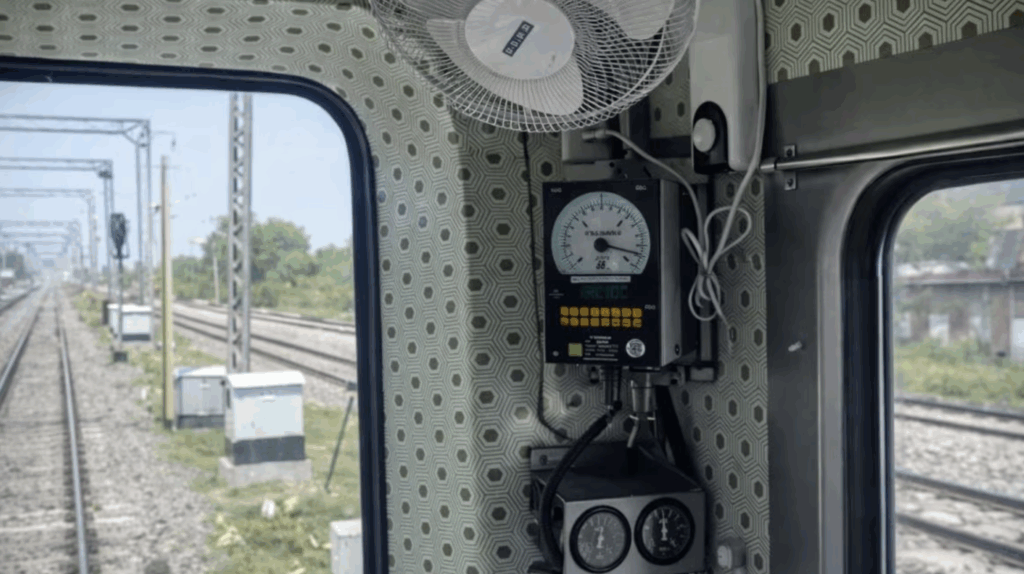

In a recent trial conducted by the East Central Railway (ECR), a special train reached 180 kmphone of the highest speeds ever achieved on India’s conventional rail network. This was not a commercial run, but a controlled speed testshowcasing the improved capability of Indian tracks and systems.
The achievement is being seen as a strong indicator that Indian Railways is gradually moving toward semi-high-speed operations (160–180 kmph range).
Where Is the Grand Chord Section?
The Grand Chord is one of India’s most important railway corridors. It connects Pt. Deendayal Upadhyaya Junction to Dhanbadpassing through Bihar, Jharkhand, and Uttar Pradesh.
Spanning over 400 kmthis route is part of the busy Delhi–Howrah line and plays a crucial role in both passenger and freight movement. It is considered one of the busiest railway sections in the country.
Years of Infrastructure Upgrades Behind the Milestone
This achievement didn’t happen overnight. Over the past decade, Indian Railways has invested heavily in:
- Track strengthening and modernization
- Advanced signalling systems
- Electrification upgrades
These improvements have significantly increased the speed potential of existing tracksallowing trains to safely operate at much higher speeds.
Safety Systems Like Kavach Playing a Key Role
To support higher speeds, Indian Railways is also deploying advanced safety measures such as:
- Kavach (automatic train protection system)
- Extensive track fencing to prevent trespassing
These upgrades are critical to ensure that higher speeds do not compromise passenger safety.
Not Yet the Speed You’ll Experience
Despite hitting 180 kmph in trials, regular train operations are still slower.
Most premium trains like Vande Bharat currently operate at 130–160 kmph in real conditions. The 180 kmph milestone is a proof of capabilitynot an immediate operational change.
What This Means for the Future
This milestone signals a clear direction for Indian Railways:
- Faster travel times on existing routes
- Expansion of semi-high-speed corridors
- Better integration with future high-speed rail projects
It also shows that India is focusing not just on new bullet train projects, but also on upgrading its existing network for speed and efficiency.
Bigger Picture: India’s Rail Speed Transformation
India is steadily moving toward a future where:
- 160–180 kmph becomes standard on key routes
- High-speed trains complement upgraded conventional lines
- Travel becomes faster without massive new infrastructure everywhere

Comments are closed.